2012/08/01

Gore Vidal on the creation of the universe

In honor of the late Eugene Luther Gore Vidal Jr., 1925-2012, a writer you may love or hate but must admire, I offer this review that I wrote 9 years ago:


CreationCreation by Gore Vidal
My rating: 3 of 5 stars

A 600-page travelogue on a long-gone world. Cyrus Spitama, half-Greek, half-Persian grandson of Zoroaster, boyhood friend of Xerxes, travels across the vast Persian Empire of the 5th c. BC, to India — where he marries a king's daughter and converses with holy men of various persuasions, most memorably with Gautama Buddha himself — and thence on to Cathay (China), where he becomes the prized slave of an impoverished duke, listens to Lao-Tze, and comes to know the aged Confucius intimately (they go fishing together). Finally he manages to return to Persia, in time for Xerxes' assassination and the ascension of his crippled son Artaxerxes, who sends him on as ambassador to Athens, where he hears Thucydides' distorted pro-Greek version of the Persian wars, chats with the young Pericles, and dictates his memoirs to his grandson Democritus. Lots of action, even more philosophical discussion, but only sporadic, unsustained narrative tension — ideas, rather than characters, are Vidal's main concerns here. Cyrus, one of the few purely fictional characters to appear, is seeking to solve the riddle of creation, a paradox for Zoroastrians, solved by reincarnation for Buddha, an event that never occurred for Lao-Tze, and an issue beyond human knowing and thus not worth exploring for Confucius. In an epilogue, Cyrus' grandson Democritus sums up his famous solution to the problem — all is matter, made up of "atoms," ceaselessly recombining to create new things. Fascinating as popular history of philosophy, but lacking the sustained, complex character development that Vidal achieves brilliantly in Burr. We get intriguing glimpses of Pericles, Xerxes and the others, but the only truly complex and fascinating characters are Atosa (Darius the Great's wife and mother of Xerxes) and Confucius.

View all my reviews

2012/07/16

A perilous and unnecessary journey

As I Lay DyingAs I Lay Dying by William Faulkner
My rating: 5 of 5 stars

A poor Mississippi family disintegrates upon the death of Anse Bundren's wife Addie, mother of the 5 other Bundrens. Through the running thoughts and memories of these family members, and of others who come in contact with and sometimes try to help them, sometimes to cheat them, bit by bit we learn the complex story of marriage, adultery, and conflicts never voiced but tearing the insides of Cash, the eldest son (about 30), his slightly younger brother Darl, and the three who came many years later and at least one of them by a different father, the rebellious Jewel who is the most loved by Addie, and his 17-year-old sister Dewey Dell, and their littlest brother Vardaman, convinced that his mother is a fish and is not really dead. The only character whose mind remains closed to us is the passive-aggressive Anse, a devious old coot who likes to see himself as a victim of fate but manages to manipulate everybody else.

Most of story is the tremendously difficult journey by wagon and mules, in the face of storm and flooding, to distant Jefferson where Anse insists is the only proper place to bury the by now rotting corpse of Addie — but Anse's real motive for this totally unnecessary trip to town is to get himself a set of false teeth, which he has been longing for for years. Flood, injury, mutual betrayal, madness, conflagration, and the exploitation of a poor rural girl in trouble by an unscrupulous city-slicker intensify the drama of their odyssey.

View all my reviews

Signifying

The Sound and the Fury: The Corrected Text with Faulkner's Appendix (Modern Library)The Sound and the Fury: The Corrected Text with Faulkner's Appendix by William Faulkner
My rating: 5 of 5 stars

Of all the vast output of William Faulkner (September 25, 1897 – July 6, 1962), The Sound and the Fury is the most often cited as an influence by contemporary Latin American and Spanish novelists (see article the day after the 50th anniversary of his death, El País 2012/07/10). It is a difficult challenge for the reader (and surely more difficult for its Spanish translators, because of the recourse to different Mississippi dialects), with abrupt unannounced shifts of time (from 1928 back to 1910 or even earlier) and of points of view, and deliberate disregard of conventional punctuation. From the beginning, we are required to decipher the ramblings of the "idiot", Benjy, a full-grown man (celebrating in 1928 his 33d birthday) with the mentality of an infant, deducing from his incoherent stream of consciousness the where and when of events vaguely described. We also have to accept that this severely brain-disabled person can, in his inner consciousness, repeat verbatim long passages that he has heard but not understood. The next sections are also 1st-person streams of consciousness, also disjointed but more intelligible, of Benjy's older, deeply-troubled brother Quentin (on one fateful day in 1910) and then his younger, deceitful and extremely cruel brother Jason (in 1928, but remembering much earlier times), and finally a beautifully rendered 3d-person account on the life and concerns of the black servant Dilsey, the only loving creature and the one who has been trying to hold this self-destructive and self-hating family together. The story of Benjy's sister Candace and of her bastard daughter, also named Quentin, we piece together from all the other narratives.

It's a wonder that Faulkner could get this published at all in 1929. It didn't sell well until years later, after Faulkner had become famous for other works. Then in 1946 he added the "Appendix," printed as an introduction, as a kind of reader's guide, adding the history of the once illustrious, now disintegrated Compson family and some hints about its survivors and providing very helpful clues to the events and personalities we are about to meet.

Reading it can be an exhausting but exhilarating experience. What other authors have taken away from it is the deep intensity of the portraits of place — mostly rural Mississippi, but also Cambridge-Boston — and the liberty to write freely in the disconnected natural way our thoughts flow. In the end, it is, as Macbeth says of life itself (Act V), "a tale /Told by an idiot, full of sound and fury, / Signifying nothing." But only to the ill-starred Compsons, unable to make any sense of their own lives. To the attentive reader and especially to other authors, Faulkner's manner of telling the tale signifies everything.

View all my reviews

2012/07/07

'Making' sense with Celan - Guest post

Thanks to contributor Dirk Van Nouhuys for this stimulating and persuasive view of Celan, of meaning, and of language.

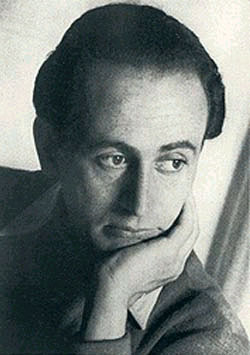
Paul Celan
One of the things Noam Chomsky did to revolutionize linguistics was to point out that you could make sentences that were grammatically correct but did not make sense. His observation freed linguists to devote their attention to grammar without worrying about meaning, as they had tended to do.  An example he used is this sentence: “Colorless green ideas sleep furiously.”
 It seems to me that when Chomsky asserts this he is using ‘make’ in a narrow sense. The phrase “make sense” for him means something like ‘to harmonize rationally with the speaker’s notion of the world.’ But ‘make’ can also mean create, and ‘make sense’ can mean create meaning. 

I once had a teacher, Yosel Rogat, who suggested that any metaphor, as opposed to a simile, behind the scenes evokes a universe in which the metaphor is literally true. If you say, “life is like a nightmare,” you point to certain resemblances that you might be able to list. “If you say, “life is a nightmare”, you evoke a universe of darkness and suffering where sordid details struggle for realization.

So it is with Chomsky’s sentence. If you speak it from the narrow, Chomskian perspective, then you say nothing about ideas or about sleep or about fury. But if you take ‘make’ in the sense of create, you have a resonant image of ideas, some reified (because they might have color), but without color and at once somnambulant and raging. And it does seem relevant to me that Chomsky is himself a furious wielder of abstract ideas intended to rouse others from complacency time after time.

And so it is with Paul Celan. His poems for the most part do not make sense in the narrow Chomskian definition. But they make a great deal of sense by creating meaning. Of course I’m reading in translation, but I doubt knowing German would make any difference. In fact I think the German inclination to create new words by joining old ones freely lends it self to this sort of sense making. You can put two words together in a way that does not harmonize rationally with the world, as you know it, but does create a new sense, a new batch of meaning. 

This generation of meaning is one thing that makes Celan so exhilarating to read, and, in his context so moving. You re constantly involved in making sense. Reading this book is a long struggle in which you time after time are forced to make (create) sense based on the chimeric materials Celan provides you. Nourishing your mind in the background as you work is Celan’s tortured history, his upbringing as a German-speaking Jew in what had been part of Austria, was then Romania and is now the Ukraine; the death of his mother in a concentration camp; his tormented attempts to recreate his nationality and his identity; his deep involvement with the German language though he was a Jew suffering horrors enacted by Germans; his career in France, his eventual suicide. It is the history of a chimeric identity, and the poems are chimeric. That the evocation is mostly of tragedy and suffering does not make it less wonderful because it shows the capacity of the human mind to work with such dark material and come out richer in meaning.


Dirk van Nouhuys
813 San Diego Road
Berkeley CA, 94707


2012/06/18

Antidotes to economic/psychological depression

In response to my article about the "indignados" of Spain, friend and colleague Christopher Leo writes:
You and I have been through this movie before. The rotating protests are reminiscent of the late sixties, except that then there was one clear focus, the war in Vietnam. This time it's about many things, and no one thing in particular. Hard to guess where it's going to lead, if anywhere. 

Swarming rallies convoked by SMS and Internet are a worldwide phenomenon now. Even if the protests were completely ineffective in changing policies, they at least serve as an antidote to severe psychological depression among the millions who are suffering sudden decline in economic possibilities. (See Increasingly in Europe, Suicides ‘by Economic Crisis’ - NYTimes.com.)

Thus the protest rallies are an example of what Gramsci liked to call "optimism of the will". There are other antidotes to depression available: Jihad, neo-Naziism (as in Greece today), religious mysticism, drugs, alcohol etc. Lots of opiates for the people are on the menu. Of all of these possibilities, the big, rapidly assembled protest rallies against perceived injustice, where people of diverse class and ethnic backgrounds discover a common cause, seem to me by far the most healthful, both for the individual  and for the society.

Sustained anger and racist hatred are hard on one's health (see Anger Effects on Your Heart: Heart Disease, Atherosclerosis, and More), drugs destroy your physical and emotional defenses, and mystic ecstasy doesn't help much with practical problems. Political protest in an atmosphere of solidarity not only feels better, it may — just may — help bring about a more equitable system.


2012/06/16

When God spells Dog


Journey to Virginland: Epistle 1Journey to Virginland: Epistle 1 by Armen Melikian
This is sillier than A Hitchhiker's Guide to the Galaxy, but the jokes are hyperpedantic and theological rather than technical and sociological — OK, a bit of literate silliness can be fun. But this is the kind of copophragic humor and irreverence I remember from 1st grade, when we thought "underwear" was a terribly funny and naughty thing to say. Here the naughty joke is that "Dog" is "God." And maybe Satan isn't so bad.

Other reviewers have loved this book (see the publisher's Journey to Virginland page), so maybe you will too.


I didn't.

2012/06/12

Taking our minds off real-life woes


We're in the midst of a silly annual festival here in Carboneras, when townspeople dress up as "Moors" and "Christians" of some vague earlier age and, after days of mock-solemn processions (the kids love getting into the costumes, but the adults look like they're having the most fun), stage two battles on the beach and negotiations between the opposing leaders (who have to stay steady on horseback, while all dressed up in stage armor with plumes and capes) in front of a mock-up of a local castle. Tomorrow we will get to see the battles: in the morning, the Moors "invade" by landing on the beach in a little boat and threaten the Christians with stealing their image of St. Anthony. After a lot of elaborate speeches, the two teams run at each other, waving toy swords, and some of the Christians are supposed to fall down, and the Moors celebrate their triumph. But in the afternoon the Christians regroup and, again running at each other on the beach, they win. This is supposed to be a re-enactment of a real historical event, probably in the 17th century.

Here's a clip from 2010 to give you an idea. It's a great way to take everybody's mind off the deepening economic crisis. The great thing is that, unlike real life, everybody who participates gets to win: the "Moors" in the morning, the "Christians" in the afternoon, and the costumes are fun.

2012/06/07

The World's Richest Countries And Biggest Economies, In 2 Graphics : Planet Money : NPR

The World's Richest Countries And Biggest Economies, In 2 Graphics : Planet Money : NPR

Good to know.

Deep in the caves, deep in our past

See Telegraph article cited below
We've been traveling, just got back to Madrid from Cantabria (region on the north coast of Spain). Our main interest was to see the caves where our ancestors made such amazing paintings 12, 20 and even 40 thousand years ago. We got into a major one called El Castillo, a small number of people with a guide — just stunning, to see the paintings of giant bisons, deer, horses and, in one remote spot, a little fox. The best paintings are deep in the interior, where no sunlight at all penetrates, and sometimes in spaces so small that only a fery few people could have entered; there are no remains of smoke around the figures, so paleontologists infer that they used smokeless tallow lamps (they've even found the remains of bowls that may have been for such lamps). Also stunning and amazing is the nearby Cueva de las Monedas, too small for clan habitation but a fantastic temple of stalactites and crystals, with a few exquisite paleolithic paintings tucked into remote crevices.

From The Ballroom Blog
One has to wonder what those works meant to their artists and to the rest of the clan. Were they summoning the spirits of those sacred animals? Except for the deer, most of the animals they painted were not part of their diet, so must have had some other importance to them.

The most famous cave of all, Altamira, has been closed to the public since the 1970s; the crowds were destroying it, not by vandalism but just by their presence, changing the temperature and humidity that had preserved those marvelous paintings. To compensate, the authorities have built a life-size "neocave" millimetric replica of the main chambers, reproducing every crack and bulge of the rock and ever handprint (both positives — paint smeared on the palm of the hand and pressed against the rock — and negatives — paint blown over the back of the hand pressed on the rock), every charcoal or iron oxide figure, every engraving etched with some sharp stone.  It was disappointing not to see the real thing, but still well worth the visit, because of the attached museum, with clear and vivid explanations of all the history and "prehistory", including the geological formation.  At some future date, they plan to again admit very small numbers of people for limited visits. The other caves inhabited tens of thousands of years ago remain accessible (there are many, besides the two we visited, in Cantabria and southern France). Now for the first time I feel a desire to read Jean Auel's The Clan of the Cave Bear, her famous re-imagination of the age when Neanderthals and Homo sapiens cohabited the planet.

For more, see Spain to reopen Altamira Caves despite risk of destroying prehistoric paintings - Telegraph

2012/06/06

Civil protest in Spain: Optimism of the will


The dismantling of the once-excellent public health, education and other benefits and destruction of labor rights, with no prospect of economic recovery from our deep recession, threaten to overwhelm Spaniards with "pessimism of the intellect".  The rising of the indignados, known here as "15-M", is a thrilling example of the only antidote "optimism of the will" —the determination to change the course of events, as Antonio Gramsci (following Romain Roland) liked to remind himself and others .

The following article has just appeared in the June issue of

THE VOORHIS VOICE


Edited by Ivan Light and published by The Democratic Club of Claremont (CA)

Thanks to Ivan  for his invitation to develop this analysis.

 Spain’s Indignados
By Geoffrey Fox

Last year’s mass movement of indignados in Spain, initiated May 15 (“15-M”), and evolving into protest occupations of the central plazas and marches, astonished government authorities and even participants. Inspired by protests in Tunis and Cairo, and encouraged by those in Greece and Portugal, the Spanish mobilization demonstrated further possibilities of democratic action in the Internet age, setting an example for movements as far away as Chile (the huge student protests) or the U.S. (Occupy Wall Street). But “15-M” was also a response to specifically Spanish political conditions.

This was the biggest in a series of volcanic eruptions against the legacy of the Franco dictatorship (1939-75) that began even before the election of the first Socialist party government, in 1983. Franco-ists and their allies have been entrenched in the judiciary, business sectors, and the Catholic Church, which still enjoys extraordinary legal and financial privileges. Democratic demands had erupted in mass mobilizations repeatedly in recent years, for example against military intervention in Iraq, the mishandling of a huge coastal oil spill, and attempts to use the 2004 terrorist bombing at Atocha for electoral advantage. Additional background included a series of corruption scandals, and the removal from office of judge Batasar Garzón, for investigating the current scandals and exhuming the crimes of the Franco dictatorship.  This was Spain’s political drama even as ordinary people endured an economic “crisis” that they blamed on those very corrupt officials and antidemocratic legacies. 

Police estimated 20,000 at the initial demos May 15 in Madrid’s Puerta del Sol, and 130,000 nationwide, with the biggest gatherings in Barcelona, Murcia, Granada, Seville, Malaga, Alicante and Valencia. One reason for the big initial turnout was the date, exactly one week before nationwide elections for regional and municipal authorities;  another was the demo’s independence of any party or trade union sponsorship. The heated campaign of mutual blame for the economic crisis by the two principal parties had disgusted many voters with both. The governing Socialists had disappointed their supporters by bowing to pressure from Brussels and Berlin to freeze pensions and cut other benefits; and the right’s Popular Party, closely aligned with big capital and banking, offered no credible alternative. One of the popular slogans of 15-M was “Don’t vote for them!” and the initiating coordinating committee called itself “Real democracy now!” (¡Democracia Real Ya!).

The original protesters included experienced veterans of social action groups but they were joined by many younger “indignados” frustrated by their lack of employment or educational opportunities. In Madrid’s spacious Puerta del Sol after the speeches, hundreds of the youth decided spontaneously to stay the night. Their rousting by the police before dawn was the second main cause of the protest’s huge success: press and Internet coverage of the rough handling resulted in far larger crowds the next night, and  spontaneous encampments in other cities.

The veteran social activists and younger, unemployed  “indignados” were quickly joined by a broader cross-section of the electorate, including students and unemployed adults, fully-employed but worried workers and professionals, housewives, and retirees. They were articulate, informed and determined. Participants set up orderly camps, declaring that they would not leave until satisfied that they had accomplished something.

Mobilized by Internet social networks, e-mail, and SMS, not by a parties or unions, the coalition sprouted no leadership that could be pacified with minor concessions. The press sought out the cyber activists, who called themselves “¡Democracia Real Ya!” — “Real Democracy Now!”  — but cyber activists could not and did not seek to control over a mass consensual movement of  indignant people, the “indignados.”

The right-wing Popular Party at first imagined that the demonstrations could benefit them electorally, reasoning that indignados who boycotted the election would otherwise vote for the left. The right did win big, not just on May 22, 2011 but even more significantly in the parliamentary and presidential elections November 20. However, their political victory has deepened dissatisfaction with the political right and the whole political structure. The Socialist Party sought the protesters’ support, expressing sympathy with their grievances, but with little apparent success. The 15-M crowds had already decided that major parties and the trade unions were too bureaucratized were too embedded in the system to respond to their demands.

But how to create real democracy? The absence of an executive committee or even a “majority rules” consensus prevented the emergence of a unitary of demands;  however,  there did emerge a broad consensus on what people did not want: huge bailouts of the banks, huge cuts in health and education budgets, more bureaucratic, non-representative rule. The term “indignados” came from a book written in French by Stéphane Hessel,  a Résistance veteran. The book’s title, Indignez Vous! might be translated literally as  “Get indignant!,” but  “Don’t put up with it anymore!” would be a truer fit.  Indignation is essential as a starting point for protest, but for real, lasting change, as Hessel himself emphasized, indignados have to agree on and work for clearly defined goals. To define these goals, one of the many committees that popped up in the Puerta del Sol set up suggestion boxes for proposals, and gathered nearly 14,700.  When finally analyzed months later, the demands ranged from “open lists” of candidates, to harsher punishments of corrupt politicians, to nationalization of the banks and even abolition of the monarchy. Here was enough material for several political initiatives, requiring different kinds of actions.

The camp-ins amounted to intense political self-education, including the practical experience of working with diverse people to meet the needs of such an improvised settlement. The camp alumni have taken those experiences back to their neighborhoods and created local action groups to act locally while continuing their debates to develop larger strategies for acting in the whole society.  Many of the 15-M veterans again thronged the plazas of Madrid, Barcelona, Valencia and other cities on the anniversary,  on May 12, 2012.  The crowds in the plazas were somewhat smaller, and though there were a few late night skirmishes with police, they mostly respected the police order against setting up tents or sleeping bags. This has led some reporters to speak of exhaustion but that prospect is unlikely because the rallies are only the most visible part of a movement that has grown deeper and wider in 2012.

Meanwhile, the larger situation of Spain in Europe and of all of Europe in the world are getting worse, and activists realize that it will take more than mobilizations and neighborhood actions to create employment, restore social services,  and realize their many other demands. But, roused from their torpor, the two big union federations and the parties of the  left (Partido Socialista Obrero Español, Izquierda Unida, and regional left parties) are now finding common ground rather than spending all their energy competing for the same constituents as in the past. Together they are making broader demands, and introducing more internal democracy . Demonstrations have become almost weekly events, with 15-M and unions joining forces, including in the broad labor-community general strike last march against the rightwing “labor reform”  that simplified the process of firing workers, and nullifying labor contracts while reducing economic equality. The indignados have not made a revolution, but should it come, they will be better prepared thanks to all their collective work since 15 May 2011.

Geoffrey Fox is an American author who resides in Almeria, Spain. He is the author of
 A Gift for the Sultan and other books. His blogs:  Literature & Society and also Lecturas y lectores.