Born Again in a Second Language - NYTimes.com
Showing posts with label writing. Show all posts
Showing posts with label writing. Show all posts


2013/09/19
Writers retreat (or advance)
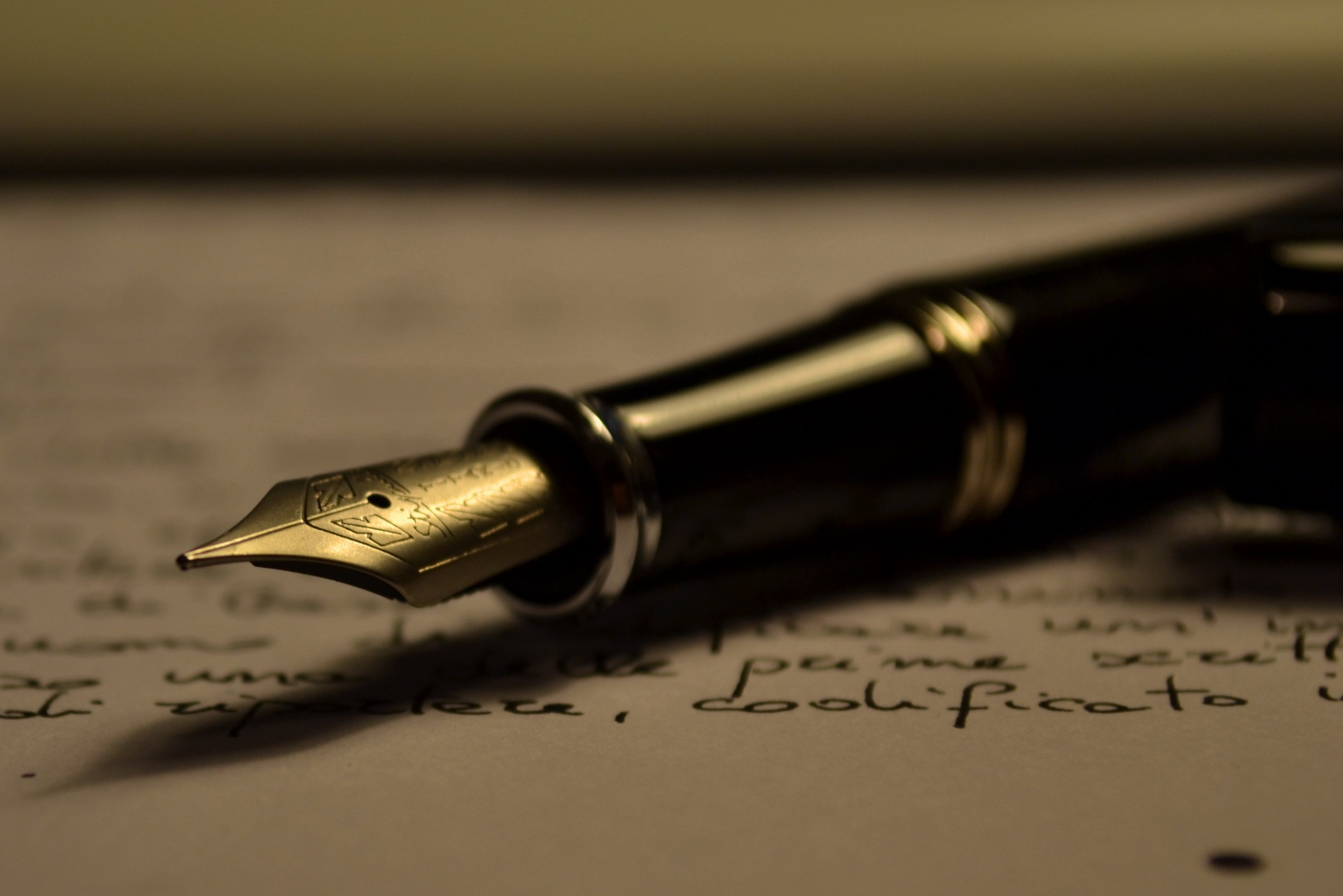
The experience was valuable for several reasons, including: updated information about how the book business is operating currently, including a frank presentation via Skype by a guest speaker in Los Angeles on optioning books for TV or film production; tips and practical exercises on writing techniques, and recommendations of readings that may serve as models or as sources of ideas to stimulate our own creative imaginations. But beyond all that was something hard to get from on-line forums or self-help books: the synergy of face-to-face contact and interchange, with Wendy Rohm and with the 10 other participating writers.
Wendy is a very experienced freelance magazine writer, book author and agent (as you'll see if you check out her website), so there was a lot to learn from her. She was also closely attentive and constructively critical of the work as we produced it in workshop exercises. And it was also very helpful to engage with the other participants and they developed books completely unlike mine, suggesting other approaches and seeking solutions to some of the same problems of narrative structure, pacing, etc.
Online forums can be great — I have colleagues to share ideas with in LinkedIn and Goodreads, and some close friends and colleagues in our Thoth Books editorial collective. But the face-to-face exchange with an experienced professional, in real time and in a real place, is insurpassable.
2013/09/18
2013/08/20
J.K. Rowling and the Usefulness of Fame | Louise Marley | Blog Post | Red Room
Louise Marley has expressed my thoughts on this strange business of writing.
J.K. Rowling and the Usefulness of Fame | Louise Marley | Blog Post | Red Room
J.K. Rowling and the Usefulness of Fame | Louise Marley | Blog Post | Red Room
2013/06/23
Back from the U.S. of A.
Susana and I got back home to Carboneras (Almería, Spain) yesterday after nearly a month in the USA (and a few days in Madrid), our first trip back there in nearly four years: Cambridge and Boston MA, for my college reunion; Galisteo and Santa Fe NM to see old friends; Arizona to hang out with my two sons (one in Prescott, the other in Flagstaff), and finally New York, for many personal and business reasons, including a meeting with the editor for our current book-in-progress, a history of architecture and urbanism in Latin America.
So this is just to explain why you hadn't seen anything from me over the past month — we were too busy traveling and had too infrequent and interrupted access to the Internet for me to sit down and write anything interesting. Now we're back in our seaside home and ready to get back to work on projects including:
 This will keep us busy while everybody else is at the beach. Maybe we'll get to go down to the beach, too, from time to time. It's right outside my window, mighty tempting.
So this is just to explain why you hadn't seen anything from me over the past month — we were too busy traveling and had too infrequent and interrupted access to the Internet for me to sit down and write anything interesting. Now we're back in our seaside home and ready to get back to work on projects including:
- first, that book I just mentioned (volume I, the pre-Columbian history, is written; the volume on 20th and 21st centuries is well advanced; we're saving for last what we expect to be the least challenging portion, on the long colonial period and the first post-independence century).
- My new novel, still in early stage.
- More commentary on current events. Next up, an article on Turkey and its protests.
2013/03/21
The New Yorker Rejects Itself: A Quasi-Scientific Analysis of Slush Piles | The Review Review
The New Yorker Rejects Itself: A Quasi-Scientific Analysis of Slush Piles | The Review Review
Aha! I thought so. The title is not quite accurate — The New Yorker didn't exactly reject itself, but… Well, read what happened.
Aha! I thought so. The title is not quite accurate — The New Yorker didn't exactly reject itself, but… Well, read what happened.
2012/05/10
The most explosive writer of the late 20th century?
 |
| Cinema Libre: Norman Mailer |
Mary Dearborn's appraisal sounds over the top but — You know? It's not entirely absurd. He was in all events one of the heavyweight contenders on an era when a whole raft of writers was competing to be the most attention-getting, outrageous and provocative. It wasn't easy to be more provocative than Gore Vidal, Jack Kerouac, Hunter S. Thompson, or other contemporaries, or to outshine as a prosemaker that older generation of Hemingway and Faulkner, but Mailer did his damnedest.
Like Vidal, he participated in politics as a candidate for office — not the Senate, like Vidal, but for mayor of New York. Like Hunter Thompson, he'd fuel himself on alcohol and drugs (though unlike Thompson, he was not a firearms enthusiast). Like Kerouac and other writers he admired, he wrote fast and furiously. And, most of all like Hemingway, he tried to live the experiences he wrote about, from war to prize-fighting to political campaigning.
And far more than any of them, even more than Hemingway, he outraged and openly insulted feminists. Though — or because — as he and many of his lovers said, he "loved" women. "Love" can mean many different things. In his case it meant that he strongly desired to couple with them, to possess them, to please them. And imagined that he was pleasing them by being outrageous, by talking dirty in public or even, in a drunken drug-fueled rage that is one of the most impactful moments of the documentary, attacking and stabbing his wife under the apparent illusion that he was a bullfighter and she the bull.
And he also wrote some of the most powerful descriptions of death and killing, of male rage. Drawing on and channeling his own rage to make us feel and shiver with the shot, the stab, the punch, the fuck. His themes were always sex and violence. His problem, that he didn't know the difference. Violence was always orgasmic, sex to be complete had to be violent.
He wasn't always a great artist — sometimes he was just a stupid clown. But he could be a great artist, and sometimes was. Maybe his most important work is the nonfiction (Armies of the Night, etc.). But — for him and I think in reality — it's all "fiction," because every supposed fact is really a distortion through somebody's way of viewing and describing events. And that's why a work that the reader knows is "fiction" can be truer, because it avoids the pretense of objectivity and openly calls on the reader to draw on his or her own experience to feel and complete the story. This is an insight from one of the "Extras" in the DVD, from an interview in Mailer's last year of life (2007).
This addition to the abundant Mailer literature — no writer seems to have attracted more attention — doesn't give us much in analysis of why America could grow and celebrate such an enormous ego, despite the suggestion in the title "Norman Mailer, The American"— that is, that he and his fame were uniquely American phenomena. That's something for us to think about. Something about "America" made him possible.
What the documentary does offer is a lively composite of videoclips and interviews, some of them insightful and others revealing the incomprehension of people Mailer had stunned — most notably, Adele Morales Mailer, the wife he took for a bull and nearly killed. Except for Adele's very personal account of that fateful night, most of this stuff we knew before. But the documentary is most interesting, to me and probably most writers, for the scenes of Mailer himself, talking about life and writing. If you get the DVD, don't miss the snippets of his remarks, at widely different times of his life, in the "Extras." Mailer was very intelligent, and occasionally — but only occasionally, and only when sober — he was also wise.
Just released by Cinema Libre
Check out these video clips: http://vimeo.com/album/1917630
Also worth reading, this obit from the New York Times, by Charles McGrath:
Norman Mailer, Towering Writer With Matching Ego, Dies at 84
2011/08/30
Calling all authors; Red Room spiffs up its site
The Red Room is a lively gathering place for authors to talk shop, trade notes, promote books, or just hang out. And now it looks better than ever. I hadn't been spending a lot of time there, but a new team of editors (I think they're new, at least they've got some new ideas) has just made it more lively, and at their urging I've added some posts to my blog there. So if you are an author, you won't want to miss this forum. And check out Geoffrey Edmund Fox's blog to see what it looks like (mostly the same content you've seen here, but presented a little differently). The Red Room is probably the only place where you'll see my middle name — so you don't confuse me with all those other Geoffrey Foxes out there.
2011/07/16
Reporting on civil rights in the dangerous '60s
I just renewed contact with an old college buddy who dropped out to do stuff that was more important — fighting for racial justice in the deep south in the dangerous '60s. And to write about it, so the rest of us could get some idea of what it was all about. His short recap here of some of his experiences and people he worked with or encountered, from his earlier writings (in The Nation and elsewhere) is an important reminder of how intense, risky and, at the same time, joyful that struggle was.
Reporting Civil Rights: Perspectives on Reporting: Peter de Lissovoy - Returning to Georgia
He writes so vividly and was involved in such exciting, frightening, and sometimes hilarious events (check out "The Great Pool Jump") that I've just ordered his novel, Feelgood .
.
Peter and I are nearly the same age, both grew up near Chicago and went to Harvard, but then we took off in different directions — me, to South America, he to Southwest Georgia. Except for one brief foray into the deep South, my involvement in civil rights was mostly northern and urban (in Evanston when I was a grad student at Northwestern U, later with the Black Panthers and Young Lords and others in Chicago). Southwest Georgia was like another planet.
Yes, he's right in his retrospective, we did manage to change the world a little bit for the better with all our serious, enthusiastic and sometimes foolhardy acts. Southwest Georgia is not the same today (not nearly as unjust, though far from perfect) as it was before he and Randy and C. B. King and all the others worked their magic, in all their different ways. I'm glad to have found you again, Pete.
Reporting Civil Rights: Perspectives on Reporting: Peter de Lissovoy - Returning to Georgia
He writes so vividly and was involved in such exciting, frightening, and sometimes hilarious events (check out "The Great Pool Jump") that I've just ordered his novel, Feelgood
.Peter and I are nearly the same age, both grew up near Chicago and went to Harvard, but then we took off in different directions — me, to South America, he to Southwest Georgia. Except for one brief foray into the deep South, my involvement in civil rights was mostly northern and urban (in Evanston when I was a grad student at Northwestern U, later with the Black Panthers and Young Lords and others in Chicago). Southwest Georgia was like another planet.
Yes, he's right in his retrospective, we did manage to change the world a little bit for the better with all our serious, enthusiastic and sometimes foolhardy acts. Southwest Georgia is not the same today (not nearly as unjust, though far from perfect) as it was before he and Randy and C. B. King and all the others worked their magic, in all their different ways. I'm glad to have found you again, Pete.
2011/06/23
Review copies of 'Sultan' available
If you would like a free ebook of A Gift for the Sultan for review, please let me know. I can give you the coupon code for a free download in whatever e-format you prefer.
for review, please let me know. I can give you the coupon code for a free download in whatever e-format you prefer.
2011/06/22
Researching "Sultan"
A fellow reader in Shelfari and Goodreads asked me to describe my research process for A Gift for the Sultan. My best answer to the question is in the video I've posted on my Amazon author page (also on my website and on YouTube). But here's a summary.
I sort of went crazy on the research; I found the period and the real characters so fascinating that I read everything I could find, in all the languages I read (only three, unfortunately — neither Greek nor Turkish). I think I was able to read almost everything relevant (in English, French or Spanish) because I focused narrowly on just a few months of history, from mid 1402 to end of 1403, when the nascent Ottoman Empire was suddenly smashed to pieces (for a short but critical period).
The subject was completely new to me — all my previous books had been about Latin America. But I had learned to do research. I joined an e-forum of scholars on Turkey and another one for Byzantinists, and I was so obsessive in searching through the New York Public Library and the very good collection in the New York University library that there came a point where those scholars were asking me questions. I even discovered a pencil-written manuscript in the NYPL archives, on a 15th century Turkish poetess, and passed that on to a literary journal in Ankara that used it for its inaugural issue. There were times when I thought my whole project was insane and I put it aside for months at a time, but the research was fun and put me in contact with lots of intelligent people. And I'm so stubborn that I kept working on the prose until I got it right, at least as far as I could tell.
I'm glad that this reader was interested enough to ask. Thanks!
I sort of went crazy on the research; I found the period and the real characters so fascinating that I read everything I could find, in all the languages I read (only three, unfortunately — neither Greek nor Turkish). I think I was able to read almost everything relevant (in English, French or Spanish) because I focused narrowly on just a few months of history, from mid 1402 to end of 1403, when the nascent Ottoman Empire was suddenly smashed to pieces (for a short but critical period).
The subject was completely new to me — all my previous books had been about Latin America. But I had learned to do research. I joined an e-forum of scholars on Turkey and another one for Byzantinists, and I was so obsessive in searching through the New York Public Library and the very good collection in the New York University library that there came a point where those scholars were asking me questions. I even discovered a pencil-written manuscript in the NYPL archives, on a 15th century Turkish poetess, and passed that on to a literary journal in Ankara that used it for its inaugural issue. There were times when I thought my whole project was insane and I put it aside for months at a time, but the research was fun and put me in contact with lots of intelligent people. And I'm so stubborn that I kept working on the prose until I got it right, at least as far as I could tell.
I'm glad that this reader was interested enough to ask. Thanks!
2011/03/29
Do ebook consumers love bestsellers, or does it just look that way? – The Shatzkin Files
Another intelligent analysis of our changing lit industry by the insightful and very experienced Mike Shatzkin.
My latest book is now available both as paperback (Amazon's Createspace) and as an e-book through Kindle or Smashwords. The amazingly versatile and well-organized Smashwords makes the same text available in a whole variety of electronic formats, including the open industry format Epub, LRF for Sony Reader, and .mobi for Kindle (as well as PDF, RTF, etc.). Thus if you are a Kindle user, you can get and read my book either through the Amazon Kindle site or from Smashwords.
The Amazon and Smashwords editions are very slightly different; in the Smashwords edition, which I just uploaded, I was able to correct a silly error (miscalculated Hegira dates in the three final chapter headings) and I added a reader review by novelist Jan Alexander as a blurb. (It'll be the first thing you see if you download a free sample of the book). I set the price exactly the same, $4.99. I get 80% from Smashwords, 70% from Kindle, so both because of the correction and the price, I would be happier if Kindle users got their copies from Smashwords. But I don't think that's going to happen: Amazon has so much huger a presence on the Internet, is so much more visible, and if you've bought a Kindle reader, you're already connected to their store. Shatzkin's essay confirms that guess. Of course, if you want to read an e-book on something other than Kindle, Smashwords is the place to go.
The other thing that is clearer now from Shatzkin's analysis is that it will take a whole string of lucky breaks for a book like mine to become a big seller. The on-line sellers aren't set up to make it easy to find the unusual and unconventional works. So far I have been lucky in two ways: readers' reviews (on the Amazon site) have been wonderful, and the book is being translated for publication in Turkey.
Do ebook consumers love bestsellers, or does it just look that way? – The Shatzkin Files
Oh well. I'll just have let happen whatever happens. And meanwhile go on to write the next thing.
My latest book is now available both as paperback
(Amazon's Createspace) and as an e-book through Kindle or Smashwords. The amazingly versatile and well-organized Smashwords makes the same text available in a whole variety of electronic formats, including the open industry format Epub, LRF for Sony Reader, and .mobi for Kindle (as well as PDF, RTF, etc.). Thus if you are a Kindle user, you can get and read my book either through the Amazon Kindle site or from Smashwords.The Amazon and Smashwords editions are very slightly different; in the Smashwords edition, which I just uploaded, I was able to correct a silly error (miscalculated Hegira dates in the three final chapter headings) and I added a reader review by novelist Jan Alexander as a blurb. (It'll be the first thing you see if you download a free sample of the book). I set the price exactly the same, $4.99. I get 80% from Smashwords, 70% from Kindle, so both because of the correction and the price, I would be happier if Kindle users got their copies from Smashwords. But I don't think that's going to happen: Amazon has so much huger a presence on the Internet, is so much more visible, and if you've bought a Kindle reader, you're already connected to their store. Shatzkin's essay confirms that guess. Of course, if you want to read an e-book on something other than Kindle, Smashwords is the place to go.
The other thing that is clearer now from Shatzkin's analysis is that it will take a whole string of lucky breaks for a book like mine to become a big seller. The on-line sellers aren't set up to make it easy to find the unusual and unconventional works. So far I have been lucky in two ways: readers' reviews (on the Amazon site) have been wonderful, and the book is being translated for publication in Turkey.
Do ebook consumers love bestsellers, or does it just look that way? – The Shatzkin Files
Oh well. I'll just have let happen whatever happens. And meanwhile go on to write the next thing.
2011/03/24
Waking up the bear
All writers have to have some psychological trick to use when the going gets rough or when you just don't know how to confront the blank screen or page. For some, it can be a mood-altering substance like alcohol or opium, but that's dangerous and, from what I've seen from writers' bios, works less well the more you use it. Much better and safer is recourse to an alter ego. Jorge Luis Borges had one that he called Jorge Luis Borges, who he claimed was the one who really wrote his stuff. Me, I have a whole team to call on:
Lion I call on when I need a quick and ferocious response, especially when writing fiction; for example, in entering the consciousness of Arslanshahin (whose very name, "arslan," means "lion"), the quick and ferocious war chief in A Gift for the Sultan.
Mr. Glib is helpful when I just need a cleverer way to say not much at all, or have to summarize a complex idea tightly — as in the promotional text on the back cover of my novel.
 And finally, for the really big challenges, Bear. He is harder to stir into action, but he is so big and lumbering he won't stop until the job is done. I've had to wake him up this week, because without him I could never deal with the job before me now. Too detailed and subtle for Mr. Glib, too ponderous and time-consuming for Lion. It's a serious review of a serious scholarly book, on a historical period that I don't yet understand as well as I must. As long as it was just me and Lion and Glib, I kept finding excuses to put it off, or to dance around the topic. But now that I have awakened Bear, he won't let me stop until we've found out all we need to and get the job done. (Sometimes I wish he'd just go back to sleep, but now that he's aroused there's no stopping him.)
All these characters live within me, like any good alter ego. You can read more about them here. All of us send greetings to you and your alter egos, too — you must have one or two at least, right?
Here's how Horst Bienek put the problem of the writer alone, without such an alter helper, in the last stanza of his poem about his worksite ("Der Arbeitstisch"):
that wounds me
I stare at it)
(Bear image from Solar Navigator/Animal kingdom)
Lion I call on when I need a quick and ferocious response, especially when writing fiction; for example, in entering the consciousness of Arslanshahin (whose very name, "arslan," means "lion"), the quick and ferocious war chief in A Gift for the Sultan
. Mr. Glib is helpful when I just need a cleverer way to say not much at all, or have to summarize a complex idea tightly — as in the promotional text on the back cover of my novel.
All these characters live within me, like any good alter ego. You can read more about them here. All of us send greetings to you and your alter egos, too — you must have one or two at least, right?
Here's how Horst Bienek put the problem of the writer alone, without such an alter helper, in the last stanza of his poem about his worksite ("Der Arbeitstisch"):
In der Schreibmaschine ein weißes leeres Blatt(In the typewriter a blank white page
das mich verwundet
Ich starre darauf
that wounds me
I stare at it)
(Bear image from Solar Navigator/Animal kingdom)
2011/02/06
Interviews on "A Gift for the Sultan"
 My thanks to Kipp Poe Speicher and his blog, "Closing My Eyes…," for posting this interview of Geoffrey Fox about A Gift for the Sultan and about writing generally. Sharing ideas and writing habits with colleagues can be really useful to writers — not only to pick up some new trick or technique, but so we don't feel quite so alone in our struggles to get the words right.
And here is another intervew (in Spanish) that appeared in our local Carboneras newspaper Campomar, by our friend and very good local journalist Inma Caparrós. Photo at right is from the event she describes:
Geoffrey Fox presenta su último libro "A gift for the Sultan"
2011/01/12
2011: Resolutions

I did get my novel published, though not by February as I had resolved, and I did write several blog essays about Spain, as promised. Now I'll have to work harder on those other things, the architectural history book and new fiction. Write more, read more, write better, that sums it up.
2010/10/05
Walter James Miller Obituary
I just learned of the death of my dear friend and mentor. He was always encouraging of my work, and I had hoped to share with him my new novel. Even in his nineties, he remained active as a writer, lecturer and reader. A dear, adventurous, generous man.
Walter James Miller Obituary: View Walter Miller's Obituary by New York Times
Among many other things, he did several ambitious translations from the French. This is one of them.
Walter James Miller Obituary: View Walter Miller's Obituary by New York Times
Among many other things, he did several ambitious translations from the French. This is one of them.
2010/07/05
Personal update
A friend I hadn't heard from for a while asked me what I was up to. Lots of things, really, too many to keep track of. There's the approximately-weekly essay on Spain (I try to post every Sunday, but sometimes life gets too complicated and, like today, it comes in late). There's guitar practice, flamenco and classical; maybe some day I'll be good enough to play for you. There's that overdue book we're writing for Norton on the history of architecture and urbanism in Latin America (the pre-Columbian section is done and now my co-author Susana & I have jumped all the way to the 20th century). And there's the novel I'm in the process of publishing and which should be available by fall. And ideas for two other novels that I've barely started. Travel, most recently to Paris, then Barcelona, then Madrid (see my blog entries on Paris, 2010/06/10, and "Barcelona or Madrid?"2010/06/23).
And something else that will no doubt surprise my old friend, and anybody else who has known me over the years: I've been seduced by fútbol. Me, who since a grade school flirtation with baseball (obligatory in a suburb of Chicago, with two major league teams), me who had never paid any attention to any professional sport. Until now.
In Spain, fútbol is a collective passion that I finally couldn't ignore. At first I had no idea what those 22 guys were doing on the field. Well, 20 of them, anyway—it was pretty obvious what the portero or arquero guarding the net was up to, but the maneuvers of the other guys as they scurried up and downfield were a mystery. I've now watched enough (on the tele) and read enough to enjoy a really good pass, or a steal of the ball, or—more rarely—¡gol! We've been reading Eduardo Galeano's marvelous Fútbol a sol y sombra, and like him, my enthusiasm isn't limited to any particular team. I'm glad that Spain has been doing so well, since I live in Spain, and I was disappointed that Argentina got so thoroughly wiped out by Germany, since we have a strong Argentinian attachment in our house, but I can root for a good play by Germany or Ghana (which started out well) or even Paraguay ("even," I say, because those boys were playing rough and playing not to win, but not to lose—and an all-defensive game is much less fun to watch). And it gives me something to talk about with folks in town here in Carboneras.
Actually everything's going pretty well for us here in southern Spain, better than for a lot of people we know here. By a combination of luck and smart decisions by the smarter half of this couple, we got ourselves cushioned just in time before the "crisis"—as this deep economic recession is mislabeled. (A "crisis" is supposed to be a turning point, but so far the bankers and economics ministers haven't agreed on where to turn and seem to be hoping for a miraculous return to the old system. But I digress.)
My only problem is that I've fallen a few decades behind in my schedule. I was supposed to become a famous novelist by the time I was 45, and a good guitar-player in my 20's. I was also supposed to be fluent in French (I'm part way there) and German (long way to go still) and a couple of other languages by now. (I hadn't really planned to learn Spanish; it just happened.) And to have written more books. I haven't abandoned any of these projects, but it looks like I'll be obliged to live a little longer than I had expected to get them all done.
And something else that will no doubt surprise my old friend, and anybody else who has known me over the years: I've been seduced by fútbol. Me, who since a grade school flirtation with baseball (obligatory in a suburb of Chicago, with two major league teams), me who had never paid any attention to any professional sport. Until now.
In Spain, fútbol is a collective passion that I finally couldn't ignore. At first I had no idea what those 22 guys were doing on the field. Well, 20 of them, anyway—it was pretty obvious what the portero or arquero guarding the net was up to, but the maneuvers of the other guys as they scurried up and downfield were a mystery. I've now watched enough (on the tele) and read enough to enjoy a really good pass, or a steal of the ball, or—more rarely—¡gol! We've been reading Eduardo Galeano's marvelous Fútbol a sol y sombra, and like him, my enthusiasm isn't limited to any particular team. I'm glad that Spain has been doing so well, since I live in Spain, and I was disappointed that Argentina got so thoroughly wiped out by Germany, since we have a strong Argentinian attachment in our house, but I can root for a good play by Germany or Ghana (which started out well) or even Paraguay ("even," I say, because those boys were playing rough and playing not to win, but not to lose—and an all-defensive game is much less fun to watch). And it gives me something to talk about with folks in town here in Carboneras.
Actually everything's going pretty well for us here in southern Spain, better than for a lot of people we know here. By a combination of luck and smart decisions by the smarter half of this couple, we got ourselves cushioned just in time before the "crisis"—as this deep economic recession is mislabeled. (A "crisis" is supposed to be a turning point, but so far the bankers and economics ministers haven't agreed on where to turn and seem to be hoping for a miraculous return to the old system. But I digress.)
My only problem is that I've fallen a few decades behind in my schedule. I was supposed to become a famous novelist by the time I was 45, and a good guitar-player in my 20's. I was also supposed to be fluent in French (I'm part way there) and German (long way to go still) and a couple of other languages by now. (I hadn't really planned to learn Spanish; it just happened.) And to have written more books. I haven't abandoned any of these projects, but it looks like I'll be obliged to live a little longer than I had expected to get them all done.
2010/05/13
Cognitive Theory For Breakfast | Radio Litopia
These people just discovered me on Twitter, and I'm glad they did. You writers and readers (that must include anybody who ever looks at this blog) should also enjoy this.
Cognitive Theory For Breakfast | Radio Litopia
If you don't want to listen to the whole thing (a lot is pretty silly), here are the 4 rules for big e-sales of books, even by a completely unknown author (from Joe Konrath, who writes under various pseudonyms):
Cognitive Theory For Breakfast | Radio Litopia
If you don't want to listen to the whole thing (a lot is pretty silly), here are the 4 rules for big e-sales of books, even by a completely unknown author (from Joe Konrath, who writes under various pseudonyms):
- Have a professionally done, eye-catching cover. This is extremely important on the internet and on eReading devices when it’s often reduced to the size of a posted stamp. It should pop. It should be colorful. You should be able to clearly read the author’s name and the book title on it. And it should draw your eye. It should be interesting.
- Have a well-done product description. And a product description is the same thing that’s on the back of paperbacks or the inner jacket copy of hardcovers.
- Have a well-written book. Well, that should go without saying. On all eReading devices, you could download a sample first. If your first chapter doesn’t hook, the reader instantly, why is anybody going to buy it?
- And the last, of course, is the most important of all: have it cheap.
2010/04/02
Amy Tan: Chance & creativity
These two brief oral essays by Amy Tan are charming and well-aimed. The first, about what her closet suggests about her disordered consciousness, is especially funny, and (I think) will be recognizable to you as it was to me: We all keep disordered closets in our minds.
Two Essays | Narrative Magazine
Her remarks on her second topic, "Serendipity"reminded me of unexpected discoveries in my recent work, set in and around Constantinople in 1402 and the world-changing battle at Ankara (Timur, or "Tamerlane," defeated the Ottoman sultan, incidentally saving Constantinople from the Ottoman siege).
At the beginning, I knew I had to bring together the fiercest of Ottoman warriors with the gentlest of Byzantine Christian princesses, who would have to be a daughter of Emperor Manuel II Palaiologos. But she would have to be nubile in 1402 and Manuel didn't marry until 1392, so she would have to be a bastard and yet treated as a princess. But was this historically plausible? Dubious, I went ahead anyway and created the mystically inclined, quick-witted bastard princess Theodota.
And then in my more-or-less random readings of everything I could find about the period I discovered Zampia, a real bastard daughter, whom Manuel cared for enough to marry her to a nobleman. And then, a Turkish friend surprised me with the information that the name I had invented for my Ottoman warrior, combining the words for "lion" and "hawk" -- Arslanshahin -- was in fact a well-known and fairly common name; she directed me to an Istanbul telephone directory, where I found several.
In these and other instances, my research kept confirming things I had already invented. That's what Amy Tan would call serendipity. I think it really has to do with being open to discovery, and to "listening" to an epoch or setting so we can anticipate the things that will fit.
Two Essays | Narrative Magazine
Her remarks on her second topic, "Serendipity"reminded me of unexpected discoveries in my recent work, set in and around Constantinople in 1402 and the world-changing battle at Ankara (Timur, or "Tamerlane," defeated the Ottoman sultan, incidentally saving Constantinople from the Ottoman siege).
At the beginning, I knew I had to bring together the fiercest of Ottoman warriors with the gentlest of Byzantine Christian princesses, who would have to be a daughter of Emperor Manuel II Palaiologos. But she would have to be nubile in 1402 and Manuel didn't marry until 1392, so she would have to be a bastard and yet treated as a princess. But was this historically plausible? Dubious, I went ahead anyway and created the mystically inclined, quick-witted bastard princess Theodota.
And then in my more-or-less random readings of everything I could find about the period I discovered Zampia, a real bastard daughter, whom Manuel cared for enough to marry her to a nobleman. And then, a Turkish friend surprised me with the information that the name I had invented for my Ottoman warrior, combining the words for "lion" and "hawk" -- Arslanshahin -- was in fact a well-known and fairly common name; she directed me to an Istanbul telephone directory, where I found several.
In these and other instances, my research kept confirming things I had already invented. That's what Amy Tan would call serendipity. I think it really has to do with being open to discovery, and to "listening" to an epoch or setting so we can anticipate the things that will fit.
2010/04/01
My latest disguise
 I just received the reviews by the "expert reviewers" of the Amazon Breakthrough Novel Award, based on the excerpt consisting of the first three chapters of A Gift for the Sultan. One of them surmised that my novel must take place "at the height of the Holy Roman Empire in Turkey" -- which I can forgive. There must be a lot of people who confuse the Byzantines and their rivals. It was all a long time ago.
The other review was more surprising. The reviewer was convinced that the author of this "more or less religious-themed historical science fiction story" must be a "young woman of religious bent." The reviewer wasn't much interested, because "I don't read science fiction, nor religiously-themed works."
Me either.
From p. 61 of July 5, 1993 issue of The New Yorker, (Vol.69 (LXIX) no. 20)only for academic discussion, evaluation, research and complies with the copyright law of the United States as defined and stipulated under Title 17 U. S. Code.
Subscribe to:
Posts (Atom)