2015/01/04

Petition Vietnam Peace Commemoration Committee

In case you haven't seen this, there is a petition going to Lt. Gen. Claude M. "Mick" Kicklighter of the Vietnam 50th Anniversary Commemoration Program, demanding that any commemoration include all of us who protested with all the energy we could summon against that monstrously cruel war.
Petition Vietnam Peace Commemoration Committee
If you too were active, here's your chance to sign and describe some of what you did. Together, we finally made it impossible for them to continue — making it clear first to LBJ, and then to Nixon, that they couldn't keep the peace at home if they continued the war abroad.

Here you can find my statement, along with those of all the other signers, describing a little bit of how we were involved in those actions.
Viet Nam Today: Annotated Signers

2014/12/25

Vietnam, the ongoing memory | Harvard Gazette

Lest we forget. This war shaped all our lives, even of those not born till afterward. For thus of who were young adults 40 years ago, the draft, the enormous expense of the destruction (bombs, aircraft, medical attention to the wounded, junkets of congressmen), the deep political divisions (antiwar vs. LBJ and McNamara 'Realpolitik'), the clashes of protesters and police, the career decisions and other moral dilemmas, the grieving for the enormous human losses skewed the lives of all of us — and that was just in the United States. The consequences in Vietnam were enormous, too enormous for most Americans to even think about at any length or depth — because thinking about it, seriously, could bring us to the brink of despair, or of action.

Vietnam, the ongoing memory | Harvard Gazette

2014/12/18

The Paris Commune, and them and us

Fighting Over the Paris Commune | The New Yorker 

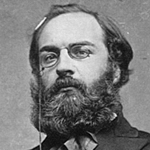
Raoul Rigault
Right on my subject. All the contradictions that Adam Gopnik mentions are themes of my novel in progress. I'd quibble with some of his characterizations — Raoul Rigault and others were no angels, communeux or communards (they themselves generally used the first term) were far less inclined to annihilate their enemies than were the Versaillais commanders, “well-dressed ladies” really did do some of those horrible things after the massacre (we have ample newspaper accounts, by foreign and presumably objective reporters). And and then there's this remark,
There are many instances in Merriman’s account of people being saved by accident or by the act of a charitable and decent individual. But there is scarcely an incident of a principled humanity, where one side or the other refused to massacre captured civilian prisoners or hostages on the ground that it was the wrong thing to do, rather than impolitic at that moment.
Yes, there were such instances, not only but mostly by "communards" — the most vivid testimony is in Vuillaume's "Red Notebooks"(also the best source on the crazed self-importance of Vuillaume's one-time friend Rigault). But in the last days and hours, the desperation of the Commune's defenders led to uncontrollable, mad rage on the last remaining, eastern streets of Paris. Eugène Varlin, draped in his official Commune sash, tried mightily but failed to save a group of hostages on the rue Haxo (image right).

A bloody mess, and it's true that the "Communards" were hardly united, except in their anticlericalism, and had they "won" or at least held out for a longer time, it's not at all clear that the progressive, democratic and humanitarian leaders among them would have ruled. Well, all this is rich material for my novel "The Bookbinder" (working title), which will be not only about the Paris Commune of 1871 but about us and our world today.

2014/10/22

An earthquake of a book about an earthquake event

Ten Days that Shook the WorldTen Days that Shook the World by John Reed
My rating: 5 of 5 stars

This vivid first-hand reportage of the first ten days of Bolshevik power, from the seizure of the Winter Palace in Petrograd, 25 October 1917 (by the Julian or Old Style calendar, which corresponds to 7 November 1917 in the Gregorian or New Style calendar) to its consolidation in Moscow and gathering force in the rest of Russia, is strongly partisan, pro-Lenin and the Bolsheviks, but also scrupulously documented and honestly, frankly observed. Reed describes the appearance, voices and quirks of the protagonists, including anonymous soldiers, sailors, Red Guards and workers, making apparent the chaotic, improvised character of most of the events, and the quick-witted decision-making and sometimes pitiless actions, especially those of the austere and uncompromising Lenin and the far more colorful, dramatic, and sarcastic Trotsky that repeatedly saved the Bolshevik insurrection from impending disaster. Reed does not hesitate to describe flaws, doubts and internal disputes, showing how precarious was their adventure and how close to failure. He collected leaflets, newspapers and bulletins from all parties, many of them reproduced in the book, and learned enough Russian not only to translate these but also to conduct interviews of Kerensky, Trotsky, Lenin and many other actors in this drama. Events in Petrograd and, later, Moscow are acutely observed, making this an indispensable account of the violent, chaotic, suspenseful first days of the seizure of power by masses of workers and soldiers with no administrative experience and, for all but the few intellectual leaders of the various parties, scant literacy or general knowledge of culture or history.
Those first ten days did indeed shake the world: they determined Russia's withdrawal from the Great European War, shaking diplomacy and strategy for all the other powers involved (Germany, Austria, England, France, the US especially), and created the beginnings of the hastily assembled Red Army which would eventually to triumph over the many fronts in the civil war in the world's largest nation, which was also one of Europe's least developed. The book itself continues to shake readers loose from more simplistic interpretations of this terribly complex series of events that redrew the lines of world power for the rest of the 20th century.
This 1922 edition is the first to appear with a foreword by Vladimir Lenin, encouraging all to read it. Reed was surprised and delighted to learn that Lenin had actually read it, and apparently was not offended by the very frank reporting that did not glorify the Bolsheviks, even though it supported them. Recognized even by the fiercest opponents of Communism as splendid and indispensable reportage, reader demand has not diminished and the book continues to be reissued by any number of publishers and in virtually all languages. Even if you have no particular interest in the Russian revolution (unlikely, but who knows?), you will find this book a model of vivid, scrupulous journalism — as Reed had already demonstrated in an earlier book, "Insurgent Mexico" but was unable to repeat after "10 Days," because he died in 1920 of typhus, in Russia. He was 33. He is buried alongside other revolutionary heroes just outside Lenin's mausoleum in Red Square.

View all my reviews

2014/10/07

Anti-boycott petition

This just come to my in-box from a scholar at Tel Aviv University. I agree (broadly) with the argument that an academic boycott is not the way to encourage dialogue, and dialogue is what we most need in the age of extremisms. Boycotts of many products may be effective, for example, a boycott of the Israeli weapons industry might be a very good thing — and might even make the Israel government respond. But boycotts of academic or any other intellectual interchange — "I refuse even to listen to you" sort of boycotts — will not only be utterly ineffective to change Israeli (or anybody's) policy, but will simply hamper much needed communication. 

They are seeking signature from academics, but I am not affiliated to any academic institution, so rather than sign I'm expressing my support here. Follow the link to read the petition, though I think Professor Dreyfus' presentation of the case is especially clear.
Friends,

May I suggest that you consider signing this petition against academic boycotts, specifically academic boycotts of Israel’s academic institutions, scholars and students. The petition originated in the USA but is intended to be signed by scholars in all
countries. 

Personally, I oppose much of our present government’s policies with respect to Palestinians and a Palestinian state. So do many of my colleagues. However, I oppose an academic boycott in principle (see Zvi Ziegler’s arguments below) and in practice: A boycott is likely to weaken voices against government policy and strengthen the right wing in Israel. 

Best wishes,

Tommy
Tommy Dreyfus

Zvi Ziegler is head of the committee gathering signatures. He writes,
Our approach is that academic boycotts are harmful to the progress of mankind , and that science should be pursued without discriminating against people on account of their race, gender, nationality, politics, etc. This approach is identical to the one expressed by several national academies of science, including the USA one.


2014/10/01

Brilliant images hold up a wispy tale

Light YearsLight Years by James Salter
My rating: 5 of 5 stars

Salter is famous for his beautiful sentences, beginning here with “We dash the black river, its flats smooth as stone. Not a ship, not a dinghy, not one cry of white. The water lies broken, cracked from the wind. This great estuary is wide, endless.”

The opening of Light Years seems to open a world, a very particular world of rough, unyielding nature — river, trees, rocks — and the precarious and unstable marks left by generations of humans, down to the youngest, two little girls who crouch outside the bathroom, urging their story-telling papa (who is soaking in the tub) to come out and tell them more about their pony that, according to him swims to the bottom of the river to eat the onions that grow there.

The little girls grow up, their story-telling father continues telling fables but mostly to himself, while their mother keeps trying out new ways, and new lovers, in a mostly unsuccessful effort to keep herself interested in life. Their pets, including that errant pony, a tailless dog and a turtle, grow old and all but the turtle die, as do some of this family's friends — lots of little events, and some bigger ones, occur over the 15-some "light years," 1958 to about 1973, through which we observe a man and a woman, the parents of those little girls, from their home in rural New York to their work and play in New York City, and then briefly (and separately) to Italy and Switzerland, before each — separately still — returns to the soggy land around that black river, its familiar buildings decayed and newer, unwelcoming ones thrown up as gaudy future ruins.

And that’s about it for the story. No one here is driven by any great, unforgiving ambition, but the man and woman and all their friends move mostly by inertia, nudged along at times by dreams and impulses, which are mostly disappointing when fulfilled. Still, the book is so beautifully written, the people are so believably individual, and the weather and texture and look of the sites so vivid, that it is a joy to read. The opening lines, about the river and the sea birds and its “dream of the past” are as entrancing as the opening lines of García Márquez’ One Hundred Years of Solitude, but with this difference: the first lines of the latter book — the Colonel facing a firing squad and remembering his childhood — contain the hint of the whole complicated story. In Light Years, there almost is no story beyond the images of different moments in the slow and uncomprehending maturing, or simply aging, of a man and woman as they drift apart and with no common project.


View all my reviews

2014/09/18

From the center of the maelstrom of the Paris Commune

Mes cahiers rouges: souvenirs de la communeMes cahiers rouges: souvenirs de la commune by Maxime Vuillaume
My rating: 5 of 5 stars

Maxime Vuillaume’s “red notebooks” (cahiers rouges) contain some of the most vivid first hand testimony of all the writings on the Paris Commune. Vuillaume knew almost all the major players, some of them very well, and was himself an important actor, as a founder and editor of one of the most popular newspapers of the Commune, Le Père Duchêne.

Only 26 when he barely escaped execution in the bloody final week of the Commune (May 20-28, 1871), Vuillaume wrote the first post-commune reports in clandestine documents from his exile in Switzerland, before the amnesty (1880) permitted him to return to France. For years, he was reluctant to publish his notes, for fear of injuring people still living or being sued by their descendants. But finally, some 30 years after the annihilation of the commune, a younger journalist, Lucien Descaves, persuaded him to put them into shape and publish them, and Vuillaume then also began to compose and publish additional "cahiers", sometimes correcting things in the earlier ones or adding detail, and sometimes taking on aspects of the Commune that he had not personally experienced but researched through documents and interviews. All of these, the earliest and most personal and the later researched reports, have been gathered together in this edition of the “red notebooks.”

Vuillaume's Père Duchêne was a foul-mouthed, rabble-rousing, over-the-top scandal sheet, in imitation of the original Père Duchesne of Jacques-René Hébert that rallied the sans-culottes from 1790 until Hébert was guillotined in 1794. As in the original version, the "Old Man" or "Père" of the title was the fictional voice of a man of the "people", i.e., the unprivileged, lambasting the rich, the clergy, and anybody else seen as an oppressor. Its readers probably knew the paper was not to be trusted — reporting events that may or may not have occurred — but they bought it anyway, so many of them that the paper made more money than expected. They must have delighted in the invective against the “jeanfoutres” and “bougres” (gross insults, common in speech but rarely seen in print in those days), meaning all those opposed to the Commune, including Catholic clergy, local bourgeois and the government in Versailles.

The more mature Vuillaume, traumatized by the horrific bloodshed and prolonged repression of the end of the commune, became a much more serious, careful and responsible reporter, but without losing his capacity for vivid and impassioned description. Thus all these reports or “notebooks” are well worth reading, even those that go over material also covered by his journalist contemporaries Prosper-Olivier Lissagaray and Jules Vallès (both of whom Vuillaume knew well). But by far the liveliest cahiers are those on the experiences closest to him: Cahier I, “Une journée à la cour martiale de Luxembourg,” describes the army's systematic killing of suspected communards after their final defeat and Vuillaume’s own very narrow escape from execution; III, “Quand nous faisions Le Père Duchêne,” about all that he and his equally young partners, Eugène Vermersch and Alphonse Humbert, had to go through to get the capital together, write and distribute a daily paper in that period of intense debate, street agitation and combats, and IV, “Quelques-uns de la Commune”, intimate portraits of communards including Raoul Rigault, who in his last days was the commune’s chief prosecutor. Samples from some of those sharp-tongued articles are included in this book, but for the most part, the mature Vuillaume writes a more temperate prose, but still with passion for the lost cause of the Commune.

See also my reviews of Jules Vallès' fictionalized account, L'Insurgé,  and Lissagaray's Histoire de la Commune de 1871

View all my reviews