2012/12/05

Blog Hop … The Next Big Thing

A day late and a dollar short. I was supposed to do my "Blog Hop" entry yesterday, but things happened — including, believe it or not, a visit by Omar Sharif to our little fishing village in Almería (Spain), where he filmed part of "Lawrence of Arabia" 50 years ago! But back to this blog hop.

Me reading at a local bookstore, Librería Nobel in Vera, Spain
Mary Tod tagged me for this "hop" which somebody (we don't know who) started and called THE NEXT BIG THING. The idea is for each author to answer 10 questions about a work in progress (WIP) or recently published book, and then tag other authors to do the same the following week. 

What is your book's title?
 
A Gift for the Sultan takes place in and around Constantinople in 1402, when that city was under ferocious siege by the Ottomans. I've already written here previously about its development, but answering these ten questions may be a good way to sum up the experience. My new novel, or WIP, is too fresh to talk about and as yet has not found its title.

Where did the idea come from for the book?

I had just completed a nonfiction book on social issues in the U.S. (Hispanic Nation, University of Arizona Press) and was ready for something completely different. On a visit to Istanbul and from there into the interior of Turkey, I was deeply impressed by the rich mix of cultures and overlapping histories of successive invaders and settlers, especially the long period of uneasy co-existence between the Greek-speaking, urbanized Christians and nomadic, newly Islamized Turks. And while reading up on that history, I was surprised to learn two facts. First, that Christian emperors and satraps had frequently offered their daughters in marriage to Turkish chieftans in order to buy peace. What, I wondered, would that sudden immersion in an utterly alien culture be like for the young Christian bride? Second, that under the terrible stress of bombardment and isolation, the ruler of Constantinople was prepared to surrender the city to the Sultan, but, afraid of the reaction of the populace, he had to carry out his negotiations in utter secrecy.  What were the many tensions within that city?  I was also thinking of the more recent siege of Sarajevo by Orthodox Serbs and other cities under stress.

What genre does your book fall under? 

It is being marketed as "historical fiction", but it is really, or also, a sociological study of the shifting alliances and betrayals that emerge when two powerful cultural systems — in this case, urban Greek-speaking Christians and Ottoman Muslims — collide. The fictional characters are closely patterned on real social types of that place and time, and everything I have invented is something that really could have happened that way. But "historical sociological fiction" is too unwieldy a label, so let's leave it as "historical fiction".   

Which actors would you choose to play your characters in a movie rendition? 

A Turkish translation of the book has just been published in Istanbul. I will be delighted if some Turkish filmmaker or TV producer takes it on, and casts some dashing, dark, 30-ish actor (there are several who might be available) as the Turkish warrior who is supposed to deliver the princess to the Sultan; a pretty young woman who can pass for the adolescent Greek princess who suddenly finds herself among the rough Turkish horsemen; and some good comic actors for the parts of the Christian merchant trying to profit from this new event, the English mercenary palace guard, and the various other Turkish, Greek and other personalities. 

What is the one-sentence synopsis of your book? 

A great city calls on all its resources — magical, military and monetary —to survive assault by a powerful urban force.

But there is another story, of special interest to  the readers of the Turkish translation The supremely arrogant sultan Bayezid, called "Thunderbolt" ("Yildirim" in Turkish), meets his downfall at the hands of the very astute, chess-playing war chief from Samarkand, Timur (Tamerlane). Even today, families in Turkey frequently name their sons Yildirim or Timur. 

Is your book self-published or trade published? (The original form of this question said "or represented by an agency?")  

Oddly enough, the answer is "Both". I published it myself in English in 2010. A major Istanbul publisher, Nokta Yayıncılık Dağıtım ve Pazarlama, then purchased translation rights and published it last month (November 2012).   

How long did it take you to write the first draft of your manuscript? 

A very long time. The original idea came to me on that first trip to Turkey in 1997. But I knew almost nothing about Turkey or what we call the Byzantine empire, their languages or customs, or the details of their long, involved history. I put the work aside several times and wrote other things (several short stories, journalistic articles), but I was too intrigued by the story to abandon it. I now know an awful lot about those peoples and their history, and even began studying Turkish. I completed the draft in 2008 or 2009.

What other books would you compare this story to within your genre?

I'm not modest. I'll say Tolstoy's War and Peace, for its interplay of sociology and history, and also certainly Albanian author Ismail Kadaré, The Siege. 

Who or What inspired you to write this book? 

My experience in Turkey, as described above, and also my reading of the news. I think there is much to be learned from this momentous conflict about Muslim-Christian relations today, and about the terrible fear and rage against urban civilization that motivates much of contemporary terrorism. 

What else about your book might pique the reader's interest?  

A very gallant, though very superstitious Ottoman warrior, and a bold and perky young Christian princess rebelling against the fate designed for her. And many dramatic and some quite comic scenes. 
 ∞∞∞∞∞

And here are some of the other blog-hopping authors you'll want to check out:

Jan Alexander is a fiction writer and financial journalist, currently putting finishing touches on a fantastical, satirical novel about New York, the new China, and the process of fictional creation. She plans to tell you all about it next week (December 12) on the blog of a small collective of writer-editors that she co-founded, http://thothbooks.blogspot.com.es/ 

Mary Tod, who "tagged" me for this post, is a writer of historical fiction whose blog has just that title: http://awriterofhistory.com/author/awriterofhistory/ Thanks, Mary, for the invitation to the blog hop.

Sophie Schiller is a writer of historical fiction and spy thrillers. She has a recent book called Transfer Day. Her own blog is at  http://sophieschiller.blogspot.com
Richard Sutton has written two novels, The Red Gate and Gatekeepers about the O'Deirg family and the ancient secret they are charged to protect. He blogs at  http://www.sailletales.com
Kirstie Olley lives in Australia and calls herself a speculative fiction writer. And she is pleased to have completed NaNoWriMo. She blogs at http://www.storybookperfect.com/.

2012/11/30

Musings : Shadow Dimensions: Plato's Cave, Wayang Kulit & the Literary Endeavor

Add caption
A reflection from a very thoughtful colleague. I loved her shadow-puppet analogy to the characters we create in our fiction. I think all of you, fellow writers and readers, will enjoy this.

Humble Musings of a Literary Kind: Shadow Dimensions: Plato's Cave, Wayang Kulit & the Literary Endeavor

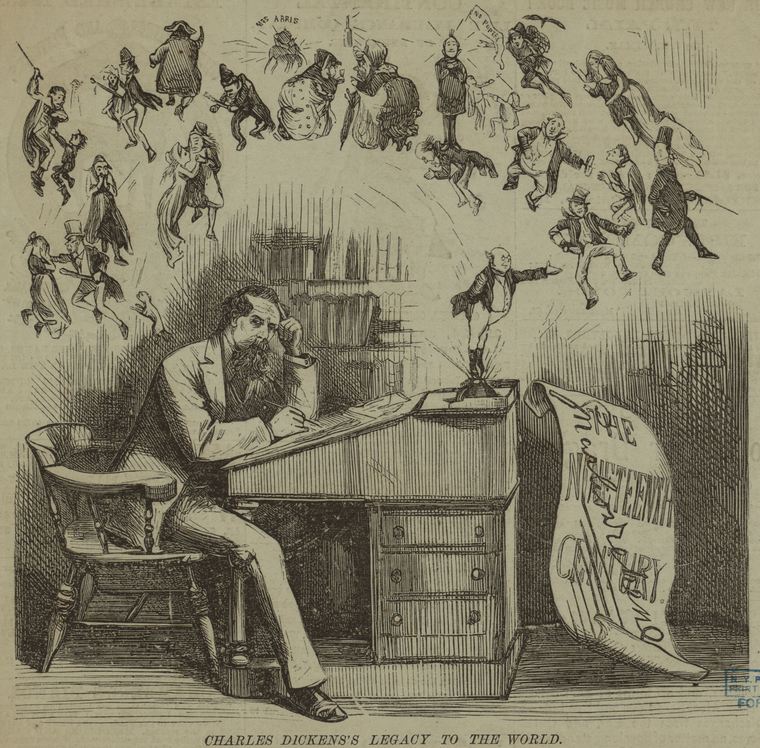
And along the same lines, some of the shadow beings that populated Dickens' brain, and from there to ours.

Image at top: Shadow theater (more information at this site)
Dickens and his characters from New York Public Library Print Collection

2012/11/29

"One World, Two Sultans"


BİR CİHAN İKİ SULTAN — "ONE WORLD, TWO SULTANS"

This is the Turkish translation of my novel A Gift for the Sultan, just published by Nokta publishers in İstanbul.

The phrase at the top is Timur ve Yıldırım'in Mücadelesi —“The struggle of Timur and Yildirim”

Timur was the khan from Samarkand we know as Tamerlane; Yildirim (or Yıldırım in Turkish), "Thunderbolt", was the nom de guerre of Sultan Bayezid (1354-1403), defeated by Timur in the Battle of Ankara, July 1402.

The novel is about much more than the struggle of these two fierce warriors — it is also about how a great city, Constantinople, confronts a terrible siege and about the complicated relations between Orthodox Greeks and Ottoman Muslims in this frontier period, when neither had unchallenged dominance of the region. But Timur and Yildirim's struggle is a big part of the story, and is of special interest to Turkish readers as part of their founding history.

A Gift for the Sultan (English-language original)


2012/11/27

Turkish edition of "A Gift for the Sultan"

I'm delighted to announce that the Turkish-language version of A Gift for the Sultan has just been published by Nokta in Istanbul and presented at the TUYAP International Book Fair in that city. The Turkish title is Bir cihan iki sultan ("One World, Two Sultans").

2012/11/19

Top Ten Ingredients of Favourite Historical fiction - A Writer of History

Here's a thoughtful discussion, sparked by historical fiction author Mary Tod and continued in a whole series of lively comments.

Top Ten Ingredients of Favourite Historical fiction - A Writer of History

I think she's got a good list of the most common features of popular historical fiction. But I don't take it as a recipe for my own work, and I don't suppose any serious writer would. For me, the aims of re-imagining events of the past are, first, to learn something that might be useful in our future actions, and second, to understand better how things got the way they are. My novel about the 1402 Ottoman siege of Constantinople (A Gift for the Sultan) is really about how any great city draws on its most diverse resources when under tremendous stress, and also about how such a polyglot, multiethnic and territorially expansive system as the Ottoman Empire (with all its consequences down to the Balkan wars of the 1990s and Syria today) got its start.

Drifting through Paris in the 1980s

Dans le café de la jeunesse perdueDans le café de la jeunesse perdue by Patrick Modiano
My rating: 4 of 5 stars

Beautifully told, sad story of a lost child of Paris in the 1980s, whose brief passage through their lives has left an indelible and unresolved impression on at least four men who knew her. Daughter of an unwed mother with a night job in Le Moulin Rouge, disappointed and ashamed because of her rejection of admission by the Lycée Jules-Ferry (her one attempt to escape her poor routine), Jacqueline Delanque drifts into a cocaine habit with a new, more sophisticated girlfriend, then drifts into the Café Condé where the habitual idlers baptize her "Louki"; she also allows herself to be pulled into an insipid marriage with the much older director of a real estate agency where she finds work as a temp, but finding no satisfaction in his house or his circle of friends, simply decides not to return there one night but to stay with a boyfriend almost as aimless as she. She is remembered years later by a former student in l'École de Mines, by the private investigator hired by her husband to find her, and by the boyfriend who perhaps, in his immature manner, also drifting, perhaps loved her.

Besides all these people, the quartiers of Paris, each with its social class connotations, and their changing character since those days when "Louki" frequented the Café Condé, are characters in the novel.

This is the first Modiano I've read. I'll want to read more of such beautiful, lyrical expression. And maybe improve my French enough to review him in that language.

View all my reviews

2012/11/17

Generations of mothers of rebellion

A good friend and colleague has commented about the Agnès Poirier article I praised here recently, disputing her characterization of the Paris Commune of 1871 as "the mother of all rebellions." In his note he reminds me of many of the earlier ones, some much, much earlier, and of course the Révolution Française of 1789. I think we should give the journalist a little latitude — she needed a quick, economical phrase. But let's consider why and how the Commune mattered, and if it was a "mother," what have been its children?

The motherhood of revolution must go back to Eve, the original rebel. That is, if we mean "origin". But of course revolution has had many generations of mothers, each spawning offspring that had to adapt to its times.

What caught the attention of everybody in the late 19th century, revolutionary or counterrevolutionary, was that the Commune erupted in one of the principal cities of industrial capitalism. This could mean either that it was the last flare of the big one of 1789 or the harbinger of an ever more potent urban revolt. And that among the declarations of the communards were visions of a society that translated Liberté, Égalité, Fraternité into what were then modern, practical terms.

The Commune and all the earlier revolutions my friend mentions were many things at once, aiming in different directions, impelled by different and often contrary groups. I'm drawn to the communards because they are more of my time than Saint-Just, Robespierre, Danton et al., in language and proposals. Europe and the world had changed enormously since the revolution of 1789, in large part because of that revolution (and American independence, and Napoleon and his wars, and of course the steam engine, etc.).

To us today, pre-1789 is a much more foreign place than 1871. When I read about poor, brave Eugène Varlin, or about the women at the barricades (there were hardly any in 1789, but they were everywhere in 1871), they stir memories of our own days of rebellion, of 20th century Communists I've known, of debates I suffered and engaged in. Like all analogies, reading 1871 through, say, 1968 or the 1970s distorts both, I know that, but still, they stir me. And I want to get to know them better, by imagining their lives in my novel. They (the metalworkers, bookbinders and seamstresses, to name 3 of the main participating occupational groups) feel closer to me than the sans culottes, but if I live long enough, maybe one day I'll want to write about them too.

In any case, the Commune acknowledged its own "mothers" and "grandmothers" — especially 1789, 1830 and 1848 —  and its offspring have included Lenin's and Trotsky's concepts of revolution, much of the language and aims of the Spanish Second Republic (the one finally defeated by Franco), the many guerrilla movements in Asia, Africa and Latin America in the 1960s, '70s and '80s, and even in rebel discourse today.

2012/11/10

Understanding the society that produced the Commune

Paris Babylon: the Story of the Paris Commune Paris Babylon: the Story of the Paris Commune by Rupert Christiansen
My rating: 5 of 5 stars

Wittily told and extensively researched, this brief account of the Second Empire, the Franco-Prussian War and the Commune has two special merits. First, it is more sociological than ideological: Christiansen aims neither to condemn nor exalt the revolutionary Communards or the Versaillais who tried (and ultimately succeeded) to destroy them, but rather to understand all sides. He is of course appalled by the atrocities, a few by the communards (much exaggerated by Versailles propaganda, but there were some) and far more by the Versailles government troops, especially during the semaine sanglante and following, but such horrors by one side do not necessarily justify the decisions and confusions by the other. The book's second great virtue is its descriptions of curious aspects of Paris and Louis Napoleon's II Empire on the eve of the series of disasters that destroyed it: war with Prussia, then the siege of Paris and finally the Commune. There is a brief account of Baron Haussmann's transformation of the city's space, and its unintended social and economic consequences. And the chapter, "The Spermal Economy," on French medical opinion and prejudices about sex (how much to indulge and how, and how upper-class men used the Opéra as their exclusive brothel) is very amusing, though of doubtful relevance to the Commune, whose proletarian defenders' sexual behavior surely had little to do with such official notions. The account of the war is too brief to understand it, and the intense debates among Blanquistes, Prudhonniens and Marxistes, Républicains, and monarchists and other conservatives, are merely alluded to.

For readers new to the subject, this book provides a lively and fair overview of events, with bibliographic notes for those who want to understand more. And for anyone, its anecdotes and portraits, e.g. of the Empress Eugénie and of the pathetic and mysteriously uncommunicative Emperor, or Haussmann and even of the young and insolent Rimbaud (who may or may not have got to Paris during the Commune — we don't really know) make it a lively and suggestive addition to the bibliography.

For me, as I continue developing my new novel around this dramatic episode, it will be more helpful for portraying the bourgeois, in the middle between the great revolutionary and reactionary forces. 

View all my reviews

2012/11/09

Afghanistan: a personal view of the traumas

The Kite RunnerThe Kite Runner by Khaled Hosseini
My rating: 3 of 5 stars

A rich boy grows up with a terrible sense of shame for a childhood act of cowardly betrayal, and only decades later redeems himself in a punishing campaign requiring great courage. This is the story thread for a book that is really about the traumas of Afghanistan, in its several stages: from the almost feudal stability under the king (overthrown in 1973), when the narrator's widowed merchant father and others in the dominant Pashtun ethnic group could live very comfortably at the expense of the despised Hazara servant caste, to the Communist government where the push for rapid reforms and the rise to power of other ethnic groups (including Hazara) roused violent resistance, to the triumph of the Taliban, celebrated as liberators but then quickly become far worse tyrants than any of their predecessors. The descriptions of how such a rapid chain of disasters affected the urban, educated Kabul élite are vivid and memorable. Also closely observed and moving is their struggles to cope with their sudden plunge of status as exiles in California, the narrator's once-powerful father as a gas station attendant, an ex-general living on his pride and the dole, and both of them trying to sell junk in a weekend market. All this makes the book worth reading — though the story is too melodramatically neat, every punishment exactly fitting the crime. There's also a movie, which is much weaker and insipid, because it leaves out all that makes the book's episodes scary in order to focus on the thin story of redemption.

View all my reviews

The book should be a stimulus to find out more of what's behind the current disasters of that country. Hosseini does not pretend to any political acuity, that is, he does not attempt to evaluate or explain these huge events, but he may lead the reader to try to find out more. The conditions of the Hazara people , for example, have been a major part of the nation's drama but little discussed outside the country — or even among Afghans, because it's a source of shame. We really need to re-examine the Communist period, which began to accomplish many good things, especially in reforming ethnic relations and opening opportunities to women, before the resistance by patriarchal tribal leaders, abetted by the U.S., escalated the violence and the Soviet army invaded with all the usual clumsiness of invaders, causing the violence to escalate even more, and so on. There were some missed chances for creating a freer society. 

La Commune: a lesson in audacity | Agnès Poirier | Comment is free | guardian.co.uk

Here's an excellent summary which will help you understand why I feel passionate enough about this episode to make it the center of my new novel — which I am just now starting.

La Commune: a lesson in audacity | Agnès Poirier | Comment is free | guardian.co.uk