Before continuing about Mario Vargas Llosa and Euclides da Cunha and Brazilian history, I have to say something about Cartagena, Spain. I made my first visit last week and it made a powerful impression.
First, there's the spectacular setting, built on the peaks and dips of mountains around a bay ground out by millenia of waves pounding on the rock — the east coast of the Iberian peninsula — that forms the western wall of the Mediterranean sea. And then there are layer upon layer of human history, preserved in the fragments of ancient and newer streets and buildings and waterworks since Hasdrubal (Hannibal's younger brother) renamed it Carthago Nova ("New Carthage") in 228 BC. (See Cartagena Spain - Google Maps. Carthage was based in what is now the Gulf of Tunis.) A Roman theater has been partially restored, and a separate Roman circus, and the Vandals and Visigoths and Byzantines and Moors were also here.
Susana and I went with two friends, artist Ernesto Pedalino and publicist Dora Revinski to see the art installations in Manifesta 8, scattered in various structures around town. Some of the art responded very effectively to its setting, especially the creations in the former prison of San Antón, where we had the added advantage of an actual convict, formerly a prisoner in San Antón and full of stories of what life was like there, as guide. But what most impressed me was the giant Refugio or air raid shelter dug out of the Cerro de Concepción by pick-and-shovel miners during the civil war. Cartagena, the Second Republic's main naval base,was bombed heavily and repeatedly by German aircraft, 1936-1939. To protect as many people as possible, refugios were dug or built in many places in the city and outlying areas. This was the largest, with a capacity for 5,500 people. A very knowledgeable guide led us through the galleries, showing us how families tried to survive in the dark, compact spaces and explained the terrible problems of health care, food rationing and, of course, hoarding and hunger. Though suffering near starvation and massive destruction, Cartagena hung on until March 30, 1939, being the last Spanish city to fall to the forces of Francisco Franco.
You can see images of the war in Cartagena here: La Guerra Civil Española en Cartagena. I won't soon forget them.
Manifesta 8
Cartagena, Spain - Wikipedia, the free encyclopedia


2010/10/20
History, fiction and historical fiction
In my review agenda that I posted last month, I promised to write something about two closely related, big, important books on Brazil: Euclides Da Cunha, Backlands : the Canudos Campaign, trad. Elizabeth Lowe (New York: Penguin Books, 2010), and Mario Vargas Llosa, La guerra del fin del mundo (Madrid Spain: Punto de Lectura, 2008). Vargas Llosa's recent and belated Nobel recognition may make readers especially interested in this and all of his fiction.
But to my annoyance, my alter ego Baltasar Lotroyo has beaten me to the punch with his own blog entry: Lecturas y lectores: Ficción, historia, ficción histórica. As you see, if you read even a little Spanish, I've plagiarized his title. And for those who don't read Spanish easily, I'll sum up his main points.
Balta begins by quoting Vargas Llosa from a recent interview, “I have never written a historical novel.” And then goes on to mention three of Vargas Llosa's novels situated in and based on extensive investigation of historical events: his latest, El sueño del celta; his La fiesta del chivo, and the one that concerns us here, La guerra del fin del mundo.
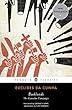 This dense, long, and powerfully moving book (first published in 1981) is dedicated to Euclides da Cunha, “a tragic figure and one of the greatest of Latin American narrators,” known today almost exclusively for his great book Os sertões, which has been recently re-translated as Backlands: the Canudos campaign
 . (There is also an earlier translation, Rebellion in the backlands
 , 1957, by Samuel Putnam — but probably harder to find now.) So let's begin with Da Cunha and his story, considered by many Brazilians to be the greatest work of literature their country has produced.
In 1889, Brazilian military units backed by the urban elites of Rio de Janeiro and Salvador da Bahia, deposed the aging Emperor Dom Pedro II and declared the country a Republic, and the new republican rulers initiated a whole panoply of reforms meant to “modernize” the country, that is, to make it look more like the European countries they emulated. Just the year before, Dom Pedro had finally succeeded in pushing through the abolition of slavery, and for this and other reasons he was revered by many of the poor, non-urban, non-propertied, illiterate or barely literate majority of Brazilians. Nor did these poorer, non-elite groups understand or accept such changes as the introduction of the metric system, a census, increased taxes.
In the deep backwoods of the northeastern state of Bahia, with a mestizo population — whites, Amerindians, blacks and various combinations — and a primitive economy of hard-scrabble agriculture and cattle-raising, where the mounted police rarely entered the dense scrub, gulleys, canyons mountain peaks and bandits roamed at will, the people were especially suspicious. And when a tall, thin, ascetic preacher with penetrating gaze and a direct line to the will of the Good Jesus walked barefoot into their villages, telling them everything that was wrong with the republic and urging devotion to the Good Jesus and to the traditional ways, more and more of those villagers and wanderers followed him. His name was Antônio Vicente Mendes Maciel, but he was known as Antônio Conselheiro ("the Counselor"). And this was the unlikely, and to city folks from Rio or Salvador incredible, beginning of what grew into a massive and extremely bloody revolt against the new state.
(To be continued)
But to my annoyance, my alter ego Baltasar Lotroyo has beaten me to the punch with his own blog entry: Lecturas y lectores: Ficción, historia, ficción histórica. As you see, if you read even a little Spanish, I've plagiarized his title. And for those who don't read Spanish easily, I'll sum up his main points.
Balta begins by quoting Vargas Llosa from a recent interview, “I have never written a historical novel.” And then goes on to mention three of Vargas Llosa's novels situated in and based on extensive investigation of historical events: his latest, El sueño del celta; his La fiesta del chivo, and the one that concerns us here, La guerra del fin del mundo.
This dense, long, and powerfully moving book (first published in 1981) is dedicated to Euclides da Cunha, “a tragic figure and one of the greatest of Latin American narrators,” known today almost exclusively for his great book Os sertões, which has been recently re-translated as Backlands: the Canudos campaign. (There is also an earlier translation, Rebellion in the backlands, 1957, by Samuel Putnam — but probably harder to find now.) So let's begin with Da Cunha and his story, considered by many Brazilians to be the greatest work of literature their country has produced.In 1889, Brazilian military units backed by the urban elites of Rio de Janeiro and Salvador da Bahia, deposed the aging Emperor Dom Pedro II and declared the country a Republic, and the new republican rulers initiated a whole panoply of reforms meant to “modernize” the country, that is, to make it look more like the European countries they emulated. Just the year before, Dom Pedro had finally succeeded in pushing through the abolition of slavery, and for this and other reasons he was revered by many of the poor, non-urban, non-propertied, illiterate or barely literate majority of Brazilians. Nor did these poorer, non-elite groups understand or accept such changes as the introduction of the metric system, a census, increased taxes.
In the deep backwoods of the northeastern state of Bahia, with a mestizo population — whites, Amerindians, blacks and various combinations — and a primitive economy of hard-scrabble agriculture and cattle-raising, where the mounted police rarely entered the dense scrub, gulleys, canyons mountain peaks and bandits roamed at will, the people were especially suspicious. And when a tall, thin, ascetic preacher with penetrating gaze and a direct line to the will of the Good Jesus walked barefoot into their villages, telling them everything that was wrong with the republic and urging devotion to the Good Jesus and to the traditional ways, more and more of those villagers and wanderers followed him. His name was Antônio Vicente Mendes Maciel, but he was known as Antônio Conselheiro ("the Counselor"). And this was the unlikely, and to city folks from Rio or Salvador incredible, beginning of what grew into a massive and extremely bloody revolt against the new state.
(To be continued)
My video on A Gift for the Sultan
In this informal 7-minute video I say how A Gift for the Sultan is a radical break from what I've written up to now (almost all of it on Latin America) but also how it is a continuation of my life-long concerns with the conflicts and interpenetrations when cultures collide. I also show you a bit of the place where I live and work. We taped it for my Amazon Author page, where it should show up tomorrow. Meanwhile, you can see it here on YouTube.
2010/10/18
Updated author page
 I've just updated my Amazon Author Page, with a profile and another, happier photo of me — there's no room for modesty when you're trying to sell your books —and more info on the books. Soon, maybe even later today, I plan to put up a short video explaining how and why I wrote my latest novel, A Gift for the Sultan, and showing the place where I work (it's really lovely).
There's a link at the bottom of the Amazon.com page that opens when you click on any of my books (they've got seven listed, but one title twice, so it's really only six). If I've done this right, an RSS feed should place this and other new Literature & Society blog posts there, too.
2010/10/14
Casualty of War and Spanish Economy
Sensitive report on a complicated problem we have been watching here in Spain:
Memo From Mollet De Vallès - A Casualty Both of War and the Spanish Economy - NYTimes.com
Memo From Mollet De Vallès - A Casualty Both of War and the Spanish Economy - NYTimes.com
2010/10/08
Obama in Command: The Rolling Stone Interview | Rolling Stone Politics
Eloquent. Persuaded me, mostly. Except we're still waiting for a more realistic policy in Afghanistan.
Obama in Command: The Rolling Stone Interview | Rolling Stone Politics
On the other stuff, I think he's right, and even on Afghanistan — well, we know the other guys, the GOP, would only make things worse, so BHO is the best man available. (Thanks to friend Sylvia for forwarding this link.)
Obama in Command: The Rolling Stone Interview | Rolling Stone Politics
On the other stuff, I think he's right, and even on Afghanistan — well, we know the other guys, the GOP, would only make things worse, so BHO is the best man available. (Thanks to friend Sylvia for forwarding this link.)
2010/10/07
BBC News - The Nobel and the ignoble
The big news is that Mario Vargas Llosa finally has been awarded the Nobel Prize. But while reading the BBC account of that, I came across this oddity:

BBC News - Guayabera shirt now official Cuban formal dress code
And these people still think of themselves as “revolutionary”. And who do you suppose is going to iron the things?
As an unrelated item, Vargas Llosa's recognition gives me great satisfaction. I often disagree with him politically, but I respect his serious engagement with politics even if from erroneous neoliberal premises. Most of all, I admire his art and tremendous industry in producing novels that show a rich, complex world far beyond his doctrine or mine.
When I think about V LL and me, I am reminded of Pablo Neruda's late poem “El enemigo” about an encounter with an old ideological adversary. It ends…
(That's rather loose, but “incomprehension” is closer to Neruda's meaning than “obscurity”. Perhaps “lack of clarity” is closest, except it's too wordy.)
BBC News - Guayabera shirt now official Cuban formal dress code
And these people still think of themselves as “revolutionary”. And who do you suppose is going to iron the things?
As an unrelated item, Vargas Llosa's recognition gives me great satisfaction. I often disagree with him politically, but I respect his serious engagement with politics even if from erroneous neoliberal premises. Most of all, I admire his art and tremendous industry in producing novels that show a rich, complex world far beyond his doctrine or mine.
When I think about V LL and me, I am reminded of Pablo Neruda's late poem “El enemigo” about an encounter with an old ideological adversary. It ends…
And there we were, each one / with his certainty honed / and hardened by time / like two blind men, each defending / his incomprehension.Allí estabamos cada unocon su certidumbre afiladay endurecida por el tiempocomo dos ciegos que defiendencada uno su oscuridad.
(That's rather loose, but “incomprehension” is closer to Neruda's meaning than “obscurity”. Perhaps “lack of clarity” is closest, except it's too wordy.)
Other gifts for other sultans
While googling for my book's title, I came across the charming and informative article by Peter English.
Saudi Aramco World : A Gift for the Sultan
The sultan in question is Murad (or Murat) III, nearly two centuries later than the one who figures in my novel, but this is a fascinatingly detailed account of an incident in British and Ottoman diplomacy.
I've also just discovered another novel with the same title as mine, A Gift for the Sultan , published nearly 50 years ago and described as “the intimate novel of a young girl sold into slavery.” According to a reviewer, it is “Based on the true story of Helen Gloag, a Scottish girl that will become the wife of the Sultan of Morocco, after being captured by wild pirates and sold as a slave. Interesting details of the life of the Sultan's court and Middle Eastern culture.” Not my story, and not the same sultan.
There's no end of stories about “gifts” to some sultan or other, usually a girl for the harem, as in Colin Falconer's novel The Sultan's Harem, 1992: “Hurrem, a young, red-headed nymph was "imported" by a prince or "Pasha" of the empire as a gift for the Sultan along with other girls.” (From a reader's review).
The one in my novel is Yildirim Bayezid, the first Ottoman to assume the Arabic title sultan, which he thought would give him more prestige than the traditional Turkish khan. And the “gift” here is the city of Constantinople itself, whose ruler is willing to surrender because…
But read the novel. Especially if you're interested in the history of Muslim-Christian conflicts and connivances, which become quite complicated when money was/is involved.
Saudi Aramco World : A Gift for the Sultan
The sultan in question is Murad (or Murat) III, nearly two centuries later than the one who figures in my novel, but this is a fascinatingly detailed account of an incident in British and Ottoman diplomacy.
I've also just discovered another novel with the same title as mine, A Gift for the Sultan
, published nearly 50 years ago and described as “the intimate novel of a young girl sold into slavery.” According to a reviewer, it is “Based on the true story of Helen Gloag, a Scottish girl that will become the wife of the Sultan of Morocco, after being captured by wild pirates and sold as a slave. Interesting details of the life of the Sultan's court and Middle Eastern culture.” Not my story, and not the same sultan.There's no end of stories about “gifts” to some sultan or other, usually a girl for the harem, as in Colin Falconer's novel The Sultan's Harem, 1992: “Hurrem, a young, red-headed nymph was "imported" by a prince or "Pasha" of the empire as a gift for the Sultan along with other girls.” (From a reader's review).
The one in my novel is Yildirim Bayezid, the first Ottoman to assume the Arabic title sultan, which he thought would give him more prestige than the traditional Turkish khan. And the “gift” here is the city of Constantinople itself, whose ruler is willing to surrender because…
But read the novel. Especially if you're interested in the history of Muslim-Christian conflicts and connivances, which become quite complicated when money was/is involved.
2010/10/06
Labors of self-promotion
I've just spent the whole day updating (and renaming) my website, now called Fiction & Social Thought (I thought it would be too confusing to have two "Literature & Society" pages). Please take a look and let me know what you think. It was time for an overhaul, especially now that I have a new novel out.
And for those few of you who have read it in advanced copies, now that it is at Amazon, be the first (or the second or the third) to review it! Please!
P.S. The image of the book cover (left) sometimes comes up and sometimes doesn't. If not, try refreshing your screen.
And for those few of you who have read it in advanced copies, now that it is at Amazon, be the first (or the second or the third) to review it! Please!
P.S. The image of the book cover (left) sometimes comes up and sometimes doesn't. If not, try refreshing your screen.
2010/10/05
Walter James Miller Obituary
I just learned of the death of my dear friend and mentor. He was always encouraging of my work, and I had hoped to share with him my new novel. Even in his nineties, he remained active as a writer, lecturer and reader. A dear, adventurous, generous man.
Walter James Miller Obituary: View Walter Miller's Obituary by New York Times
Among many other things, he did several ambitious translations from the French. This is one of them.
Walter James Miller Obituary: View Walter Miller's Obituary by New York Times
Among many other things, he did several ambitious translations from the French. This is one of them.
Subscribe to:
Posts (Atom)