2013/03/07

Holy Lands

I promised some weeks ago to describe our trip. Here at last is a full, detailed narrative, not by me but by Susana Torre, who has been my traveling companion on this and many other adventures through the years. Susana drafted this as a letter to friends, and she has graciously permitted me to post this somewhat edited version for the general public.
 
1/2013 - SUSANA AND GEOFF’S TRIP TO JORDAN, ISRAEL, AND THE WEST BANK

         We were drawn to these lands for may reasons — including history, topography and current events and we also wanted to know how the regional conflict is experienced on a day-to-day basis. The research we did before traveling made me realize that the conflict was already embedded in the two checkpoints of the partition plan of 1947, which had created geographically fragmented states. It is a conflict that continues to be driven by extreme ideological positions and contradictory factors, such as very real security issues for Israel vs. the Israeli settlements encroaching on Palestinian territories, heavily subsidized and protected by the Israeli army. And Israel’s relations with its immediate neighbors, historically and currently, are also essential to the regional story, so we took advantage of this trip to also visit Jordan.

JORDAN
I did not want the experience of crossing the Israel/Jordan checkpoint at the Allenby/King Hussein Bridge to contaminate the beginning of our trip. The reported minimum of three hours it takes to clear security in a militarized and chaotic environment (after a 3-4 hour taxi drive from Tel Aviv) was more than I wanted to endure after our 5-hour flight from Madrid. So we killed some time at the airport and took the direct 50-minute flight to Amman’s Queen Alia airport. But we skipped Amman, choosing instead to sleep in Madaba, where we could start our journey with a view of the 6th century mosaic map on the floor of St. George’s church. The work of unknown Greek Orthodox monks, it is the oldest known geographical depiction of biblical territories, from Lebanon to the Nile delta and from the Mediterranean to the Arabic desert. The central and best-preserved part of the mosaic is “HAGIA POLIS IERUSALEM” — “Holy City Jerusalem” — whose Damascus Gate was the point used to measure distances to all cities in the map. Outside, the hustle of the dusty provincial town center was amplified by the visual clutter of campaign posters strung across commercial streets for candidates to the Parliament’s 140 seats (only 10% of which are reserved for women).
Having little confidence in public transportation, which was scarce and, we were told, unreliable, we hired a taxi to take us to Petra via the King’s Highway. This ancient road, now paved but still meandering, winds through the desert and up to the ridge of the eroded red landscape of Wadi Mujib, as magnificent as the Grand Canyon, before reaching Kerac. This is one of the most impressive of a series of crusaders’ castles whose ruins crown the mountains throughout the region, ghostly reminders of the constancy of wars. When we arrived in Petra in mid-afternoon the sunlight was quickly fading, coloring the hills a dull, dusty red.
Petra: Treasury. 3 Jan. 2013
We spent all of the following day in the vast archaeological site of the ancient Nabatean city which Pliny the Elder described as a center for caravan trade. We walked through the narrow, mile-long siq, whose stone walls sometimes resemble fabric pushed and pulled by wind and water. Then the stone becomes, suddenly, architecture, in the culminating view of the Treasury, the most elaborate and well preserved of the façades hewn into the sandstone cliffs that surround the site at one end of Wadi Musa (Moses’ Valley). Their doorways sometimes (but not always) lead to shallow caves. The dominant use of these carved facades was funerary, so one has to imagine a vast gathering of tents or mud buildings --long disappeared-- enclosed by tombs. It is understandable why Sextus Florentinus, Roman governor of Arabia, wanted to be buried here in AD 129, where he could remain surrounded by all that beauty long after the living had departed.
On the steep climb to the High Place of Sacrifice (460 feet above the ground!) we encountered little souvenir tables staffed by Bedouin women and children, who clamber up the cliff every day. On the way down, Hanan besieged me in perfect, nuanced English learned as a child from the tourists, to please be her first client that day, so I obliged with the purchase of a small forged-iron horse and a donkey made in her village with the same tools and formal ideas as in ancient figurines. Later, we would have to hire the actual beasts to see the rest of the site when our legs could no longer support us. We were grateful for the paucity of tourists in winter, because the silence and immensity of the desert were exquisite and not to be disturbed, an experience that was even more heightened in Wadi Rum the following day.
Wadi Rum, 4 Jan. 2013
In Wadi Rum, we were Mohammed Hammad’s only customers for the daylong tour with overnight at one of the many tent camps in the desert. Mohammed’s cousin Musa -- the only Bedouin nurse in the village’s infirmary on his day off-- was our guide in his dilapidated jeep. Later, Musa would instruct us in the simple certainties of the Bedouin way of life – “man is man, and woman is woman”. And you become a man when your father leaves you alone as a child in the desert for a few days to fend for yourself.
YALLAH! “Let’s go!” he would happily scream while dropping sideways without holding the wheel to emphasize that there were no roads or traffic rules to guide our itinerary. Yet, the visitor’s experience is structured by highlights – such as a huge tree growing in the sand, a hidden spring, an exceedingly strange rock formation, or glyphs encoding information for ancient caravans -- each with a name, sometimes inspired by T. E. Lawrence’s writings or David Lean’s movie about him. While Geoff climbed the “Red Sand Dune”, I sat down and watched the red sand paint the side of a rock cliff. This slow and almost imperceptible activity so utterly transformed the cliff that I renounced all climbing opportunities for the rewards of contemplation.
Wadi Rum is the kind of place that could be called sublime, where awe, fear and an irresistible surrender of reason to sight, touch and smell, combine to stir up something deep inside. When we returned to Rum Village at sundown we learned that all the houses were inside sub-tribal family compounds, marked by waist- or shoulder-high mud walls. The exception was Mohammed Hammad’s house, ornate and decorated like no other and in its own plot, a rebellious sign of individualistic modernity, where our host is never long separated from his computer and Wi-Fi connection. Regrettably, we didn’t spend that night alone in the desert because we had to leave before dawn to catch our plane back to Israel. On this return trip we took the aptly named Desert Highway, straighter and faster than the King’s Highway, making part of the trip through a red sand storm.

JERUSALEM AND TEL AVIV
We arrived in Ben Gurion Airport in the morning on Shabbat, when public transportation closes down. But we did find a sherut (shared cab) to take us to Jerusalem. It was raining lightly, an anticipation of the impending storm that would leave that city and all major highways leading to it paralyzed two days after our arrival. We stayed in a grand old guesthouse in the old city’s Armenian quarter, near the Jaffa Gate and the turbaned stele marking the tombs of Suleyman’s architects, whom he had executed because they had left the grave of King David (a prophet of Islam) outside the city walls. The old city is a labyrinth of streets with entrances to courtyards surrounded by dwellings, with the exception of the colonnaded Roman Cardo and the Jewish quarter. All synagogues and one third of the quarter were destroyed when Jordan occupied the city after the 1948 war. It was rebuilt, when Israel took control of the city after the Six-Day War (1967), to include the big plaza in front of the Western Wall and to create public open spaces and modern apartment buildings clad with the same stone as the old.


Ethiopian Monastery, Roof of The Holy Sepulcher Church   

Old Jerusalem impressed us as a kind of hospice, where each group of inmates, wearing exaggerated identity markers, is locked inside its own religious and existential truth. You see them all over, at all times of day and night, alone or in groups: Armenian monks in pointy headgear mimicking the shape of Mount Ararat; Haredi men dressed up for the Shabbat in huge flattened fur hats; Catholics in tunics dragging full size crosses along the souvenir market that now occupies the Via Dolorosa; Greek Orthodox priests in tall cylindrical hats and chest-size silver crosses. You don’t see the Ethiopian monks on the streets, as they seem to spend most of their time inside the diminutive mud huts of their monastery built on the public access roof of the Church of the Holy Sepulcher. Inside the church, a variegated mob engaged in various rituals. Many believers seemed to be in a kind of orgasmic ecstasy, prostrated over a stone the length of a human body, frantically rubbing on it the plastic bags containing their purchases. It is said to be the stone where Mary washed Jesus’ body after it was taken down from the cross.
Armenian monk
How do they know? Saint Helena, mother of the Byzantine emperor Constantine, was largely responsible for establishing the now accepted map of Christianity’s sacred places when she traveled to Palestine at her son’s behest to recover relics. She relied on oral traditions almost 300 years after the facts, and on her suspicion that pagan temples had been erected over places revered by Jesus’ followers to erase the memory thus located. I left convinced that Old Jerusalem should belong to no country. A place so fiercely disputed for centuries should be strictly administered by a neutral international agency, not subject to the pressures of power politics (as if this was actually possible).
Outside the old city there is a modern Jerusalem, where a park-like precinct including the Knesset, the Supreme Court and various administrative buildings, stake Israel’s claim to Jerusalem as the state’s capital. At the Israel Museum, also within the precinct, we ran through the fierce rain to enter the subterranean gallery housing the Dead Sea scrolls found in Qumran, considered the work of the ascetic Truth searchers known as the Essenes (2nd C BC to 1st C AD), a model for current-day haredim. I very much wanted to see Yad Vashem, the matrix of all modern memorials to crimes against Humanity, but we encountered its forbidding gate locked up due of the snow storm, the worst in two decades.
In Tel Aviv we felt relieved to find another side of Israeli society --the democratic, argumentative, self-doubting, sophisticated, ethnically mixed, outward-looking one. The people we encountered eschewed certainty, believed in dialogue and toleration, and were generally critical of their government’s policies regarding the occupied territories. Tel Aviv is a dynamic and ambitious city where the “garden city” urban fabric of the central district, proposed by Patrick Geddes in the late 1920’s became populated by the largest concentration of Bauhaus-inspired buildings anywhere in the world. Not all are well designed, and many are in disrepair, but they reminded us, along with the kibbutz movement, of the optimistic, modern Nation-building during the State of Israel’s first decades. Within and outside this core, huge new residential and hotel towers, many on the waterfront, are drastically changing the scale of the city, threatening to replace much of the old neighborhoods, like Neve Tzdek, or block public access to the boardwalk.

THE WEST BANK
Before we left home, I had found a small Israeli tour-operator eager to show life on the West Bank, and we signed on for two day trips — in the company of Yamen, a lively and humorous Palestinian guide with Canadian citizenship.
Palestinian authority territory area A ahead. Entry to Israeli citizens is forbidden. Dangerous to your lives and is against the Israeli Law.” So read the sign at the crossing point. A law openly broken by many. The taxi with Israeli plates that had picked us up at the Jerusalem YMCA left us at the bridge with the huge warning signs. From that point onwards Yamen would take us to Jericho, Qumran, the Jordan River and the Dead Sea the first day, and to Camp Aida, Bethlehem and Ramallah the second. On our way to the 5th and 6th century cliff-hanging Greek Orthodox monasteries (St. George, Mar Saba) we heard the long litany of big and small ways in which the Israeli government make the lives of Palestinians miserable and anxiety-ridden. Restriction of movement between cities; access forbidden to Jerusalem; being forced to fly from Jordan to go abroad (even if you are a Canadian, like Yamen’s wife, but married to a Palestinian); being forced to close down shops that face the separation wall; confiscation of land or forbidding their use for cultivation if it adjoins a Jewish settlement; unreliable water supply; searches at checkpoints, and so on. Yamen was proud of having been Banksy’s contact for the implementation of the Flower Thrower and the girl registering the Israeli soldier, his well-known murals on the separation wall. The wall has become, on the Palestinian side, a gallery to display the work of the world’s best-known street artists as well as those of amateur graffitists. Another Berlin Wall waiting to fall.
We found submerged in the Jordan River four of the many Russian tourists we had encountered, covered only with wet T-shirts acquired at the shop near the place where Jesus had been allegedly baptized. The young Jordanian and Israeli soldiers guarding their respective banks could not take their eyes off the spectacular blonde and the only man, who was using his iPad inside the river to document his own baptism.
There seems to be a construction boom going on in Ramallah, perhaps in anticipation of the city becoming the capital of some future state. We stayed to have dinner with one of Geoff’s former academic colleagues, an Israeli Palestinian (raised as a Catholic) married to an American. He is an anthropologist, as critical of Al Fatah and Hamas as he is of Israel, convinced that those two competing Palestinian authorities are both in corrupt complicity with the State of Israel to administer the colonies and manage the conflict.
The snowfall had also paralyzed traffic in Ramallah. In the morning, young men were staging a battle with snowballs around the new fountain surrounded by giant lions (made in China) that marks the town center. Finally a friendly young man found us a taxi that took us to the Kalandia checkpoint, where we arrived just in time to switch to an Israeli sherut to take us back to Jerusalem. Israeli soldiers checked our I.D. inside the bus, saving us the unpleasantness of crossing the oppressive, jail-like long corridors on foot.
Banksy: Flower Thrower, on the security wall, Bethlehem
Geoff and I differ on when the conflict is likely to be resolved. I feel it could take another generation or two, when the Israeli and Palestinian children that are now being educated together will grow up and challenge the incrusted enmity, set aside the mutual grievances, have the courage to demolish or turn over some settlements, and tear the wall down. Geoff believes that it could happen sooner — the politicians bent on keeping the conflict going are widely discredited among their own constituents on both sides, and the tremors of resistance (more visible in Israel, with its greater freedom of expression, but present in subtler form in Palestinian territory) could become an upheaval.  
 Either way, it would also help to recognize that the 19th century notion of nation-state with defensible boundaries would make no sense in the 21st. And that other ways exist to define place for an “imagined community”, such as “The Arc”, a proposal by Douglas Suisman that uncannily echoes my own thinking on this subject: http://www.rand.org/pubs/research_briefs/RB9119/index1.html

2013/02/17

The Oscar for Best Fabrication - NYTimes.com

Connecticut Civil War Battle Flag
The Oscar for Best Fabrication - NYTimes.com

I'm with Maureen Dowd on this, and with Lincoln, who is quoted (by Connecticut Congressman Joe Courtney) as saying, ‘Truth is generally the best vindication against slander.’

Bards, poets and novelists, from Homer through Shakespeare to Gore Vidal or anybody writing today, have always gleefully distorted history when they chose to produce more pleasing fiction. Thus a neatly coherent and conclusive fiction, especially one that fits our prejudices, becomes our substitute for the real, messy and far more complex events of real history.

Was there really a Trojan War, and were its heroes really that heroic? Was Richard III really that bad? If we are using history just to tell a good story, and if the history is very remote from our daily lives, maybe it doesn't matter. Especially since Richard III's descendants are not likely to sue the heirs or producers of Shakespeare. Or the descendants of Menelaus, however miffed they may be. But if we are using fiction to teach history, especially about something that is still a hot current issue, like slavery, then it matters.

I'm happy to leave Tony Kushner's screenplay the way he wrote it, but I think it would be good for high school teachers to make students aware of the distortion. Not because this historical detail (whether they were Connecticut or Illinois senators who voted "Nay" on abolition) is so terribly important (except perhaps to Connecticutians), but because it can help make the students more wary consumers of movies, novels and other political mythmaking.


2013/02/06

Getting back on track

Lawrence and camel, from Jordan Jubilee
(Photo is probably fake, like Lawrence.)
Hi, everybody. We're back from our travels and I am now resuming work on my novel. The trip to Israel was a major detour, which then led me into other byroads (readings and discussions related to the region, some of which I've mentioned in my blog) taking me far off the track. To show how far afield I've wandered, I even got into T. E. Lawrence's version of his terror campaign against the Ottoman empire, partly because I wanted to re-read his descriptions of Wadi Rum (he writes it "Rumm") and the breakup of that territory. All of it fascinating, and possibly material for a future novel or short story or several essays, but marching to Damascus in 1918 or Jerusalem in 1947 (with Amos Oz) is not going to get me any closer to Paris, 1871. I still owe my readers reviews of some of this material, including the short novel by Oz, another one by Israel's Nobel-prize winning Agnon, David Grossman's sensitive (but dated) reportage on the occupied territories, and Lawrence's tendentious and fascinating tale of his adventures — bloody, comical and homo-erotic by turns — and self-acknowledged treachery of the Arabs. And then I want to drop the subject, at least for a while.

Meanwhile…

Monument aux victimes des Révolutions, construit dans le square Samuel-de-Champlain le long du Père-Lachaise, avec les pierres originales du mur. (Wikipedia)
Back on track, since I'm the only one imposing deadlines on myself, I've decided generously to extend this one. I now propose to finish my draft of the novel about Paris by my birthday, in April. This is to give the concept of "deadline" a more literal sense, though maybe I should call it a "lifeline". Anyway, a birthday is a convenient marker. I'll tell you more as it develops. So far I have my main characters and the story thread — though not its conclusion — clearly in mind, which is a good start.

2013/01/28

Daily lives and cruel choices under occupation

Qissat: Short Stories by Palestinian WomenQissat: Short Stories by Palestinian Women by Jo Glanville
My rating: 3 of 5 stars

These twelve stories are diverse in every way but one: they are all by women whose lives have been distorted by the loss of a homeland they can call their own, whether their own remembered loss or that of their elders. Some of the authors are exiles too young to have known Palestine and who write in English, for others expulsion is a compulsive, constant memory, while some endure and write from within the occupied territories and in its language. They are all worth reading, to gain an understanding of the costs of exile and occupation, in Palestine and in other parts of the world. Those experiences present people with cruel choices of collaboration, resignation, or resistance, of saving one's livelihood and family or one's dignity. It is never clear which is the truer choice or the more honorable.

To my mind, the most affecting story is by Lina Badr, a novelist and short-story writer in Arabic, living in Ramallah (and active in cultural affairs of the Palestinian Authority), "Other cities." Jordanian-born Umm Hasan ("mother of Hasan"), mother of six, dreams obsessively of spending a few days away from little Hebron, one of the most intensely occupied and harassed towns controlled by the Israelis, to the relative freedom of Palestinian-administered Ramallah; but she is married to a totally unsupportive cousin (Abu Hasan, "father of Hasan") who has not bothered or not dared to get her the necessary Israeli papers to legalize her status in the occupied territories, and she as the wife is not permitted to apply on her own. Passage from one town to the other, though only a few kilometers apart, requires passing through multiple Israeli checkpoints, which will require credentials, and she cannot imagine leaving her six children behind — for shame and because Abu Hasan certainly wouldn't take care of them; how she manages to achieve her modest goal, and incidentally embarrass an Israeli captain who has held up the travelers out of boredom or spite, not only describes some of the multiple indignities under the occupation but also hints at the moral damage it inflicts on the occupiers.

View all my reviews

2013/01/25

Shameful episodes in stunning prose

We bought this book in Tel Aviv last week, just days after viewing the exhibit and film Alone on the Walls about the heroic but ultimately failed struggle of residents of Jerusalem's "Jewish Quarter" against the assault by overwhelming forces of the Arab Legion and other Arab armies. A few dozen young men with small arms and lots of ingenuity, aided by women, children and the elderly, managed to hold off the siege for 150 days, from December 1947 to final surrender in May 1948. It is a powerful, moving story, documented by a photojournalist who, in disguise, accompanied the Jordanian troops and was able to get close to the attackers and, after the defeat, to the defeated.

But the 1948 Arab-Israeli war, like all wars, was morally complicated. This famous book by a prolific and highly respected Israeli novelist probes actions of Israeli forces that cannot inspire pride, and that help explain the deep pain and anger of Palestinians today.

Khirbet KhizehKhirbet Khizeh by S. Yizhar
My rating: 5 of 5 stars

Published (in Hebrew) in 1949, just months after the events it describes, this was the first novel to (as the author himself described it years later) "[lay] bare the original sin of the State of Israel": the forcible, violent expulsion, killing, and razing of the homes of Palestinian villagers whose ancestral lands happened to fall on the Israeli side of the 1948 partition — the expulsion that Palestinians remember as the Nakba or "Catastrophe." Yizhar (Yizhar Smilansky) was a Sabra, born in Eretz Yisrael (in Rehovot) in 1916, 31 years before there was a state of Israel. He writes with an understanding of his Israeli character's psychology from the inside, which makes his portrait of a young Israeli soldier on a mission of what we would now call "ethnic cleansing" sharply, shudderingly convincing. The IDF detail assigned to erase the village of Khirbet Khizeh in the 1948 war is supposed to believe that they are acting in self-defense, that the villagers are all potential terrorists. But as the day of shooting at and sometimes killing fleeing men, mindlessly slaughtering farm animals, terrorizing women, children and old men too infirm to run, and blowing up houses continues, with no sign of an enemy weapon or hostile reaction anywhere, the soldier wonders what in his God's name he and his fellows are doing if not recreating the Jews' own history of exile.
"All at once everything seemed to mean something different, more precisely exile. This was exile. This was what exile was like. This was what exile looked like . . ."
But the young soldier does not bring himself to resist an order, and he does not dare to appear soft or Arab-loving to his comrades, so ever more reluctantly he continues with his squad until the village and its lives are totally destroyed. But his shame continues to haunt him. The book was a best-seller in Israel when re-issued in 1964 and was for a time required reading in high schools. Its merit is not merely its denunciation of "the original sin" but also its exquisite description of landscape, people, sensations and the doubts of the young soldier. It reads brilliantly in this translation by ; it must be wonderful in Hebrew.

For another review, thoughtful and seemingly well-informed, see Jacqueline Rose's "rereading" from the Guardian.

View all my reviews

2013/01/24

Jordan's desert vastness and ancient cities

Photo by G. Fox, 4 January 2013
As you see, it was quite a journey to the great desert canyon of Wadi Rum, where caravans have passed and Bedouins have trekked, warred and trafficked for ages, and where T. E. Lawrence based his operations during part of the guerrilla war against the Ottomans, 1917-18. And where much of the movie about him, "Lawrence of Arabia," was filmed more than 50 years ago. 

We had three priority destinations in Jordan. First, the mosaic map in Madaba; next and more important, the ancient city, or cemetery, or whatever it was, of Petra, and finally, this amazing canyon, Wadi Rum. 

The mosaic floor map in Madaba, 25 km southwest of Amman, was originally composed of over two million tesserae by Greek-speaking Christians between 1540 and 1570. The map disappeared under the rubble of the razed church in the Persian conquest of 1614, until the surviving central portion was "rediscovered in 1884, during the construction of a new Greek Orthodox church on the site of its ancient predecessor." (Wikipedia: Madaba Map). Check out another site, Sacred Destinations, for more images, especially of the central portion showing the major buildings of Jerusalem at that time. At the top you can read (in Greek letters) "HAGIAPOLISIEROUSA…", i.e., "Holy City Jerusa…," all run together as one word and missing the last tessarae, which must have been LEM. It's the oldest surviving map of the city, and its scale and depictions are amazingly accurate for 6th century cartography.

Al Khazneh or The Treasury at Petra
Not much more to see in Madaba, at least for us non-Arabic speakers, so we moved on quickly to Petra. This city in a desert canyon had been settled by 1550 BCE, was built up with elaborate temples and a controlled water supply by the Nabateans beginning around 312 BCE, was further developed by Greek and then Roman conquerors, some of whom left great tombs for themselves, and was not abandoned until a major earthquake destroyed many buildings and its water system in 363 CE ("Common Era," what Christians call "AD").   We trudged all over — the site is immense — and climbed to some impossible heights to stand on ancient altars, got rooked by some charming, thieving Bedouin children (we foolishly exchanged their euros for dinars, confused by their smiles into thinking the bills were of equivalent value). After a few hours we were too exhausted to face the trek back to the entrance, and took the "desert taxis" — a Bedouin-guided horse for Susana, a donkey for me. Here is my photo of "the Treasury," just to prove I was there — you'll find many better images on the 'net, if you haven't been there yet.

For me, though, the high point of our Jordan visit was not a city but a building-free desert canyon of shifting sands, great craggy rocks, changing colors and more Bedouins — especially our young adult hosts and guide. This will be for my next note. The intersection of geology and humanity made a deep impact on me, as it had on Col. Lawrence and on almost everyone else who has seen Wadi Rum. 

Thanks to Eva Borsody for pointing me to Guy Delisle's illustrated narrative, Chronicles of the Holy City.  This review by Rupert Christiansen will give you some idea — from the sample and description, it looks great. Delisles lived there for moret han a year and knows the city much better than we could, but his amazement and perplexity at the enormous contradictions were much like our own. I'll get to our Jerusalem experience in a future note — after Wadi Rum.

2013/01/23

In the holy lands

Armored dove on the separation wall — a Banksy production
Susana and I returned home to Spain on Sunday, after our two-week exploration of Israel, the West Bank, and a little bit of Jordan. I'll be telling you more about our experiences over the next few days; it was too much for a single brief note on a blog, and too much to assimilate so quickly.

We met with Bedouins in Jordan, Palestinians in Israel and the occupied territories of the West Bank, and with Israeli Jews, including some dear friends from the past and a few newer friends on both sides of the ugly separation wall. Meanwhile, here is a story we've been following and which illustrates the gross failure of the Netanyahu policies.

Israel removes Palestinian protest camp outside Jerusalem - Israel News | Haaretz Daily Newspaper

More on this in the next few days, and on our conversations with Jews and Arabs, and on the books we have been reading — David Grossman, Amos Oz, Agnon, Yizhar, a collection of stories by Palestinian women, and even T. E. Lawrence.  Shalom and Salaam alaikum.

2013/01/07

Travels with Kindle

We've begun the year AD 2013 in the birthplace of the great myths of the West, the monotheism of the Jews and its offshoots in Christianity and Islam. This is also (according to Mayan astronomers) the beginning of the first Baktun of what must be the Fifth Creation (the Fourth Creation, as we all know, ended last December, but without dramatic consequences), an excellent time for new ventures.

Last week we were in Jordan: Madaba, Petra, and Wadi Rum. Then on Shabat we arrived in Jerusalem, where I am writing this from, of all places in this city of so many faiths, the Lutheran Guest House, quite comfortable and perfectly located in the Armenian Quarter of the old city, with a view of the Dome of the Rock Yesterday we took a tour with a Palestinian guide (not permitted to enter Jerusalem) to Jericho, Qumran and the edge of the Dead Sea, with stops at Greek monasteries precariously perched in the mountains, the spot on the Jordan River where Jesus is said to have been baptized, and got views of the Cave of Temptation (from below -- we didn't climb) and too many monstrous Jewish settlements that have taken Palestinian land and water. As we were the only tourists (our guide sometimes has as many as ten), the guide brought along his family, so we had plenty of opportunity to learn from them of life for the Palestinians in a fragmented territory with many restrictions and checkpoints. I'll be telling you more of this later; today I can't delay, because we have much more to see.

And, oh, my title: "Travels with Kindle". Inspired, of course, by Kapuscinski's "Travels with Herodotus" (you can read my review in the archives of this blog or on Goodreads). While in Jordan, I logged on and downloaded T. E. Lawrence's Seven Pillars of Wisdom (Wadi Rum is one of the places he stopped on his adventures, and was also the setting for a major part of the movie Lawrence of Arabia), and here I've been reading short stories by Palestinian women to help me understand the life and history here. More later.

2012/12/17

Momentous minutiae

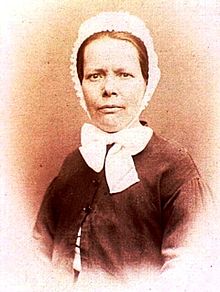
Nathalie Lemel
A reflection by fiction-creating colleague P. J. Royal (Historical Context and the Art of Exclusion) reminds me of how the minutiae we find in our research can give new twists or meanings to our stories. Some seemingly unimportant detail may reveal the mechanism that made people in another time and place act the ways they did. In A Gift for the Sultan, the way a man wraps his turban and whether and when he chooses to do it are not just costuming, but a whole attitude of defiance, or arrogance, or sometimes anxiety. In my present novel in progress, I'm looking for clues in daily lives of the people of Paris to explain their extraordinary behavior in the Commune of 1871. What made so many ordinary, working-class Parisians, men an women, risk everything — and ultimately, most of them, lose everything — for it? And just what was it they thought they were defending?

The disastrous (and utterly unnecessary) war with Prussia and the huge French casualties; the winter-long siege and bombardment of their city, along with the paralysis of production, employment and income and the shortage of food; the sense of national humiliation before Prussia and of betrayal first by their Emperor and then by a new government that promised only greater exploitation and the elimination of hard-earned rights; and the anxiety produced by all this and so little expectation of relief — these were all components for combustion of a large, proud, densely populated city, suddenly abandoned by its government and police forces. Without knowing any more, we might expect riots, crime, vandalism. Instead, we see a social revolution where hitherto unknown men and women rose to police the city, maintain the roads, hospitals and schools and keep the factories and commerce functioning, all the while fighting to defend it and making all major decisions even as to military defense by majority vote, for a few weeks from March 18 to the end of May, «au temps des cérises», spring 1871.

Why, I wonder, were bookbinders so prominent? Not only the energetic and audacious Eugène Varlin and the woman he encouraged in the leadership in the bookbinders' union he created, the equally amazing Nathalie Lemel. There were many others, now anonymous, among the most active communards. Was there something about the way they used their hands and all their senses in their craft that made them especially quick to react and adapt to rapidly changing circumstances? Or was it mainly their contact with books that enabled them to envision a better world?    

And the other crafts. What about all those metalworkers who died at the barricades? And seamstresses? Hands and hand skills, hearts, neighborhoods, trade affiliations — everything is relevant when your fighting with all you have and for all your worth. Every known detail I discover helps me imagine the others.

2012/12/05

Blog Hop … The Next Big Thing

A day late and a dollar short. I was supposed to do my "Blog Hop" entry yesterday, but things happened — including, believe it or not, a visit by Omar Sharif to our little fishing village in Almería (Spain), where he filmed part of "Lawrence of Arabia" 50 years ago! But back to this blog hop.

Me reading at a local bookstore, Librería Nobel in Vera, Spain
Mary Tod tagged me for this "hop" which somebody (we don't know who) started and called THE NEXT BIG THING. The idea is for each author to answer 10 questions about a work in progress (WIP) or recently published book, and then tag other authors to do the same the following week. 

What is your book's title?
 
A Gift for the Sultan takes place in and around Constantinople in 1402, when that city was under ferocious siege by the Ottomans. I've already written here previously about its development, but answering these ten questions may be a good way to sum up the experience. My new novel, or WIP, is too fresh to talk about and as yet has not found its title.

Where did the idea come from for the book?

I had just completed a nonfiction book on social issues in the U.S. (Hispanic Nation, University of Arizona Press) and was ready for something completely different. On a visit to Istanbul and from there into the interior of Turkey, I was deeply impressed by the rich mix of cultures and overlapping histories of successive invaders and settlers, especially the long period of uneasy co-existence between the Greek-speaking, urbanized Christians and nomadic, newly Islamized Turks. And while reading up on that history, I was surprised to learn two facts. First, that Christian emperors and satraps had frequently offered their daughters in marriage to Turkish chieftans in order to buy peace. What, I wondered, would that sudden immersion in an utterly alien culture be like for the young Christian bride? Second, that under the terrible stress of bombardment and isolation, the ruler of Constantinople was prepared to surrender the city to the Sultan, but, afraid of the reaction of the populace, he had to carry out his negotiations in utter secrecy.  What were the many tensions within that city?  I was also thinking of the more recent siege of Sarajevo by Orthodox Serbs and other cities under stress.

What genre does your book fall under? 

It is being marketed as "historical fiction", but it is really, or also, a sociological study of the shifting alliances and betrayals that emerge when two powerful cultural systems — in this case, urban Greek-speaking Christians and Ottoman Muslims — collide. The fictional characters are closely patterned on real social types of that place and time, and everything I have invented is something that really could have happened that way. But "historical sociological fiction" is too unwieldy a label, so let's leave it as "historical fiction".   

Which actors would you choose to play your characters in a movie rendition? 

A Turkish translation of the book has just been published in Istanbul. I will be delighted if some Turkish filmmaker or TV producer takes it on, and casts some dashing, dark, 30-ish actor (there are several who might be available) as the Turkish warrior who is supposed to deliver the princess to the Sultan; a pretty young woman who can pass for the adolescent Greek princess who suddenly finds herself among the rough Turkish horsemen; and some good comic actors for the parts of the Christian merchant trying to profit from this new event, the English mercenary palace guard, and the various other Turkish, Greek and other personalities. 

What is the one-sentence synopsis of your book? 

A great city calls on all its resources — magical, military and monetary —to survive assault by a powerful urban force.

But there is another story, of special interest to  the readers of the Turkish translation The supremely arrogant sultan Bayezid, called "Thunderbolt" ("Yildirim" in Turkish), meets his downfall at the hands of the very astute, chess-playing war chief from Samarkand, Timur (Tamerlane). Even today, families in Turkey frequently name their sons Yildirim or Timur. 

Is your book self-published or trade published? (The original form of this question said "or represented by an agency?")  

Oddly enough, the answer is "Both". I published it myself in English in 2010. A major Istanbul publisher, Nokta Yayıncılık Dağıtım ve Pazarlama, then purchased translation rights and published it last month (November 2012).   

How long did it take you to write the first draft of your manuscript? 

A very long time. The original idea came to me on that first trip to Turkey in 1997. But I knew almost nothing about Turkey or what we call the Byzantine empire, their languages or customs, or the details of their long, involved history. I put the work aside several times and wrote other things (several short stories, journalistic articles), but I was too intrigued by the story to abandon it. I now know an awful lot about those peoples and their history, and even began studying Turkish. I completed the draft in 2008 or 2009.

What other books would you compare this story to within your genre?

I'm not modest. I'll say Tolstoy's War and Peace, for its interplay of sociology and history, and also certainly Albanian author Ismail Kadaré, The Siege

Who or What inspired you to write this book? 

My experience in Turkey, as described above, and also my reading of the news. I think there is much to be learned from this momentous conflict about Muslim-Christian relations today, and about the terrible fear and rage against urban civilization that motivates much of contemporary terrorism. 

What else about your book might pique the reader's interest?  

A very gallant, though very superstitious Ottoman warrior, and a bold and perky young Christian princess rebelling against the fate designed for her. And many dramatic and some quite comic scenes. 
 ∞∞∞∞∞

And here are some of the other blog-hopping authors you'll want to check out:

Jan Alexander is a fiction writer and financial journalist, currently putting finishing touches on a fantastical, satirical novel about New York, the new China, and the process of fictional creation. She plans to tell you all about it next week (December 12) on the blog of a small collective of writer-editors that she co-founded, http://thothbooks.blogspot.com.es/ 

Mary Tod, who "tagged" me for this post, is a writer of historical fiction whose blog has just that title: http://awriterofhistory.com/author/awriterofhistory/ Thanks, Mary, for the invitation to the blog hop.

Sophie Schiller is a writer of historical fiction and spy thrillers. She has a recent book called Transfer Day. Her own blog is at  http://sophieschiller.blogspot.com
Richard Sutton has written two novels, The Red Gate and Gatekeepers about the O'Deirg family and the ancient secret they are charged to protect. He blogs at  http://www.sailletales.com
Kirstie Olley lives in Australia and calls herself a speculative fiction writer. And she is pleased to have completed NaNoWriMo. She blogs at http://www.storybookperfect.com/.