Showing posts with label Fiction. Show all posts

2015/01/06

Historical fiction: impossible and necessary

Anyone who has seriously attempted it knows the impossibility of representing past events authentically, as they were lived and felt by the people involved. Michael Graves was surely aware of this impossibility when he impersonated a Roman noble of the 1st century A.D. in I, Claudius. John Fowles, in The French Lieutenant's Woman, interrupts his narrative to acknowledge the impossibility of truly understanding the thoughts of his character Smithson, who is, like Fowles, an Englishman and lived only a bit more than a century before Fowles' book. People then just didn't think the way we do. Even in our own families, in overlapping generations, grandchildren and grandparents are often bewildered by one another's reactions and behaviors.

There are authors unaware of this gap, and who present a Cleopatra or a soldier of Napoleon's Grande Armée as though they saw the world just like, say, a contemporary American teenager or a Green Beret. They put contemporary characters into past situations, changing little more than the wardrobe. But when you and I read historical fiction, we demand something more. We want to get into the minds of those very foreign people. People in the past just don't think and act the way we do. It's not just a question of how much they know or what tools or weapons they have available — all that is important — but, more mysteriously, the ways their brains are configured.

The biggest break between one kind of thinking and another comes, historically, with literacy. As Julian Jaynes, Walter Ong, and the pioneering work of Vygotsky and Luria in Uzbekistan and other neuroscientists and diverse scholars have made clear, the neural paths that connect and stimulate different parts of the brain change enormously with literacy. As Jaynes put it, preliteracy we used to hear voices that seemed to come from afar but were really memories stored in one hemisphere of the brain, whereas learning to read connects the two hemispheres so that one half of the brain is aware of what the other half is firing off in electrons.

But the changes don't end there. Even in a society where everyone is literate, new technologies — the telegraph, then the telephone, then TV, and on to Smartphones and Whatsapp — create new neurological connections. Our concepts of time have changed enormously, but also our sense of relationships in an era where one can suddenly acquire a zillion "friends" or even "followers" without leaving home.

In my case, in my novel in progress, I'm trying to understand and to present to readers the thinking of people who acted in — whether for or against or just trying to survive — the Paris Commune of 1871. They spoke a different language from the one I'm using, but more than that, they lived in a culture that was more oral than ours (not everybody knew how to read, and only a minority read anything at all complicated), where inner city mobility was either on foot or by horse-drawn vehicle or on horseback, and where relationships — men and women, or comrades of the same sex, or rivals — obeyed different traditions from ours. 

But we must try to reach them, if we are to understand anything about the Commune and thus to understand how the western revolutionary tradition emerged and how it has changed. We can come closer to understanding if we read carefully what they themselves said about it, and the testimony left by survivors of the bloody massacre of May 1871, together with court transcripts and newspaper reports and other documents, is abundant. We can come closer, but we cannot quite reach them. So my solution, like Fowles' in The French Lieutenant's Woman, is to acknowledge the gap, to let readers know that I am aware that those people are and ever will be different from us.

References:
Julian Jaynes, The Origin of Consciousness in the Breakdown of the Bicameral Mind
Walter Ong, Orality and Literacy 
On Lev Vygotsky and Aleksandr Luria:
Michael Graves, I, Claudius
My novel in progress: The Bookbinder 
 

2014/12/18

The Paris Commune, and them and us

Fighting Over the Paris Commune | The New Yorker 

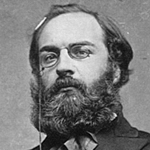
Raoul Rigault
Right on my subject. All the contradictions that Adam Gopnik mentions are themes of my novel in progress. I'd quibble with some of his characterizations — Raoul Rigault and others were no angels, communeux or communards (they themselves generally used the first term) were far less inclined to annihilate their enemies than were the Versaillais commanders, “well-dressed ladies” really did do some of those horrible things after the massacre (we have ample newspaper accounts, by foreign and presumably objective reporters). And and then there's this remark,
There are many instances in Merriman’s account of people being saved by accident or by the act of a charitable and decent individual. But there is scarcely an incident of a principled humanity, where one side or the other refused to massacre captured civilian prisoners or hostages on the ground that it was the wrong thing to do, rather than impolitic at that moment.
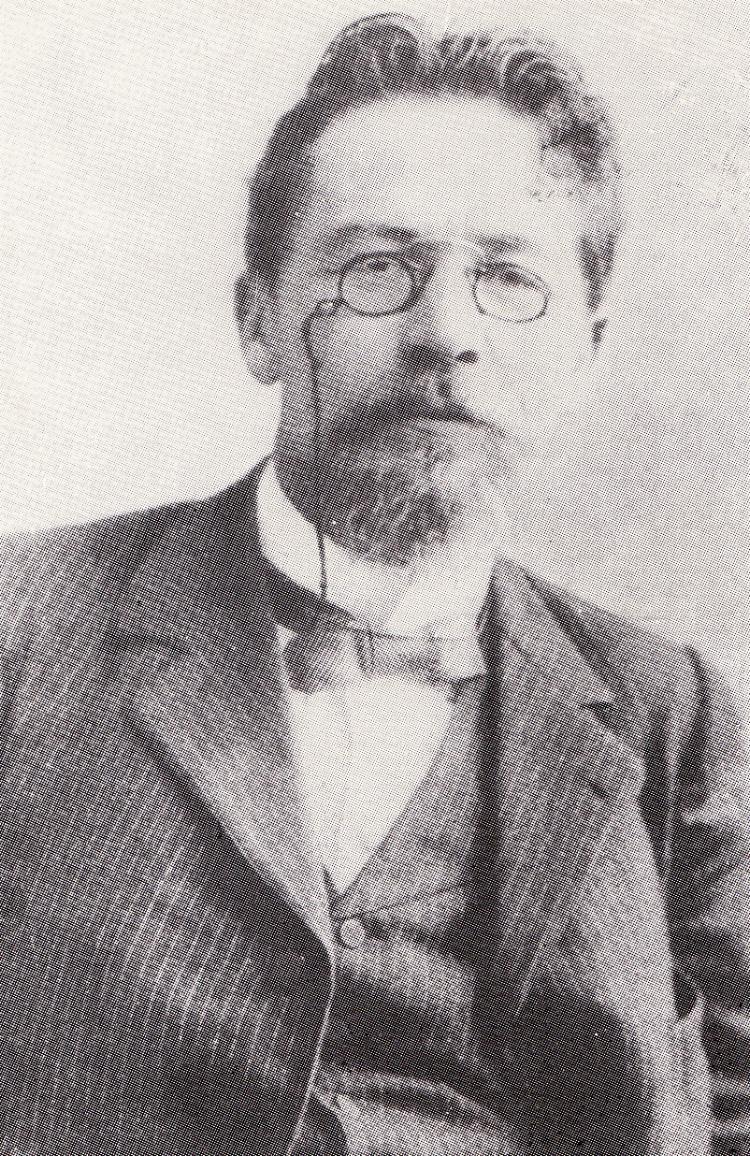
Yes, there were such instances, not only but mostly by "communards" — the most vivid testimony is in Vuillaume's "Red Notebooks"(also the best source on the crazed self-importance of Vuillaume's one-time friend Rigault). But in the last days and hours, the desperation of the Commune's defenders led to uncontrollable, mad rage on the last remaining, eastern streets of Paris. Eugène Varlin, draped in his official Commune sash, tried mightily but failed to save a group of hostages on the rue Haxo (image right).

A bloody mess, and it's true that the "Communards" were hardly united, except in their anticlericalism, and had they "won" or at least held out for a longer time, it's not at all clear that the progressive, democratic and humanitarian leaders among them would have ruled. Well, all this is rich material for my novel "The Bookbinder" (working title), which will be not only about the Paris Commune of 1871 but about us and our world today.

2014/10/01

Brilliant images hold up a wispy tale

Light YearsLight Years by James Salter
My rating: 5 of 5 stars

Salter is famous for his beautiful sentences, beginning here with “We dash the black river, its flats smooth as stone. Not a ship, not a dinghy, not one cry of white. The water lies broken, cracked from the wind. This great estuary is wide, endless.”

The opening of Light Years seems to open a world, a very particular world of rough, unyielding nature — river, trees, rocks — and the precarious and unstable marks left by generations of humans, down to the youngest, two little girls who crouch outside the bathroom, urging their story-telling papa (who is soaking in the tub) to come out and tell them more about their pony that, according to him swims to the bottom of the river to eat the onions that grow there.

The little girls grow up, their story-telling father continues telling fables but mostly to himself, while their mother keeps trying out new ways, and new lovers, in a mostly unsuccessful effort to keep herself interested in life. Their pets, including that errant pony, a tailless dog and a turtle, grow old and all but the turtle die, as do some of this family's friends — lots of little events, and some bigger ones, occur over the 15-some "light years," 1958 to about 1973, through which we observe a man and a woman, the parents of those little girls, from their home in rural New York to their work and play in New York City, and then briefly (and separately) to Italy and Switzerland, before each — separately still — returns to the soggy land around that black river, its familiar buildings decayed and newer, unwelcoming ones thrown up as gaudy future ruins.

And that’s about it for the story. No one here is driven by any great, unforgiving ambition, but the man and woman and all their friends move mostly by inertia, nudged along at times by dreams and impulses, which are mostly disappointing when fulfilled. Still, the book is so beautifully written, the people are so believably individual, and the weather and texture and look of the sites so vivid, that it is a joy to read. The opening lines, about the river and the sea birds and its “dream of the past” are as entrancing as the opening lines of García Márquez’ One Hundred Years of Solitude, but with this difference: the first lines of the latter book — the Colonel facing a firing squad and remembering his childhood — contain the hint of the whole complicated story. In Light Years, there almost is no story beyond the images of different moments in the slow and uncomprehending maturing, or simply aging, of a man and woman as they drift apart and with no common project.


View all my reviews

2014/09/01

Will Self declares George Orwell the 'Supreme Mediocrity' | Books | theguardian.com

I surprised myself by agreeing with him! "Wigan Pier", "Down and Out in Paris and London" are important reportage, also "Homage to Catalonia" if you account for the very obvious bias, and even (the much weaker) "Keep the Aspidistra Flying" may be worth reading for the satire (not the characterization or plot drama, which are almost nil), but Orwell as didactic preacher ("Animal Farm", "1984", "Politics and the English Language") really is just mediocre at best. Good reporter, shallow thinker. And barely acceptable as a novelist.

Will Self declares George Orwell the 'Supreme Mediocrity' | Books | theguardian.com

Now I suppose I'd better read something by Will Self.

2014/08/13

Historical fiction

Here, in this essay by Sam Jordison, is a clear defense of a genre that needs no defense — historical fiction has always been with us, since Homer, and continues to have very wide readership. Even though some of it is no more that what Hilary Mantel described as "chick-lit with wimples."

What interested me most was this other quote from Hilary Mantel, on the special challenge for serious exploration of the past:
"The grumbling is aimed at literary fiction set in the past,
which is accused of being, by its nature, escapist. It's as if the past
is some feathered sanctuary, a nest muffled from contention and the
noise of debate, its events suffused by a pink, romantic glow. But this
is not how, in practice, modern novelists see their subject matter. If
anything, the opposite is true. A relation of past events brings you up
against events and mentalities that, should you choose to describe them,
would bring you to the borders of what your readers could bear. The
danger you have to negotiate is not the dimpled coyness of the past – it
is its obscenity."
In the Paris Commune, the most transgressive "obscenity" is not sexual, but the subversiveness of the exalted revolutionary ideals. And the terrible bloodiness of the affair, especially in that final week of May 1871, and the disturbing parallels to cruel events today. This all may surpass the borders of what readers can accept. I shall try to take my readers into that disturbing, exhilarating world, though I know many may be reluctant to go there.
Paris sous le drapeau rouge. Place de l'Hôtel de Ville. De Vieux papiers (blog)


Historical fiction can speak very clearly to the present and the past | Books | theguardian.com

2014/08/03

Russia, revolution and me

On the 4 1/2 hour train ride from Leningradsky Station in Moscow to Moskovskaya Station in Saint Petersburg last Thursday, I continued re-reading Edmund Wilson, To the Finland Station.
Lenin's train. From Canadian Military History
I've now got close to the end of this history of revolutionary thought from Michelet to the 1917 revolution, and the arrival of Lenin and other exiles at the Finland Station in Petrograd (as the city was then known), which we plan to see tomorrow. Meanwhile, while visiting museums (the Hermitage, Museum of Russian Art) and monuments and churches and walking all over the central city in this great heat, I've been reflecting on what this visit means for me and what I've defined as my life projects.

The most immediate of those projects is completing my novel about the Paris Commune. Wilson is little help there; his too-brief summary is not only mistaken in some details, but treats the whole adventure with detached bemusement. But Wilson and this Russia visit both help me understand better the larger and longer-lasting context of that adventure. More important, they have led me to understand this novel in larger terms. What I really aim to do is understand all of social change, the revolutionary impulse, how it gets mobilized, its splits and contradictions, and especially the conflicts ensuing upon initial victory. The Paris Commune of the spring of 1871 is but one essential chapter. It inspired Lenin and all the other Russian revolutionaries, which is one reason it is essential. The other is that it was a tightly condensed laboratory experience that suggests almost all that can, or has, happened, not only in Russia 1917-1920, but also Mexico 1910 and after, Cuba 1956 (landing of the Granma) and on, and so on. I don't know how much of all this I'll be able to complete before that great, final deadline, but the whole picture, however dimly, will be in my mind as I continue.

So I see these questions as parts of two life projects: 1, to write fiction that helps me and my readers enter these processes emotionally, and 2, to analyze them as the sociologist I was trained to be.
    
And finally there is a much smaller, less ambitious project: for over 50 years I've wanted to learn Russian, and now I'm doing it. I've begun working through the originals, with the help of the translations, in a bilingual edition of Osip Mandelstam's verse, and loving it. This trip has been the great stimulus.

2014/02/07

Why a novel about the Paris Commune

Why write about events so long ago, specifically the late 19th century? Because it's terribly exciting, and because it can tell us a lot of how and why things got to be the way they are today. This was a period of very rapid changes, all of which contributed to and their effects magnified by the tumultuous 2-month life of the Paris Commune (18 March - 24 May 1871):
bonjourdefrance.com/images/paris-commune-3.jpg
:
  • the linking of distant places by the railways, facilitating not only commerce and diplomacy, but also labor organizing nationally and even internationally; 
  • the invention of mass journalism, spreading ideas and also creating a new class of intellectual workers — and stimulating (by reporting, diatribes, proposals) all of the other many changes;
  • mechanization of industries such as textile, mining, chemicals, printing and others, bringing with it the creation of an industrial proletariat and the marginalization of specialized crafts workers, all of them anxious to defend or improve their lot as the terrain shifted from under them;
  • revolutionary movements of many forms and ideals — utopian Fourerists, anarchists around Bakunin, and socialists and communists, some more or less influenced by Marx;
  • international wars — France and Prussia, most immediately — suddenly changed the relations of forces among countries, industries, and regions,
  • and great production and innovation in literature, painting and sculpture as artists, jolted by all these events, sought new ways to respond. 
I hope only to suggest some of this. It's keeping me busy.

2013/11/26

Mockingbird

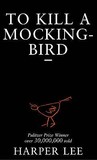
To Kill a MockingbirdTo Kill a Mockingbird by Harper Lee
My rating: 4 of 5 stars

The voice of the perky, inquisitive, acutely observant Scout Finch from age 6 to 9 captures the reader so strongly as to hold together a whole string of disparate episodes — originally conceived by the author as separate short stories. Mainly, we get to know various characters of a poor little Alabama town during the Depression, their peculiar rituals and class and racial prejudices, and their sometimes redeeming acts of generosity. In this, it is more like Mark Twain's Adventures of Tom Sawyer, another child's-eye view of a southern small town told as a series of anecdotes, than like Twain's later and more tightly structured Adventures of Huckleberry Finn.

Scout's most piquant observations of hypocrisy, neurosis, arrogance, or cowardice are of the white folks she knows best. But she also reports with fascination the courage and kindness of a few individuals, including especially her father Atticus Finch, a neighbor woman, Maudie, and the Finches' black maid Calpurnia. A particularly beautiful moment is Scout's visit with Calpurnia to her First Purchase AME Church, a revelation to this protected white girl of black devotion and dignity and a whole community close by but separate from the little white hamlet.

The book is best remembered for one episode that is expanded to extend over several chapters and which is a pleasing, though historically misleading fable: the trial of a black laborer accused of rape of a poor white woman, and his defense by Scout's father Atticus. Sadly, nothing like the judicial fairness of the Maycomb judge, the opportunity of the defendant to legal defense and serious cross-examination of the plaintiff ever happened or could happen in Alabama in the 1930s in a black-on-white rape case. What Harper Lee evidently had in mind when she wrote it was the famous Scottsboro Boys trial in 1933, where no such judicial niceties occurred. But there were defense attorneys — mostly northerners — who, a bit like Atticus Finch in the novel, made the effort, often at the risk of their own lives.

But it is the voice that saves this and all the stories in the book. You have to love this tomboy when she tells you in a hurt voice that, when she tried to hold her big brother back from some dangerous adventure, "Jem told me I was being a girl…" Or when she observes, back in her white church, "the Impurity of Women doctrine that seemed to preoccupy all clergymen."

On the Scottsboro boys, see the NYT November 21, 2013, article,  
Alabama Pardons 3 ‘Scottsboro Boys’ After 80 Years


View all my reviews

2013/11/24

The slowly creeping insight

Too Much HappinessToo Much Happiness by Alice Munro
My rating: 4 of 5 stars

What is amazing is how much Munro can make out of so little, the lives of observant but unexceptional people, most of them in and around London, Ontario, in the 1990s or 2010s, who perhaps once in their lives have experienced an exceptional event. Within this restricted fictional territory, the author finds innumerable variations.

After the first few stories I was hoping for a change of scenery and skipped to the last, and title, story of the collection, "Too Much Happiness," and was surprised by something quite different. Here the protagonist is an entirely exceptional person and so far from contemporary Canada she probably could not even imagine the Ontario forests and suburbs. The Russian mathematician Sofia Kovalevskaya (1850-1891) was the first woman to earn a doctorate in a European university at a time when women weren't admitted even to sudy in universities (summa cum laude, University of Göttingen, 1874). Kovalevskaya's extraordinary triumphs and disappointments, including difficult romance with another Russian intellectual exile, all really occurred. The fictional imagination is in making us feel as though we are she, living all these frustrations and sometimes wild hopes, until the fatal "too much happiness."

This is not the only wonderful story in the collection. Other favorites of mine included "Wood," which seems to understand a man's loneness — his need to be alone, but in a place where he feels himself as part of something greater — as clearly as Munro's other stories understand women's ways of relating to, and sometimes, avoiding one another. "Some Women" and "Child's Play" are especially about that complicated ballet. "Free Radicals" is another memorable story — or rather, two memorable stories, first of a woman's sudden and unexpected widowhood, and then of a startling irruption into her life that seems to reconfigure the meaning of everything. But even in this story, the conclusion is not an event but the protagonist's sudden understanding of events in a new way, even though she, or he, or we, may not be able to describe just what that new understanding is.

View all my reviews

2013/10/27

If War is Peace, Ignorance is Strength

Nineteen Eighty-FourNineteen Eighty-Four by George Orwell
My rating: 4 of 5 stars

Re-reading this book today, as so many people are doing, reminds us of how gloomy the world looked in 1949. And especially how gloomy it looked to Orwell, who had spent his entire life and lost his health in struggles for what he imagined as a more decent society — one where people care about and care for one another. The book is a biting satire of what he thought of as the muddle-headed reformism of the British Labour Party, heading toward a totally controlled society called "Ingsoc", Newspeak for "English Socialism", but the permanent anxiety-inducement, psychological manipulation through the distortion of language, and crude but effective torture were inspired more by Nazi Germany and, especially, Stalin's Soviet Union. The technology of surveillance by "Big Brother" seems laughably primitive today, in the face of Edward Snowden's revelations about the working of the NSA, but Orwell's vision of pseudo-friendships among individuals too frightened to really connect seems almost to foreshadow those on Facebook and Twitter.

Orwell's great strength was as a moral essayist, a writer with a very definite view of how things ought to be and a critique of all that fell short of that. And it is as a moral essay that this book continues to matter, not as an effort of belles lettres. It is not pleasing to read, the flow of the language is jarring, the characters unlovable and barely understandable as people — and that is surely just what Orwell intended. But those unlikeable characters all serve his two purposes: to point out the dangers of an all-controlling state and to remind us once again of how language can be corrupted in ways not to advance and express thought, but to impede it. And also perhaps to express one faint hope: Winston Smith, by resisting as long as he does, even though he finally succumbs, demonstrates that the system's control can never be absolutely complete.

View all my reviews

2013/10/19

A police thriller overwhelmed by real events

Le Cri du peupleLe Cri du peuple by Jean Vautrin
My rating: 3 of 5 stars

This is an immensely agitated, minutely detailed, ridiculously plotted police thriller, full of exaggerated characters, improbable coincidence and lots and lots of blood and sex, set in Paris during the 1871 Commune.

An emotionally disturbed cop and ex chain-gang convict (Charles Bassoucissé, a.k.a. Horace Grondin) obsessively pursues his murder suspect, who is now the gallant army captain Antoine Tarpagnan, and who we know almost from the beginning is quite innocent — like Inspector Javert on the heels of Jean Valjean in Les misérables, but Grondin is even crazier than Javert. These and other invented characters — other cops, crooks, prostitutes and various low-lifes — come into contact with historical figures, including Louise Michel and Gustave Courbet (very briefly) and especially Jules Vallès, whose newspaper Le Cri du Peuple provided Vautrin his title.

It is fast moving. I kept flicking the pages on my Kindle to find out what these crazy characters were going to do next, and one of the sex scenes, though a cliché, is quite lovely (a whore with a heart of gold tutors a timid youth in his first encounter). But the reason I read this instead of some other police thriller was to find out more about the Paris Commune, a far more dramatic story and with far more extraordinary personalities than the cop, the gallant and lovesick army captain he believes murdered his protégée, the troupe of loveable carnival freaks or even the gang of murderers with their grotesque symbol of brotherhood — glass eyes to be left in the hands of their victims.

The gruesome slashings of the "Glass Eye" gang, presented in bloody detail, pale into insignificance beside the more extreme and massive violence of the "week of blood" (la semaine sanglante) when government troops from Versailles virtually annihilated the communards, women and children included. Vautrin makes that suffering extremely vivid, and the (real, historical) violence is so massive that the (fictional) pursuit of Tarpagnan by Grondin seems of small importance. Vautrin is especially good at conveying the smells, most of them awful — of people, mildew, exhausted horses, bombs and rotting corpses. But the writing is so overwrought — people don't merely "say" something, they "snort" it or "grunt" it or even "whinny" it (I'm translating from Vautrin's over-abundant use of underworld argot) — that you know the story must have been conceived as a comic book, which it has now become, with illustrations by Jacques Tardi.

In short: You can learn some things about the commune, especially the minuscule details of how people lived and ate and traveled through the city, and a sense of the fear and smells and rage during the massacres of that last week. What you won't get clear is what it was all about and what it means to us.

That wasn't what Vautrin set out to do, so I'm not objecting. But it looks as though if I want to read the kind of novel I have in mind, I'll just have to write it. It's underway now.

View all my reviews

2013/10/09

Transcending literary genres

My quote from André Maurois (yesterday — see below), on the "recipe" for historical fiction, provoked reaction from friends on LinkedIn which has led me to these reflections:

From the tone of his remark, Maurois classed "historical fiction" as popular entertainment, probably along with murder mysteries and most other genres. That is, as distinct from more serious literature, of the sort that challenges the readers emotionally or intellectually. I think that is fair for most of what is put on the shelves, or in the Amazon lists, in that category. Nothing wrong with that — it's perfectly fine, I suppose, to amuse yourself. But it also made me think again of Mario Vargas Llosa's and Julia Navarro's insistence that what they write is not "historical fiction" — a puzzling stance if by "historical fiction" you mean any fiction set in the past, but not puzzling if you take the term the way Maurois describes it.
 

We don't usually think of "Julius Caesar" or any of Shakespeare's other tragedies as "historical fiction" because, although they do everything that Maurois describes, they also do much more. War and Peace and Charterhouse of Parma also do more. They are much more complex character studies, and suggest more complex philosophical inquiries, than required for light entertainment. But (as I use the term) they spring from, and then transcend, the genre. I think fiction of any genre (historical fiction, murder mysteries like those of Borges, even erotica in the pen of "O" or Henry Miller) can rise beyond our usual expectations of the form. In fact, playing with the supposed rules of any of these genres is a good approach to creating surprising, complex fiction. I'm thinking once again of Don DeLillo's Libra, but there are many other examples.

2013/10/08

Recipe for a historical novel

From a review by André Maurois:
THE recipe for an appetizing historical novel is relatively simple: take an exciting event (or period of history); study carefully your background; create an imaginary character (or a group of characters); let them have a sentimental life, distinct from the central theme; then tell the well-known story as seen by your imaginary characters, and sprinkle with local color. The result should be a nourishing and palatable dish, for a winter evening or a long journey.

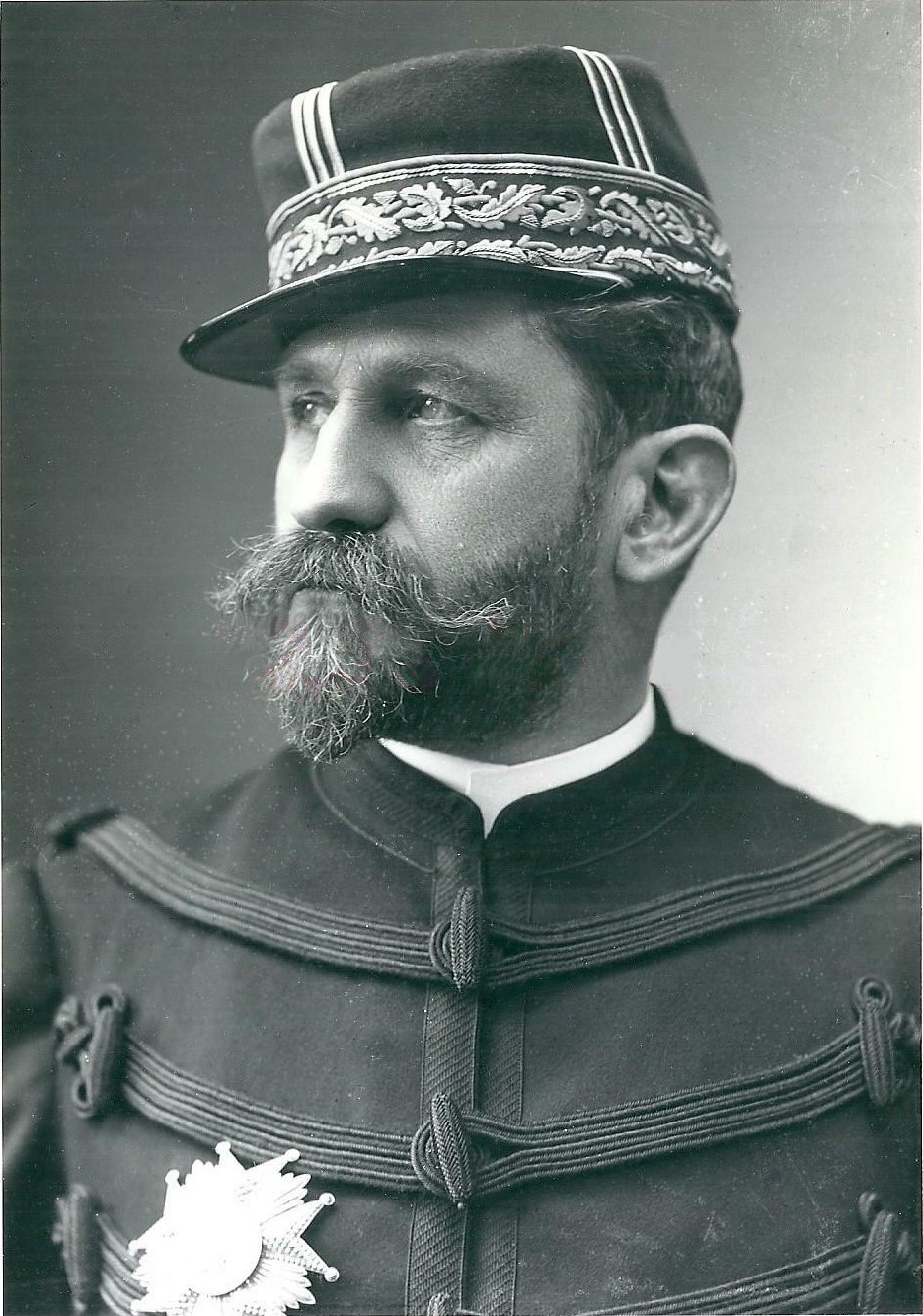
The Saturday Review, February 7, 1942. Review of novel about the comic-opera life and death of général Georges Boulanger, 1837-1891: BRAVE GENERAL. By Herbert Gorman. New York: Farrar & Rinehart. 1942. 625 pp. $3.

2013/09/28

A unique event, a common topic

A fellow author on LinkedIn has congratulated me on my choice of a unique event for my novel. Yes, of course he's right, the Paris Commune was unique, as the first (briefly) successful uprising in a modern, capitalist society. Urban revolt has been occurring almost since there have been cities, and there were immediate precedents in France: 1789, 1830, 1848. But the context had changed so much by the late 19th century (France was multi-continental imperial power, its major cities now included big industrial proletariats, communications had advanced enormously, and Paris itself had become "the capital of the 19th century" in Walter Benjamin's famous phrase), and running such a huge city had become so complex, that the communards had to invent everything as they went along.

What is not unique is my choice of subject matter. Like any powerful, dramatic event, the Commune has attracted scores of novelists and probably thousands of historians. I'm reading a recent novel now,  Le cri du peuple, by Jean Vautrin. It's a lot of fun, fast moving and thoroughly researched, but not like what I'm aiming to do. But I'll say more about that after I finish Vautrin's novel — it's slow going for me (despite the speed of the action), mainly because Vautrin inserts so much underworld argot that I'm clicking on the dictionary every couple of paragraphs. At least, I'm learning a lot of vocabulary. But it will be hard to work it into conversation, unless I want to insult my French friends.

Vautrin has collaborated with illustrator Jacques Tardi to produce this marvelous bande dessiné, for which the two authors studied (among many other sources) the collection at the Musée de Saint-Denis, where I also have spent emotion-filled hours. For a video on this collaboration (in French), see "Le Cri du peuple" de Tardi et Vautrin - Vidéo Ina.fr.

2013/09/27

Writing revolution

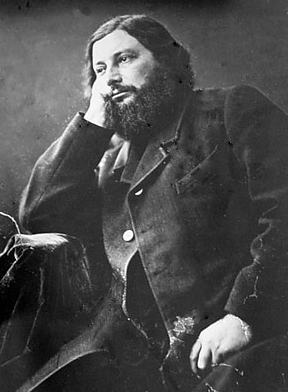
Gustave Courbet, pondering the art of revolution
As I've mentioned before, my next novel is about the Paris Commune of 1871. But not just about Paris or those 72 days of "people's power", but also about the possibilities, aspirations and contradictions in a revolutionary movement in a modern industrial capital and center of financial and military power. That is, it is also about us, today, whether in Cairo or New York or anywhere, and about the episode that has been a model for urban revolutions ever since.

So how's it going? I think I'm on track, but I'm not producing anything like 1,000 usable words of draft per day, which I think should be a reasonable quota. I hope to work up to that rhythm, though, once I work through my notes and tinkering with my outline. Meanwhile I'm still gathering more and more knowledge about Paris, French railroads, police, etc.

My novel starts with the lurch of my young protagonist, an apprentice bookbinder, from Lyon to Paris, by rail (his first trip anywhere), because he's decided to change his life — so I wanted to find out about the PLM (Paris-Lyon-Marseille or Méditerranée) line, tried but failed to get an 1870 timetable, did get an idea of how long it would take, am guessing about the fare (2 fr. 40 would be a day's wages for my guy) and the neighborhood where he would end up (3ême arrondissement, Gare de Lyon).

Why a bookbinder? Because that was one of the most politically engaged industries in the Commune. But why from Lyon? Because aside from Paris, Lyon was one of the most revolutionary cities in all France, especially in the silk industry, where women ovalistes had just formed the first feminine section of the International.

Another of my characters is a police official, and I've had to determine whether in the Sûreté (secret investigative police, staffed mainly by former criminals) or the Préfecture, and get some idea of how that was set up. For now, my character is a sous-préfet, meaning high-ranking but not at the top of the Préfecture. I already know (enough for my novel, probably) about the new police set-up under the Commune.

I'm delighted to be learning all this, but it doesn't make for rapid novel production. It does however enable me to understand the Commune in much greater complexity than we usually see.

To find out more about the Commune and to see some marvelous images, check out the blog of writer Yves Fey:

The Commune | YVES FEY

2013/08/26

Elmore Leonard's Rules

In memory of the late great Elmore Leonard, this capsule note from long ago (I probably wrote it in 1985 or '86) on one of his minor works: 
 Swag Swag by Elmore Leonard
My rating: 3 of 5 stars
(Originally titled Ryan's Rules.)

Used-car salesman Frank Ryan recruits cement mixer and chronic car thief Ernest Stickley, Jr. ("Stick") for a spree of armed robbery in Detroit's suburbs. But they break several of Ryan's 10 rules - "Never associate with people known to be in crime," etc. - when they team up with black hustler Sportree and his allies to rob J. L. Hudson's in Detroit; unplanned mayhem in Hudson's, double-cross by Sportree, undone by Stick and Ryan's death-defying double-double-cross and murder of Sportree. A clever white cop guided by an even cleverer fat black prosecutor catches them and the loot.

And another one:

Cuba LibreCuba Libre by Elmore Leonard
My rating: 3 of 5 stars

Cowboy Ben Tyler in Cuba 1898 gets caught up in the independence war with cruel Spanish officers, less cruel Cuban officers in service to Spain, independence fighters both noble and treacherous, and a decadent American millionaire landowner; he wins the girl (Amelia, a tough, opportunistic American) and, after settling all scores with his Colt .44s, takes her to start a cattle ranch in Cuba libre. Ridiculous story, in which Cuba is merely a backdrop for the actions of American characters plucked from a US western, filled in with meticulous research on naval armaments and prison conditions of the time. (Written 1999/7/21)

View all my reviews

But for Leonard's rules, best of all, for all us writers is this list:
Elmore Leonard: 10 Rules for Good Wriitng