Showing posts with label justice. Show all posts

2013/11/26

Mockingbird

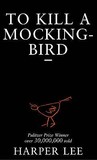
To Kill a MockingbirdTo Kill a Mockingbird by Harper Lee
My rating: 4 of 5 stars

The voice of the perky, inquisitive, acutely observant Scout Finch from age 6 to 9 captures the reader so strongly as to hold together a whole string of disparate episodes — originally conceived by the author as separate short stories. Mainly, we get to know various characters of a poor little Alabama town during the Depression, their peculiar rituals and class and racial prejudices, and their sometimes redeeming acts of generosity. In this, it is more like Mark Twain's Adventures of Tom Sawyer, another child's-eye view of a southern small town told as a series of anecdotes, than like Twain's later and more tightly structured Adventures of Huckleberry Finn.

Scout's most piquant observations of hypocrisy, neurosis, arrogance, or cowardice are of the white folks she knows best. But she also reports with fascination the courage and kindness of a few individuals, including especially her father Atticus Finch, a neighbor woman, Maudie, and the Finches' black maid Calpurnia. A particularly beautiful moment is Scout's visit with Calpurnia to her First Purchase AME Church, a revelation to this protected white girl of black devotion and dignity and a whole community close by but separate from the little white hamlet.

The book is best remembered for one episode that is expanded to extend over several chapters and which is a pleasing, though historically misleading fable: the trial of a black laborer accused of rape of a poor white woman, and his defense by Scout's father Atticus. Sadly, nothing like the judicial fairness of the Maycomb judge, the opportunity of the defendant to legal defense and serious cross-examination of the plaintiff ever happened or could happen in Alabama in the 1930s in a black-on-white rape case. What Harper Lee evidently had in mind when she wrote it was the famous Scottsboro Boys trial in 1933, where no such judicial niceties occurred. But there were defense attorneys — mostly northerners — who, a bit like Atticus Finch in the novel, made the effort, often at the risk of their own lives.

But it is the voice that saves this and all the stories in the book. You have to love this tomboy when she tells you in a hurt voice that, when she tried to hold her big brother back from some dangerous adventure, "Jem told me I was being a girl…" Or when she observes, back in her white church, "the Impurity of Women doctrine that seemed to preoccupy all clergymen."

On the Scottsboro boys, see the NYT November 21, 2013, article,  
Alabama Pardons 3 ‘Scottsboro Boys’ After 80 Years


View all my reviews

2010/05/14

Envy in the courts

Friend and colleague César Chelala just sent me a link to his latest opinion piece, Elie Wiesel's Wrong Move on Peace | CommonDreams.org   I just dashed off a reply which I'll share here with you, about a different issue of great concern.
Thanks. I was unaware of Wiesel's letter and the response. It is appalling that he could be making such statements.

Speaking of appalling, I am deeply, deeply disturbed by the campaign of a cabal of jealous judges to humiliate the best of their fraternity, Baltasar Garzón. And I'm deeply impressed by the dignity of the man under attack, who, despite all, continues doing his job and just yesterday appeaed and spoke at a conference commemorating the attacks on Jews during Argentina's dirty war. There's nothing I can do to help him, other than to express my support; the whole world of human rights jurists has mobilized in his defense, but those few Spanish judges, jealous of his fame, remain determined to do him in, as an exemplary sacrifice of any of their number who dares stand up to power.
The latest is a maneuver by Judge Luciano Varela, supported by a coterie of anti-Garzón judges, to head off the possibility of Garzón's acceptance of a temporary (7-month) appointment to the International Court of Justice in The Hague, where prosecutor Luis Moreno Ocampo was eager to have his assistance. They are completely unconcerned about the enormous damage they are causing to Spain's international reputation as an upholder of justice, a reputation that was perhaps undeserved, because it depended almost entirely on the work through the years of Baltasar Garzón.

 Judge Luciano Varela (in Spanish)

Luis Moreno-Ocampo - Wikipedia, the free encyclopedia

2010/03/23

Health and justice (not so healthy)

"This Obamacare is moving us toward a system like Europe, and that's a disaster!" smirked a protester in front of the U.S. Capitol last night (to an interviewer from Spain's Channel 1 news).

It's that kind of abysmal ignorance that makes me keep writing these notes. You know of course that the health reform bill just passed is nothing like the health plans in Europe, which are far better in almost every way than what we've had in the U.S. and still better than the (much improved) system foreseen by this bill. The Spanish system is far from perfect, but it's free and universal (for Spaniards and anybody else from the European Union or other countries with reciprocation agreements). To avoid delays in treatment, many people supplement their social security coverage with private insurance, but because the state system is always available (and thus the private insurance not absolutely necessary), such private plans are far cheaper than in the U.S., and private doctor's fees are very low. We as U.S. citizens are not supposed to be covered by the free system (the U.S. has no reciprocation agreement with Spain), but the few times we've had to go to a clinic or hospital for something, the doctors have waved away our offers of payment. But a lot of Americans don't know that and won't believe you if you tell them. But I keep telling them anyway.

The U.S. can learn a lot from Spain about how to deliver health care and about several other things besides flamenco dancing and gourmet cooking, such as high speed rail and harnessing wind-power. But Spain, like the U.S., is a bundle of contradictory forces, and there are some things in this country that are as embarrassing to cultured Spaniards as the "Tea Party" is us Americans abroad. Among the great Spanish embarrassments is one I've mentioned before, the (in)justice system.

Getting judges to make fair decisions, independent of political loyalties or economic incentives, is always a problem, everywhere. And in its recent finding that coporations can spend all they like on election campaigns because they, like persons, should enjoy "freedom of speech," the U.S. Supreme Court has again struck a blow against democracy, as it had (for example) in Dred Scott v. Sandford (1857) and Bush v. Gore (2000).

But for all its problems, the U.S. system gives you a better chance of a fair hearing in politically sensitive cases than the one in Spain, where the bias in favor of the hard right and the liberals has become even more obvious than usual in the past couple of months.

A note on terminology: Americans think of "liberal" as being "left." In Spain, and in Europe generally, "liberals" are one part of the right, or "conservative" forces.  They are the radical pro-business, free-enterprise types that Ayn Rand celebrated, akin to the neo-cons of the U.S. The "Greed is good" crowd. They push for privatizing services such as health and education and turning them into businesses, from which they and their friends can profit. Other main currents of the right include surviving fascists nostalgic for Franco, extreme Catholics nostalgic for the Inquisition (there are quite a few of those still around), white supremacists and intolerant nationalists, motivated more by ideology than by the bottom line.  Politicians who call themselves "liberal," like Esperanza Aguirre, president of the Madrid autonomous community, are generally too sophisticated to let racism or religion interfere with their efforts to turn a fast euro. But they have no problem joining with the fascists and racists in street demonstrations or other actions to torpedo the Socialist Party and the trade unions and other groups that try to rein in their money-making efforts -- on the principle that "The enemy of my enemy is my friend."

The problem with the justice system is that it is riddled with judges representing one or another of these right-wing tendencies. Some of them were sworn in under Franco. Many more of them were appointed by Aznar, who (following his mentor Fraga) pulled together the Popular Party as a coalition of fascists, nationalists and liberals (in the European sense).  And in the Spanish system, judges choose other judges to sit on the higher courts.

The best analysis I've seen of the right-wing skewing of Spanish justice appeared in today's El País, in an opinion piece by sociologist Ignacio Sánchez-Cuenca, Los jueces en la política española. Unlike the U.S., where a single Supreme Court is genuinely supreme, Spain has three high courts, none of them clearly superior to the others: the Constitutional Tribunal, the Supreme Court, and the General Council of Judicial Power. All (though each in a slightly different way) are highly politicized, subject to maneuverings of the political parties (in one case resulting in a stalemate between the Socialists and Populares, and thus no changeover of conservative judges whose terms have expired) and divided into factions of different ideological tendencies.

And this is what has made it possible for the Spanish justice system to prosecute its best-known, most independent and most prestigious judge, Baltasar Garzón, and thus to protect two objects of his judicial inquiries: the corrupt pols of the liberal (neo-con) tendency, caught in flagranti taking money and other favors for land deals, and the fascist and extreme nationalist groups opposed to any investigation of Franco-era crimes. And because of the multiple currents of the right, joined together against their common enemy, Garzón, they have brought multiple cases against him. The cases are absurd and would have been thrown out in any rational court system -- in fact, the government fiscal (roughly equivalent to attorney general) has asked that they be dismissed, but judges of one or another of the right-wing tendencies have persisted, even admitting the Franco falangistas and the ringleader of the PP's huge corruption network as accusers.

Garzón has received enormous support, both from ordinary Spanish citizens (including especially surviving relatives of Franco's victims) and from human rights advocates around the world. But the system grinds on, denying him privileges (including the opportunity to respond in court) ordinarily granted, especially to sitting judges.

And it's hardly consolation to think that things could be worse. We could, for example, be seeking justice in Italy.

2010/02/08

Justice -- a justice -- pursued

All world-aware citizens outside of Spain must be stunned by the news that Judge Baltasar Garzón, who pursued state-sponsored terrorists from Augusto Pinochet to Argentina to the U.S.'s Guantánamo, is in danger of suspension because he has dared investigate the state crimes of Franco and his followers in his own country.

In case you missed this -- I know, the world is full of crises, and it's hard to keep up on all of them -- here's the background: As an administrative magistrate, it is Garzón's job to investigate supposed crimes to determine whether there is cause for trial, and if so, to determine (a) if such a trial would be in his jurisdiction and (b) if not, to remand it to the appropriate court. That is, part of his job is to do what a grand jury does in the U.S. system, i.e., first decide whether there is a case.

The Audiencia Nacional, the penal court with jurisdiction over the entire country, is served by six investigative judges, but -- presumably because of Garzón's reputation and the attention he gets in the media -- many of the most ticklish issues end up in Section No. 5, Garzón's. In the course of his career he has taken on some of the most powerful and dangerous groups in the country. He was, very briefly (in 1993), part of Socialist goverment of Felipe González, and is generally supposed to have Socialist Party leanings, but he returned to the bench and led an extremely damaging inquiry of that government in 1998, for state terrorist tactics against ETA (a secret police group pretending to be independent activists were assassinating ETA members) This was not out of any fondness for ETA, but (he maintains) out of a very strict and uncompromising devotion to legality. He has in fact been one of the most aggressive judges pursuing ETA itself -- he has been creative (in the vew of some, too creative) in his interpretations of laws to isolate that terrorist organization from its civilian support network. And he has taken on other notable foes, including the U.S. government of George W. Bush, arguing the illegality of Abu Ghraib and Guantánamo. Lately, as though he didn't have enough enemies, he has been very aggressive in pursuing political corruption in deeply entrenched, very well-connected Partido Popular (Aznar's party, in power in several autonomous communities and likely to return to national power).

But back to the Franco investigation. Groups of survivors of people killed in the military rebellion and civil war of 1936-39 or by the Franco military regime after the war petitioned him to order the opening of the unmarked graves to determine identities of the dead and causes of death. He began his preliminary investigation, summoning hitherto secret records of the armed forces and of the Catholic Church, which knew were many of the bones were buried but was not at all interested in telling. For the Church the only martyrs worth remembering are those who were Catholic, killed by Godless Communists, Socialists or anarchists -- there were many of these, but they have been well remembered.

The Church feared that mentioning all those Godless Republicans killed by Catholics would open up old wounds; the survivors said that those wounds were already open, and the only way to close them was to find out the truth. In any case, and whatever the political or psycological consequences, Garzón saw his job as finding out that truth, and so subpenoed documents and witnesses. And now an investigative judge of Spain's Supreme Court, Luciano Varela Castro, has accepted complaints against Garzón by an ultra right outfit of ex-government functionaries, Manos Limpias, and -- this is especially startling -- the Falange, the Fascist party that backed Franco. The charge is that Garzón knowingly exceeded his authority (in Spain that's called prevaricación) by investigating the supposed crimes of Franco, because the Spanish courts had declared a Law of Amnesty -- in 1977, that is, just two years after Franco's death, when Spanish judges were still all Franco appointees.

It was all very well for Garzón or another internationally-minded judge to decide that human rights violations do not prescribe in Uganda or Chile or Argentina or Rwanda or Bosnia. But in Spain a Franco-ist self-amnesty must be respected, says the Falange and at least one judge of the Supreme Court.

It's not over yet, and not every judge on the Supreme Court agrees with Varela Castro, but it looks bad for Spain's -- and possibly the world's -- most famous judge. This is just another sign that the Spanish Civil War is not yet over.

2007/11/27

Which way is Left? (3) - Thinking otherwise

In previous notes, I've discussed the ideas of Ulrich Beck (Roots & Wings, 9/30) and, last Friday, Vidal-Beneyto (The Spanish Exception). In our recent visit to Paris I picked up the latest book of another sociologist, Alain Touraine, whose work has interested me since his publications 40+ years ago on workers' consciousness in São Paulo.

In the course of his long career, Touraine (Hermanville-sur-Mer, France, 1925) has not only explored consciousness and social change among the oppressed, but has also worked to facilitate both. With workers in Latin America and Poland, or more recently with Muslim women in France, his research design has been a guided dialogue (guided by sociologists) among activists, with the objective of helping those activists understand their situation better so as to act to change it. Since 1992, he has been summing up these experiences for the rest of us in a series of books, of which this is the latest:

Touraine, Alain. Penser autrement. Paris: Fayard, 2007.*

He begins with a critique of what he calls the "dominant interpretive discourse" (discours interprétatif dominant) or DID of the past 60 years. The 19th century had effectively killed God (i.e., an eternal and unchanging moral arbiter beyond our reach), and then the horrors of the 20th century (world wars, genocide, etc.) destroyed our faith in God's replacement, Progress (better and juster society through the advance of science and technology). Then, before the world's thinkers could recover from the shock of World War II, they were split by an Iron Curtain that almost completely blocked new social thought on either side. The sudden and unexpected collapse of that curtain left intellectuals on both sides without any clear idea of where to go next and deepened their pessimism that human beings could even affect the course of our history. From such pessimism arose what Touraine calls the "dominant interpretive discourse", that our lives are shaped by forces beyond our control, and any contrary idea is an illusion or "false consciousness." According to the DID, our individual lives are ruled by material and sexual instincts that we barely understand and can't change, our social lives by the market, especially the mechanisms of global capitalism. This is a view of a society without "actors" (acteurs), that is, human beings capable of acting upon and changing their situation. Such a desperate view of our possibilities encourages people to behave completely narcissistically, with no sense of any larger social purpose or moral control. For those with power, it's all about money and how to get more of it, with no reason to regard the poor. For those without, it's also sometimes about money and survival, but also about something more precarious, personal identity, the precariousness of trying to be recognized as a human being with rights. Among the social consequences of such desperation among the poor are delinquency and "identity politics," including the many forms of fascism or extreme, exclusionary nationalism we see all over the globe, even in places thought to be as staid and stolid as Belgium and Switzerland (not to mention ex-Yugoslavia, Pakistan, Sudan, Guatemala, etc.) Among the social consequences of the irresponsible behavior of the powerful, eager to exploit and profit from the turbulence of the less powerful, are wars and global warming.

The second half of Touraine's new book is his proposal to "think differently" -- penser autrement. It is a continuation of an argument he has been developing in a series of books since 1992: that we don't need faith in either God or Progress, but in ourselves. And the self that you or I or Touraine needs to look to is what he calls "el double", the better self or ideal self that I or you imagine and constantly compare with our practical, here-and now selves: a self with rights, affirming its "right to have rights." Most importantly, this must be a self that recognizes equal "rights to have rights" in all the other selves we encounter.

Touraine insists that this is not just wishful thinking, but a description of something that is already happening all around us. In myriad groups, organized around concerns ranging from global warming to neighborhood deterioration or, what he takes to be the most significant change-agent today, women's rights, people are coming together, discovering their differences and how to accept and even profit from them in terms of personal growth. In the end, Touraine's proposed solution, or path to a solution, to the world's problems is parallel to and quite compatible with Ulrich Beck's: we liberate ourselves and one another through social movements, by which he means self-conscious organizations (conscious of our aims and of the conditions in which we struggle) to confront whatever form of oppression we experience.

Like Vidal-Beneyto, Touraine thinks that the "Left" is exhausted and has nothing more to offer us, but that is because both thinkers think of the Left the way the Left thought of itself in recent decades -- the decades of the "dominant interpretive discourse" where individuals counted for nothing, and only a mass organization led by an enlightened elite had a chance of effecting change. And since the forces of global capitalism were so strong and pervasive, the only change worth struggling for was a total, violent rupture with the present order, that is, revolution.

But the Left (at least in my mind) is and always has been something much more valuable and more permanent, since long before the French Communist Party (Touraine's bête noire) and similar outfits tried to congeal it. That something was never better expressed than in 1789, exactly 200 years before the collapse of Soviet communism: liberté, égalité, fraternité. And those are the values that Touraine is working to recover.

My earliest contact with this thinker, research still worth reading:

Touraine, Alain. "Industrialisation et conscience ouvrière à São Paulo." Sociologie du Travail Octobre-décembre.4 (1961).

* The English translation, Thinking Differently, came out two years after I wrote this review.
2007/02/23

Defense Calls Padilla Incompetent for Trial - New York Times

Guilty until proven innocent (and we'll fix it so that your innocence can never be proven). Here's an example of Bushian justice. Defense Calls Padilla Incompetent for Trial - New York Times

2006/11/22

Responsible shopping is not enough

Mark Engler has an article in the November issue of New Internationalist, which is on the stands but not yet on-line. Meanwhile, you can check out the September issue of NI (always interesting), and then check back in (I suppose) a few days to read Mark's piece, which is clearly argued and well researched as usual: Sweating over sweatshops: Supporting 'clean clothes' campaigns to end the exploitative labour practices that pervade the textile industry is not as simple as just picking the 'right' brand to buy, reveals Mark Engler.