Laura Axelrod has summed it up beautifully, and reminds us of our (temporarily, I hope) loss of the tradition of outrageous satire in the U.S.
Could Charlie Hebdo Exist in America? | The Clyde Fitch Report
Showing posts with label US politics. Show all posts
Showing posts with label US politics. Show all posts


2015/01/04
Petition Vietnam Peace Commemoration Committee

Petition Vietnam Peace Commemoration CommitteeIf you too were active, here's your chance to sign and describe some of what you did. Together, we finally made it impossible for them to continue — making it clear first to LBJ, and then to Nixon, that they couldn't keep the peace at home if they continued the war abroad.
Here you can find my statement, along with those of all the other signers, describing a little bit of how we were involved in those actions.
Viet Nam Today: Annotated Signers
2014/12/25
Vietnam, the ongoing memory | Harvard Gazette
Lest we forget. This war shaped all our lives, even of those not born till afterward. For thus of who were young adults 40 years ago, the draft, the enormous expense of the destruction (bombs, aircraft, medical attention to the wounded, junkets of congressmen), the deep political divisions (antiwar vs. LBJ and McNamara 'Realpolitik'), the clashes of protesters and police, the career decisions and other moral dilemmas, the grieving for the enormous human losses skewed the lives of all of us — and that was just in the United States. The consequences in Vietnam were enormous, too enormous for most Americans to even think about at any length or depth — because thinking about it, seriously, could bring us to the brink of despair, or of action.
Vietnam, the ongoing memory | Harvard Gazette
Vietnam, the ongoing memory | Harvard Gazette
2014/03/15
Return to the ´60s
If at all possible, you must see this exhibition at the Brooklyn Museum: Witness: Art and Civil Rights in the Sixties
Or if you can't get to Brooklyn, at least check out the website and the catalogue. But it's not the same as seeing the vibrant, sometimes chilling, often enraged, and at times oddly distant — a protective distance, the artist's self-shielding from painful emotion — of that terrible, sometimes joyous, often heart-breaking period of struggles for simple human dignity. Among the highlights: Romare Bearden's collages, a video of Nina Simone singing with full emotion "Mississippi Godam", a collage-construction by artist Jack Whitten called simply Birmingham : a newspaper photo from the bombing of the black Sixteenth Street Baptist Church in Birmingham, Alabama, in September 1963, which killed four girls, at the center of an explosion of aluminum foil, stocking mesh, plywood and paint.
We revisited that era yesterday at the Museum, with the added joy of performance and talk by Sonia Sanchez, Bernice Reagon, and Bernice's musician daughter Toshi. They reminded us of the hope that survived, and the victories — never complete, but still significant — in those years of nonviolent struggle. Nonviolent on one side, that is.
Or if you can't get to Brooklyn, at least check out the website and the catalogue. But it's not the same as seeing the vibrant, sometimes chilling, often enraged, and at times oddly distant — a protective distance, the artist's self-shielding from painful emotion — of that terrible, sometimes joyous, often heart-breaking period of struggles for simple human dignity. Among the highlights: Romare Bearden's collages, a video of Nina Simone singing with full emotion "Mississippi Godam", a collage-construction by artist Jack Whitten called simply Birmingham : a newspaper photo from the bombing of the black Sixteenth Street Baptist Church in Birmingham, Alabama, in September 1963, which killed four girls, at the center of an explosion of aluminum foil, stocking mesh, plywood and paint.
We revisited that era yesterday at the Museum, with the added joy of performance and talk by Sonia Sanchez, Bernice Reagon, and Bernice's musician daughter Toshi. They reminded us of the hope that survived, and the victories — never complete, but still significant — in those years of nonviolent struggle. Nonviolent on one side, that is.
2014/01/29
Remembering Pete Seeger
It must have been at the concert he gave at Harvard on May 18, 1961 that I first saw and heard Pete Seeger in person. It was so long ago, and my memories so imprecise, I had to search the Harvard Crimson to be sure of the date. What I remember clearly is that the event was more than musical, that I and many of us at Harvard (I was a junior) knew that his appearance at that time, and our support, was a strong political statement, our protest against the suppression of critical speech (and song) that was orchestrated by the right-wing press and business interests and their men in Congress. Seeger had a "contempt of Congress" conviction, carrying a one-year jail sentence, pending against him (he had refused to name names) and on that pretext, Harvard had initially banned the concert. But there was sufficient pro-free speech sentiment at Harvard, including not just among us students but even on the law faculty, to make the university president relent. And as I recall, the house was packed. I don't remember what he sang, but I remember him as tall, dignified,
and weary. He was under tremendous pressure. And grateful for our
presence, as we were delighted by his. See this May 8, 1961, article in the Crimson.
2013/11/26
Mockingbird
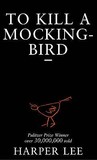 To Kill a Mockingbird by Harper Lee
My rating: 4 of 5 stars
The voice of the perky, inquisitive, acutely observant Scout Finch from age 6 to 9 captures the reader so strongly as to hold together a whole string of disparate episodes — originally conceived by the author as separate short stories. Mainly, we get to know various characters of a poor little Alabama town during the Depression, their peculiar rituals and class and racial prejudices, and their sometimes redeeming acts of generosity. In this, it is more like Mark Twain's Adventures of Tom Sawyer, another child's-eye view of a southern small town told as a series of anecdotes, than like Twain's later and more tightly structured Adventures of Huckleberry Finn.
Scout's most piquant observations of hypocrisy, neurosis, arrogance, or cowardice are of the white folks she knows best. But she also reports with fascination the courage and kindness of a few individuals, including especially her father Atticus Finch, a neighbor woman, Maudie, and the Finches' black maid Calpurnia. A particularly beautiful moment is Scout's visit with Calpurnia to her First Purchase AME Church, a revelation to this protected white girl of black devotion and dignity and a whole community close by but separate from the little white hamlet.
The book is best remembered for one episode that is expanded to extend over several chapters and which is a pleasing, though historically misleading fable: the trial of a black laborer accused of rape of a poor white woman, and his defense by Scout's father Atticus. Sadly, nothing like the judicial fairness of the Maycomb judge, the opportunity of the defendant to legal defense and serious cross-examination of the plaintiff ever happened or could happen in Alabama in the 1930s in a black-on-white rape case. What Harper Lee evidently had in mind when she wrote it was the famous Scottsboro Boys trial in 1933, where no such judicial niceties occurred. But there were defense attorneys — mostly northerners — who, a bit like Atticus Finch in the novel, made the effort, often at the risk of their own lives.
But it is the voice that saves this and all the stories in the book. You have to love this tomboy when she tells you in a hurt voice that, when she tried to hold her big brother back from some dangerous adventure, "Jem told me I was being a girl…" Or when she observes, back in her white church, "the Impurity of Women doctrine that seemed to preoccupy all clergymen."
On the Scottsboro boys, see the NYT November 21, 2013, article,
Alabama Pardons 3 ‘Scottsboro Boys’ After 80 Years
View all my reviews
2013/11/13
Censor this? No, keep the press free
I just received a call to join a censorship campaign against Richard Cohen: Group Calls for the Washington Post to Fire Columnist Richard Cohen Over Remarks on Interracial Marriage
Outrage After Washington Post Columnist “Represses Gag Reflex” Discussing NYC Mayor de Blasio’s Interracial Marriage
Seems like some people get outraged awfully easily. Maybe they should just take a deep breath and learn to read. The sentences that caused the outrage I quote below.
Richard Cohen: Christie’s tea party problem - The Washington Post: "…People with conventional views must repress a gag reflex when considering the mayor-elect of New York — a white man married to a black woman and with two biracial children. (Should I mention that Bill de Blasio’s wife, Chirlane McCray, used to be a lesbian?) This family represents the cultural changes that have enveloped parts — but not all — of America. To cultural conservatives, this doesn’t look like their country at all."
My response:
(1) I don't see how de Blasio, Chirlane or anybody else could take offense; Cohen is not saying he gagged, but describing what he imagines (correctly, I fear) to be the reaction of "People with conventional [sic] views". Well, conventions are different in different places. Not the views of New Yorkers, obviously; they voted for him.
(2) And even if a columnist offends me, I'm not going to demand to shut him up, but rather to have an opportunity to reply. I'm with Voltaire on this principle.
Outrage After Washington Post Columnist “Represses Gag Reflex” Discussing NYC Mayor de Blasio’s Interracial Marriage
Seems like some people get outraged awfully easily. Maybe they should just take a deep breath and learn to read. The sentences that caused the outrage I quote below.
Richard Cohen: Christie’s tea party problem - The Washington Post: "…People with conventional views must repress a gag reflex when considering the mayor-elect of New York — a white man married to a black woman and with two biracial children. (Should I mention that Bill de Blasio’s wife, Chirlane McCray, used to be a lesbian?) This family represents the cultural changes that have enveloped parts — but not all — of America. To cultural conservatives, this doesn’t look like their country at all."
My response:
(1) I don't see how de Blasio, Chirlane or anybody else could take offense; Cohen is not saying he gagged, but describing what he imagines (correctly, I fear) to be the reaction of "People with conventional [sic] views". Well, conventions are different in different places. Not the views of New Yorkers, obviously; they voted for him.
(2) And even if a columnist offends me, I'm not going to demand to shut him up, but rather to have an opportunity to reply. I'm with Voltaire on this principle.
2013/08/13
Homicide and self-deception
 Libra by Don DeLillo
My rating: 5 of 5 stars
Like Mario Vargas Llosa's La Fiesta del Chivo, Libra is a chillingly realistic novel that re-imagines and reconstructs a famous magnicide. But the more mysterious circumstances of the assassination of John F. Kennedy, and the particular obsessions of Don DeLillo, make this a very different book from Vargas Llosa's telling of the killing of Rafael Trujillo.
According to DeLillo (through his stand-in character, Nicholas Branch), “the conspiracy against the President was a rambling affair that succeeded in the short term due mainly to chance.” Many people with different motives were out to get Kennedy, from right-wing Aryan-nation types to non-ideological drifters desperate to leave a mark on history, but (in this version) the most systematic pursuers were people who blamed him for the “loss” of Cuba and thought that his elimination would help them get that country back. These included embittered CIA cast-offs, mobsters, investors, and Cuban exile terrorists. You get the impression that even if they'd missed in Dallas, somebody was going to get JFK as long as he insisted on riding in an open car.
DeLillo is fascinated by the narratives we make up to explain ourselves and the world around us. Mostly he is fascinated by those with the weirdest and most complicated narratives, narratives that need frequent adjustment because they keep bumping into contradictory realities. Lee Oswald struggles to persuade himself that he is on to some secret understanding of the world, gained from laborious reading (because he's dyslexic). Jack Ruby has convinced himself that he must always be a defender of the Jews and works very hard to silence his own suspicions that he may be homosexual. The rogue ex-CIA men, outwardly very calm, have an absolutely loony interpretation of history and their role in it. The most sensible character is Marina, Oswald's Russian wife, who can't take seriously any of her husband's elaborate poses and just wants him to teach her English and help her and their baby daughters survive in what for her is a strange new world.
DeLillo has a very great novelistic strength that Vargas Llosa also exhibits (though more in the Peruvian novels than in Chivo): pitch-perfect dialogue. Ruby's scenes are the best. He is a club owner, big spender and always on the brink of bankruptcy. His conversations with himself, his strip-teasers, a mobster associate from whom he's seeking a loan, his feckless male roommate, and the cops he loves (he's always taking them big, cholesterol-laden sandwiches) are hilarious, fragmented, contradictory, and utterly believable. In fact, my one complaint about the book is that we have to wait too long for Ruby to appear. Here's a sample, from his meeting with Tony Astorina, chauffeur for the mobster:
"Jack, I come by here for old time."
"We used to swim on the Capri roof."
"I'm saying. I didn't come by for the coffee."
"Tony. I appreciate."
"I come by because we go back together."
"We got laid in adjoining rooms."
"Havana, madonn'."
--Etc. It's wonderful.
We can't know whether or to what extent DeLillo's reconstruction of the messy, haphazard but ultimately successful plot to kill President John F. Kennedy is accurate, but it certainly is plausible. And it does create a coherent narrative that DeLillo offers as a “refuge,” “a way of thinking about the assassination without being constrained by half-facts or overwhelmed by possibilities, by the tide of speculation that widens with the years.” (From the “Author's Note” at end of book.)
P.S.: I read the book and wrote this review years ago; what brought it back to mind is my reading of Balzac, whose panoramic view of the social world and his ear for quirky dialogue reminded me especially of DeLillo (and maybe Vargas Llosa). I hope to develop these reflections on the sociological view in fiction in a future essay.
View all my reviews
2013/06/23
Back from the U.S. of A.
Susana and I got back home to Carboneras (Almería, Spain) yesterday after nearly a month in the USA (and a few days in Madrid), our first trip back there in nearly four years: Cambridge and Boston MA, for my college reunion; Galisteo and Santa Fe NM to see old friends; Arizona to hang out with my two sons (one in Prescott, the other in Flagstaff), and finally New York, for many personal and business reasons, including a meeting with the editor for our current book-in-progress, a history of architecture and urbanism in Latin America.
So this is just to explain why you hadn't seen anything from me over the past month — we were too busy traveling and had too infrequent and interrupted access to the Internet for me to sit down and write anything interesting. Now we're back in our seaside home and ready to get back to work on projects including:
 This will keep us busy while everybody else is at the beach. Maybe we'll get to go down to the beach, too, from time to time. It's right outside my window, mighty tempting.
So this is just to explain why you hadn't seen anything from me over the past month — we were too busy traveling and had too infrequent and interrupted access to the Internet for me to sit down and write anything interesting. Now we're back in our seaside home and ready to get back to work on projects including:
- first, that book I just mentioned (volume I, the pre-Columbian history, is written; the volume on 20th and 21st centuries is well advanced; we're saving for last what we expect to be the least challenging portion, on the long colonial period and the first post-independence century).
- My new novel, still in early stage.
- More commentary on current events. Next up, an article on Turkey and its protests.

2012/09/01
Romney Aides Scratch Their Heads Over Eastwood’s Speech - NYTimes.com
Romney Aides Scratch Their Heads Over Eastwood’s Speech - NYTimes.com
This is SO bad. Ol' Clint has never been a clear thinker, but here he's not even a decent performer. And the thoughts that come out of his rambling are just vague expressions of dislike of things he can't understand. And alas, he had an audience of nonthinkers to applaud him. (And he makes fun of Biden as an intellectual — good thing for Clint that he was talking to an empty chair that couldn't talk back.)
This is SO bad. Ol' Clint has never been a clear thinker, but here he's not even a decent performer. And the thoughts that come out of his rambling are just vague expressions of dislike of things he can't understand. And alas, he had an audience of nonthinkers to applaud him. (And he makes fun of Biden as an intellectual — good thing for Clint that he was talking to an empty chair that couldn't talk back.)
2012/08/12
Creating ignorance
They just want to confuse us. Maybe because he sounds so sincere, and because few people bother to check out his misrepresentations, and mostly because he is saying what a lot of people want to believe (no matter that it's utterly false), too many folks cheer him on.
The Most Influential Evangelist You've Never Heard Of : NPR
Suppose (though it's not true) that the founders, including Jefferson, were as conventionally religious as he claims. So what? That was 1787, this is 2012, we have a lot better explanations today of the origin of the universe and everything else. But in fact, even with the more limited knowledge available to them, most of those men were skeptical enough to realize that there were no simple answers, and certainly no sect could claim to have them.
The Most Influential Evangelist You've Never Heard Of : NPR
Suppose (though it's not true) that the founders, including Jefferson, were as conventionally religious as he claims. So what? That was 1787, this is 2012, we have a lot better explanations today of the origin of the universe and everything else. But in fact, even with the more limited knowledge available to them, most of those men were skeptical enough to realize that there were no simple answers, and certainly no sect could claim to have them.
2011/12/21
Chase Whiteside: Has the Occupy Movement Passed?
Chase Whiteside: Has the Occupy Movement Passed?
Another terrific video by Chase Whiteside. We haven't seen anything like this in the US for some 40 years, when the antiwar and civil rights mobilizations joined forces. And simultaneously, other mass movements are rolling forward even in China and Russia (and Spain and Greece and Portugal ..., not to mention everything that's happening in North Africa and Western Asia).
Chase Whiteside: Has the Occupy Movement Passed?
Another terrific video by Chase Whiteside. We haven't seen anything like this in the US for some 40 years, when the antiwar and civil rights mobilizations joined forces. And simultaneously, other mass movements are rolling forward even in China and Russia (and Spain and Greece and Portugal ..., not to mention everything that's happening in North Africa and Western Asia).
Chase Whiteside: Has the Occupy Movement Passed?
2011/11/20
This Is What Revolution Looks Like | Common Dreams
Perfectly said, by Chris Hedges:
This Is What Revolution Looks Like | Common Dreams
When I described myself as a "red dervish" a little while back, this is what I meant: red (as in revolutionary), and like a Sufi dervish personally drawing strength from my vision, the vision of our latent collective power — that of all humanity — to conquer the evil within and among us and release our more powerful impulses of love and solidarity. A Sufi would call that evil "Sheitan," a more modern name is "capitalism." Or as the great Turkish poet Nazım Hikmet (himself something of a red dervish) put it, to live "like a forest in solidarity, / this is our yearning."
This Is What Revolution Looks Like | Common Dreams
When I described myself as a "red dervish" a little while back, this is what I meant: red (as in revolutionary), and like a Sufi dervish personally drawing strength from my vision, the vision of our latent collective power — that of all humanity — to conquer the evil within and among us and release our more powerful impulses of love and solidarity. A Sufi would call that evil "Sheitan," a more modern name is "capitalism." Or as the great Turkish poet Nazım Hikmet (himself something of a red dervish) put it, to live "like a forest in solidarity, / this is our yearning."
Yaşamak bir ağaç gibi tek ve hürDavet (Invitation); for the complete translation, see this Wiki version.
ve bir orman gibi kardeşçine,
bu hasret bizim.
2011/08/31
2011/08/28
Cartoonists cartooned

Here are my notes (recenty recovered from an old file) from the cartoonists panel at this long-ago conference in New York City. These guys exist to remind us that we can't understand anything about modern politics if we take our leaders seriously.
To see current work by Matt Wuerker, check out the Cartoonist Group; for "Tom Tomorrow," see This Modern World. Ted Rall's drawings and writings (he uses his pen both ways) are at his Rall.blog. Peter Kuper's work (some of it for The Nation) can be found at peterkuper.com ; I don't know why he looked so sour when I drew him. This stuff is supposed to be funny.
2011/08/01
Budget crisis, Tea Party, and the ignorance machine
For years (too many, perhaps) I taught sociology to college students, and had to help us all understand every great social issue that came up — why things are the way they are and what we might have to do to change them. Not that I think sociological reasoning can give us definitive answers, but it should help us frame the questions better by testing various hypotheses and eliminating all the false leads and continuing to test the more promising ones. Though I have no classroom before me now, I'll try again to exercise the sociological imagination for something useful.
So, today's big issue: The impasse in the US Congress (which may or may not be about to break — they've still got to vote) and its likely consequences. Why? And what next?
Everything is the way it is because it got that way, as biologist D'Arcy Thompson is said to have said. (D. C. Dennett, The Evolution of Culture). We start there, with the history. Here's my understanding (a metahypothesis containing several testable assumptions):
The first thing that suggests itself is disarming that media machine, somehow. Imposing rules as to how far beyond the evidence a broadcaster can go is one possibility, but tricky and dangerous (free speech). Limiting ownership of media outlets is more feasible, but of course will have to overcome the resistance of those big media. Reversing the U.S. Supreme Court's recent decision that the Constitution permits corporations to secretly fund, in any amount, phony public interest group's campaigns seems like another important and probably effective check on that machine, but will require a huge amount of work.
In these and other ways, including using whatever resources we have including this little blog, we will need to to combat the production of ignorance by the defence and expansion of knowledge. And to keep asking better questions.
So, today's big issue: The impasse in the US Congress (which may or may not be about to break — they've still got to vote) and its likely consequences. Why? And what next?
Everything is the way it is because it got that way, as biologist D'Arcy Thompson is said to have said. (D. C. Dennett, The Evolution of Culture). We start there, with the history. Here's my understanding (a metahypothesis containing several testable assumptions):
- Since the beginning of the Republic there has always been a sizable stratum of change-resistant nuts ready to blame everything that makes them uncomfortable on some insidious conspiracy, regardless of any evidence to the contrary, and they're still among us. Foreigners or people with other religious beliefs have been the usual suspects. (Bibliography can be assembled if anybody is interested.) Why the US has so many and why these people insist on believing these things, what drives them and so on, are worthy questions but for now (just to explain the current crisis) we just have to recognize that they are there, almost always have been, and are likely to persist.
- The introduction of truly mass communications (when the telegraph enhanced newspaper reporting) enabled Pulitzer, Hearst and others in the 19th and early 20th centuries, motivated more by profit than by political conviction, to turn that stratum of mostly inchoate and locally harmful conspiracy-seekers into a nationwide mass market and mobilize them; regional media potentates did the same, for example in stimulating Klan outrages in the U.S. South. The Spanish-American War, the nearly genocidal U.S. military campaign in the Philippines, the anti-New Deal, anti-FDR movements in the 1930s are just a few examples of this activity.
- Major business groups initially unrelated to media (banks, railroads, oil, steel and later big pharmacy, etc.) saw the advantages of mobilizing that populist anger against any reforms threatening their profits and used their immense resources to enhance enormously the reach of the mob-rallying media, until big media and other big capital actually fused in, among others, the big television broadcasting companies.
- Murdoch, Fox News and the Tea Party are thus the predictable culmination of this process. Their main function is the production of ignorance. What I mean is that (at enormous expense and with huge resources) they work to convince people that what they should and could know simply by examining available evidence (assuming they have had a decent elementary education that enables them to read clearly) is untrue, and that the Real Truth includes such things as (for example) the foreign birth of Obama (despite all the evidence), the imminent danger of Islamization in the US, and so on.
The first thing that suggests itself is disarming that media machine, somehow. Imposing rules as to how far beyond the evidence a broadcaster can go is one possibility, but tricky and dangerous (free speech). Limiting ownership of media outlets is more feasible, but of course will have to overcome the resistance of those big media. Reversing the U.S. Supreme Court's recent decision that the Constitution permits corporations to secretly fund, in any amount, phony public interest group's campaigns seems like another important and probably effective check on that machine, but will require a huge amount of work.
In these and other ways, including using whatever resources we have including this little blog, we will need to to combat the production of ignorance by the defence and expansion of knowledge. And to keep asking better questions.
2011/07/28
Growing up out of place
 Feelgood: a trip in time and out by Peter de Lissovoy
My rating: 4 of 5 stars
Semi-autobiographical novel about a sweet-natured, dope-dealing, white middle-class youth from a northern suburb who drops out of Harvard in 1962 and heads south to join the Student Nonviolent Coordinating Committee (SNCC), the premier civil rights activist organization, in violently racist rural Georgia. In the next year and a half he also drops out of the movement but learns much about life, trouble and sex from the blacks of southwest Georgia, and about the capacity for brutality and violence, not excluding murder, by whites who see their hegemony threatened — until he comes to fear death himself as a "nigger lover" and knows it's time to leave. The book is notable for the honesty and frankness about the narrator's often confused feelings, the sensuous descriptions of places and people, and especially the sensitive and detailed portrayals of a wide range of personalities black and white, especially the blacks— a deacon and his wife, a rebel ill-disposed to nonviolence, a too-clever thief and conman, winos and various hustlers, a couple of women happy to love him but not so dumb as to trust him, and finally the gentle, wise old marijuana-expert and healer he knows as Dr. Feelgood. De Lissovoy by his own account was not of much service to the civil rights movement— too easily distracted, too ready to follow another's lead — but he was a superb witness and narrator.
This is not really autobiography, but a novel about somebody (the unnamed narrator) a lot like Peter de Lissovoy but not entirely. The real Pete de Lissovoy had already been a correspondent in Africa while still a student at Harvard, and when I knew him, he may have been getting stoned more frequently than most of us (mostly because he seemed to have better contacts) but was still a functioning and articulate intellectual. And while most of what he tells us in the book probably resembles things that really happened, some of the turns in the story (the fate of Yellow, for example, or the unexpected but very narratively-neat reappearance of Knight) make the kind of sense that's only possible in good fiction. (See the remarks Mark Twain made on the subject, especially “Truth is stranger than fiction, but it is because Fiction is obliged to stick to possibilities. Truth isn't.”- Following the Equator, Pudd'nhead Wilson's New Calendar.)
So there's some, maybe even a lot, of invention here. De Lissovoy is a writer, after all. But the basic story of the complex humanity of southern blacks, and the fear and rage of many of the whites, is absolutely true and beautifully described.
View all my reviews
2011/07/16
Reporting on civil rights in the dangerous '60s
I just renewed contact with an old college buddy who dropped out to do stuff that was more important — fighting for racial justice in the deep south in the dangerous '60s. And to write about it, so the rest of us could get some idea of what it was all about. His short recap here of some of his experiences and people he worked with or encountered, from his earlier writings (in The Nation and elsewhere) is an important reminder of how intense, risky and, at the same time, joyful that struggle was.
Reporting Civil Rights: Perspectives on Reporting: Peter de Lissovoy - Returning to Georgia
He writes so vividly and was involved in such exciting, frightening, and sometimes hilarious events (check out "The Great Pool Jump") that I've just ordered his novel, Feelgood .
.
Peter and I are nearly the same age, both grew up near Chicago and went to Harvard, but then we took off in different directions — me, to South America, he to Southwest Georgia. Except for one brief foray into the deep South, my involvement in civil rights was mostly northern and urban (in Evanston when I was a grad student at Northwestern U, later with the Black Panthers and Young Lords and others in Chicago). Southwest Georgia was like another planet.
Yes, he's right in his retrospective, we did manage to change the world a little bit for the better with all our serious, enthusiastic and sometimes foolhardy acts. Southwest Georgia is not the same today (not nearly as unjust, though far from perfect) as it was before he and Randy and C. B. King and all the others worked their magic, in all their different ways. I'm glad to have found you again, Pete.
Reporting Civil Rights: Perspectives on Reporting: Peter de Lissovoy - Returning to Georgia
He writes so vividly and was involved in such exciting, frightening, and sometimes hilarious events (check out "The Great Pool Jump") that I've just ordered his novel, Feelgood
.Peter and I are nearly the same age, both grew up near Chicago and went to Harvard, but then we took off in different directions — me, to South America, he to Southwest Georgia. Except for one brief foray into the deep South, my involvement in civil rights was mostly northern and urban (in Evanston when I was a grad student at Northwestern U, later with the Black Panthers and Young Lords and others in Chicago). Southwest Georgia was like another planet.
Yes, he's right in his retrospective, we did manage to change the world a little bit for the better with all our serious, enthusiastic and sometimes foolhardy acts. Southwest Georgia is not the same today (not nearly as unjust, though far from perfect) as it was before he and Randy and C. B. King and all the others worked their magic, in all their different ways. I'm glad to have found you again, Pete.
2011/07/04
Happy birthday, USA!

A foreigner who wants to understand the USA will have to spend a lot of time observing and talking to people in many different parts of it — as did de Tocqueville; the country is even more complex than when he visited it, so vast and so varied, and contains such multitudes of people from the most diverse parts of the globe, that almost anything anybody says about it is true about some part, somewhere, some of the time. The image of the USA is generally good today in Spain, but even our Spanish friends who know something about the country are perplexed by its contradictions.
And no American can really understand our country without knowing other cultures and countries, how the USA is like and how it is different from other places. Check out this article in last Sunday's El País on Americans in Spain and Spaniards living in America, by Spanish novelist (and New York City resident) Antonio Muñoz Molina: Desde este lado, desde el otro lado. (Sorry — I couldn't find an English-language version on the web.)
Anyway, I'm feeling especially patriotic whenever I see some action by my fellow citizens that I can be proud of. And here's one that fill me with patriotic pride: US Boat to Gaza (YouTube video). It reminds me that one our our chief national values is, and always has been, solidarity with the oppressed of other lands — even when our compatriots have been involved in the oppression. We are a land of contradictions, and one of the greatest things our country does is protect the right of all of us to protest against all the terrible things our country (or its government) does. In fact, the USA practically invented that right — it's in the Declaration of Independence that we are celebrating today:
That whenever any Form of Government becomes destructive of these ends ["Life, Liberty and the pursuit of Happiness"], it is the Right of the People to alter or to abolish it…So happy birthday, USA! With all our contradictions, may we forever keep up our struggles for justice, life, liberty and the free pursuit of all the different ways we understand happiness.
2011/01/08
On not playing well with others: guest essay
Here's a contribution by fiction-writer and essayist Dirk van Nouhuys, a regular reader of the blog. He calls it
Cars & Freedom
 |
Cars Mini  by Stephen Bayley by Stephen Bayley |
A day or two later I found myself behind a Dodge Ram in traffic. It displayed three bumper stickers. One was for the NFL team I had been watching. One was an American flag in an extremely ornate setting, which suggested the label on a Budweiser bottle. The third read, “Doesn’t Play Well with Others.” For those who don’t know, this is a note stereotypically sent home from school with the report cards of surly and narcissistic children.
It seems to me that the voiceover was more wrong than right. These are two things America in important senses has wrong. First about cars: Americans have the idea that they should be an order of magnitude faster and more powerful than they need to be, and thus consume an order of magnitude more than necessary of the world’s resources and pollute the air proportionally. The American trucking industry, which after all does deliver the goods, figures 10-20 Horsepower per ton. That means that a reasonable horsepower for a private car is about 20. They run around 100 and more. Of course America is not alone in this self-destructive urge to build fast and powerful cars, it really originated in Europe, and is being embraced, sadly, all over the planet.
Freedom is a more complex issue, as we all know. What ‘freedom’ means ranges at least from childish anarchism to the idea in some theological contexts that true freedom is willing to do what God (or the state) has required one to do. But one thing that Americans consistently have wrong about freedom is that it is orthogonal to cooperation. In practice Americans often employ cooperation as a means to a sensation of freedom, for instance on the highway, where Americans report they often feel most free, yet observe an elaborate set of cooperative rules, written and unwritten, which allow them to survive in their powerful machines without killing themselves and others beyond reasonable measure. That important and self-defeating American ideal of freedom is perfectly summed up in the third bumper sticker, “Does not play well with others.”
— Dirk van Nouhuys
P. S. Happy New Year
Subscribe to:
Posts (Atom)