Showing posts with label socialism. Show all posts

2015/07/07

New pub on Poland

We've been traveling — Milan, Venice, Turin — so I'll have much to share with you when my new, redesigned website is up. For now I just want to let you know of my article 

End of a Saga: Andrzej Wajda’s Wałęsa: Man of Hope

just published in Film International. About a great director and a powerful history.

2015/01/07

Roots and wings

Power in the Global Age: A New Global Political EconomyUlrich Beck died of heart-attack on January 1. To remind us of some of the important contributions of this very original social thinker, I am reposting this review which first appeared here in 2007.


Power in the Global Age: A New Global Political Economy by Ulrich Beck
My rating: 4 of 5 stars

In this much-praised essay, Ulrich Beck, German sociologist and professor at Ludwig-Maximilians Universität in Munich, demonstrates why neither nation-states nor international capital alone can save us from the many dangers of the "globalized" globe, and proposes an alliance of these two forces (which can't be ignored) with global "civil society" movements -- not to withdraw from globalization, but to engage it and realize its potential for making a better world for all of us.

Beck argues that: 1. The most urgent problems are now too global to be dealt with effectively by any state (global warming, pollution, exhaustion of carbon fuels, AIDS and other diseases, immigration, terrorism, etc.); 2. Transnational organizations (UN, WTO, NATO, etc.) are clumsy and ineffective, because they are still playing by obsolete "rules" of seeking common ground among states rather than among citizens; 3. Global capital is thus unrestrained by laws except companies' own "extralegal laws" of agreements among themselves, and exercises power over states by nonviolent means of threatening not to invest (in, say, Bolivia, if its laws become too uncomfortable) -- though companies do have to invest somewhere in order to survive, and fierce competition among and within companies makes their leaders' power precarious; 4. Global NGOs can exploit the vunerabilities of global capital (e.g., by organizing consumer boycotts) and pressuring states (e.g., by mobilizing voters and demonstrators), either to solve terrible humanitarian or ecological problems (e.g., Greenpeace, Amnesty International) or exacerbating them (e.g., al-Qaeda -- which is another kind of global nongovernmental organization).

The only hope for humanity is for these three forces (states, which are still necessary instruments of power, enlightened global capital, and global civil society) to combine forces as cosmopolitans, meaning that they feel themselves as belonging simultaneously to the cosmos and to the polis ("glocalization"), not to impose a Western vision of democracy or American culture or any other particular ideology ("universalism" of this sort is imperialism), but recognizing and accepting "the otherness of others" (die Andersheit der Anderen), different strokes for different folks, all recognizing one another's rights to live in a better world.

He says all that in far too many words (my favorite, from p. 286, is Globalisierungsbefürwortungsgegner, rendered by the translator as "opponents of the pro-globalization lobby") and occasionally surrealist metaphors (cosmopolitans should have "both roots and wings" he says over and over), repeats ideas and even phrases, and tells you many things that you already knew (e.g., Pres. Bush's attempt to impose his own sketchily-developed vision of a world order has had and can only have disastrous results, in Iraq and everywhere). Still, the basic ideas (the 4 points numbered above) are probably valid and well worth thinking about and maybe even acting upon -- the utopian (his term) cosmopolitan vision is a lot better than any of the alternatives under discussion.

View all my reviews

2014/06/11

Spain: Which way Left?

For a time, I was writing about political and social developments in Spain almost weekly, as my way of getting to know this country better. But then, the collapse of coherence in the Socialist Party (PSOE, Partido Socialista Obrero Español) in the months leading to the 2011 elections, permitting the easy victory of Party of Privilege (PP) and the disastrous policies that followed so discouraged me that I preferred to write about almost anything else. But things are moving again here, political currents that are at least rocking the boat and may even manage to force a change of course.

Actually, the PP refers to itself as the "Popular Party," implying both that it is well liked (it isn't) and that it represents the common people (it doesn't). It was elected on promises of bringing up employment, protecting benefits in health and education and generally preserving the welfare state much better than the PSOE. What it did was slash employment (with "reforms" making it easier and cheaper to fire workers), cut funding for hospitals and schools (and trying to privatize both, by selling them to their associates to turn them into for-profit corporations), cut budgets of regional and local governments, and do everything it could to bring down already low wages. And try to set back abortion law to the restrictive policies of the Franco era. The only people it has been helping have been the bankers (huge bailouts), corporations, and their own party officials, by doing everything possible to prevent judges from bringing them to justice for the huge corruption scandals. The latest has caused practically the entire PP government of Santiago de Compostela to resign — sometimes the scandals are just too blatant to hide.

What to do? As Lenin asked in 1902 (What is to be done?) Same question, but too late to give the same answer. Times have changed, the suffering masses now have Internet or at least What'sApp, and nobody is going to tolerate a vanguard party dedicated to enlightening the rest of us without a lot of debate.  Which doesn't mean that nobody will try — veteran leftists find it hard to break old habits — only that it's not going to work. And more and more of those veteran leftists, and newcomers to politics mobilized sometimes by personal crises, know that we have to try other ways.

The Right, with its absolute majority of the Party of Privilege now in power, has proven itself to be an absolute disaster, incapable of fulfilling even its own aims of guaranteed enrichment of the upper classes, strengthening the repressive authority it hopes to share with the Catholic Church, or winning elections. In fact, both major parties — PP and PSOE — saw their votes plummet in the May 25 European elections. So more and more people are ready to turn left.

But which way is that?
The big, unexpected success of Podemos in the May 25 elections — a brand new party with almost no funding that elected its whole slate of 5 to the European parliament (see last week's note here) is a big hint that openness to the voices and candidacies of all supporters, and a radically democratic process for arriving at political decisions and choosing candidates, are strategies that have enormous appeal. Will Podemos succeed in turning itself into a stable, organized party? And if it does, will it lose that old spontaneity and mass appeal by institutionalizing itself? Now that they've had such electoral success, so many people with different agendas are flocking to join and creating such internal tumult — just like every other new, radical group in history, since the Jacobins and on through the Mensheviks-vs.-Bolsheviks before 1917, or Occupy Wall Street more recently — that we can't say what will happen. 

But they've jolted the whole, broad family of the Left in Spain. Even the Socialist Party is now trying to shake itself free of old bureaucratic habits and promises to hold primaries. The principle enemy of the Left in Spain, as in Italy and many other countries, has always been the Left. In Spain, the party calling itself (optimistically) Izquierda Unida, a coalition run mainly by the small Communist Party, against the Socialist Party, regional left parties like Catalonia's ERC against both, and a multiplicity of smaller outfits — Izquierda Abierta, a breakoff from the Communists, and more narrowly focused groups like the anti-eviction PAH — all bickering, all rivals.

But that is changing. Amazingly, after years of bitter antagonism, PSOE and Izquierda Unida have even joined to form a regional government in Spain's biggest region, Andalusia. And all of them are learning from experiences such as the mass mobilizations of 15M (May 15, 2011) and from those of one of 15M's offspring, Podemos. We may not know for sure which way is Left — where to look for the solutions to our multiple economic crises and social inequality — but we know that we're going to have to find the direction together, without all-knowing vanguards, but lots of tumultuous democracy.

2014/04/29

When the revolution came of age

Paris Libre, 1871Paris Libre, 1871 by Jacques Rougerie
My rating: 5 of 5 stars

No one knows more about the Paris Commune than Jacques Rougerie, and no one has done more balanced and meditated research. This small book is an excellent synthesis and overview of his investigations of some of the most debated aspects: Was it the last flare-up of the sans-culottes, or the first socialist proletarian revolution? Or (as its enemies maintained) just an opportunity for wanton pillage by the "dangerous classes"? And what was it really about?

Rougerie's starting point was to ask, Who were the activists and what did they want? To find out, he pored through the records of the trials of suspected communeux in a pioneering statistical study, classifying them by age, sex, origin (many were born far from Paris), and — especially important for class analysis — occupation. This is not a fair sample of all those who fought for the Commune, both because so many had been killed and because the government accusers snatched up any suspect, often on no more evidence than a denunciation by a frightened or jealous neighbor. But it's a very long list, and the best sample we have. His conclusion: most were workers, though many were also employers and almost all in very small shops.

Who were their enemies? Here evidence comes not just from official declarations by the Commune, but also popular songs, the popular scandal sheet Père Duchène, and reports by observers of the political clubs. The main enemy by far was the Catholic church, including the clergy and the whole ecclesiastical establishment; next, the grocers, for hoarding and high prices; and finally, the landlords, demanding exorbitant rents. Big industrialists and financiers were not part of this list.

What did they want? Mostly, liberté, égalité, fraternité, with no clearer idea, but also cooperatives where workers would themselves make the rules and earn the full product of their labor. They would work with existing capitalist owners who were willing to cooperate, but if reluctantly they had to take possession themselves (reluctance due to the complexities of running an industry if you've never done it before), they had no doubt that they would compensate the owner for his fair share.

This analysis, the main part of the book, was originally published in 1971, but here he adds a preface written in 2004, critiquing certain points in the light of more recent research. These include greater emphasis on the active role of women and women's organizations, and a de-mythicizing of the military campaign. The communeux did not everywhere defend every barricade down to the last cartridge; neighborly relations and traditions determined the tenacity of their defense, fiercest in the "red belt" in the easternmost and southeastern arrondissements; the massacres by the invading Versaillais was not the work of crazed or fanatical soldiers uncontrolled by their commanders, but rather a deliberate strategy and the result of a wholesale remaking of the French army after its disastrous defeat in the war against Prussia and its ineffectiveness in the first days of the Commune.

Was it socialist? Rougerie thinks, yes, but socialism as understood in 1871 — which was not explicitly "anti-capitalist" but strongly for "Liberté, égalité, fraternité" in the new conditions of incipient industrialization. And it enjoyed a brief but glorious, even festive moment as a "free city", launching (but without time to complete them) advanced reforms in education, industry and local government that would later become standards for revolutionaries everywhere. Yes, he thinks, it was the last of a certain kind of mass urban uprising by people of various social classes united only by anger against poverty and injustice, but also a forerunner of more modern, class-oriented revolts.

View all my reviews

2014/04/17

Some revolutionary history: Chicago, 1960s and on

Thanks to my friend Tony Báez for forwarding this article — a much more detailed report on a Chicago-based movement that I discussed briefly in my book Hispanic Nation. And I send saludos to Omar López and ChaCha Jiménez, whom I haven't seen now for many years but who are still active raising Cain and consciousness.

 Newspapers of the Young Lords Organization, by Michael Gonzales.

2014/01/05

Wien, auf wiedersehen

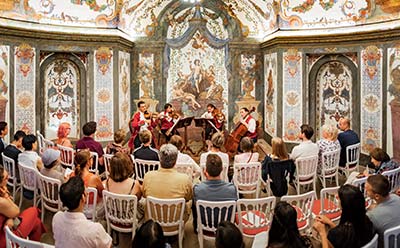
An intimate chamber marvelous acoustics.
We're about to leave Vienna, after 5 cold days of discovery. Most of what we saw, I had read about, but I had to be actually walking through those narrow streets, staring up at enormous baroque vaults, tromping through the kilometer-long courtyard of the immense Karl-Marx Hof, sitting in the tiny vaulted chamber where Mozart and friends played quartets and watching and listening as four young musicians played Mozart, Haydn and Dvorak, for these spaces and that history to come alive for me. More later. 

2013/10/27

If War is Peace, Ignorance is Strength

Nineteen Eighty-FourNineteen Eighty-Four by George Orwell
My rating: 4 of 5 stars

Re-reading this book today, as so many people are doing, reminds us of how gloomy the world looked in 1949. And especially how gloomy it looked to Orwell, who had spent his entire life and lost his health in struggles for what he imagined as a more decent society — one where people care about and care for one another. The book is a biting satire of what he thought of as the muddle-headed reformism of the British Labour Party, heading toward a totally controlled society called "Ingsoc", Newspeak for "English Socialism", but the permanent anxiety-inducement, psychological manipulation through the distortion of language, and crude but effective torture were inspired more by Nazi Germany and, especially, Stalin's Soviet Union. The technology of surveillance by "Big Brother" seems laughably primitive today, in the face of Edward Snowden's revelations about the working of the NSA, but Orwell's vision of pseudo-friendships among individuals too frightened to really connect seems almost to foreshadow those on Facebook and Twitter.

Orwell's great strength was as a moral essayist, a writer with a very definite view of how things ought to be and a critique of all that fell short of that. And it is as a moral essay that this book continues to matter, not as an effort of belles lettres. It is not pleasing to read, the flow of the language is jarring, the characters unlovable and barely understandable as people — and that is surely just what Orwell intended. But those unlikeable characters all serve his two purposes: to point out the dangers of an all-controlling state and to remind us once again of how language can be corrupted in ways not to advance and express thought, but to impede it. And also perhaps to express one faint hope: Winston Smith, by resisting as long as he does, even though he finally succumbs, demonstrates that the system's control can never be absolutely complete.

View all my reviews

2013/07/18

Back to my novel in progress: Eugène Varlin

My new novel is about a crisis in a different city, in a different time. Not Constantinople in the 15th century, but Paris in the 19th, and very especially the Commune of 1871. And for this I had to read this book:


Pratique militante & écrits d'un ouvrier communardPratique militante & écrits d'un ouvrier communard by Eugène Varlin
My rating: 5 of 5 stars

The life and writings of one of the true working-class heroes of the Paris Commune of 1871, Eugène Varlin, bookbinder, labor organizer, promoter of women's equality in work and in the movement, and ultimately batallion commander and combatant slain in the final days of the Week of Blood, the "Semaine Sanglante" that crushed the Commune. Paule Lejeune, author of many books on feminism and French history, has pulled together letters of Varlin and other texts putting his life in context.

View all my reviews

I admire Varlin enormously, and was delighted to find this modest little book put together very conscientiously by a woman who has worked for years for good causes and on the recovery of obscured revolutionary history. (Check out her list of oeuvres on this Wiki site: Paule Lejeune.)

Among the reasons for my admiration of Eugène Varlin are that he was a superb labor organizer and one of the few elected members of the Commune to keep his head amidst all the frantic rhetoric and chaotic orders and counter-orders after the Versaillais finally broke through the Commune's defenses. He was also a surprisingly articulate and clear, largely-self taught radical journalist and thinker, as the articles and letters assembled by Lejeune will make clear. And very practical: it was his idea, for which he recruited Nathalie Lemel and other workers, to set up the low-cost working-class restaurants known collectively as La Marmite, which became popular centers not only for simple, cheap nutrition but also for developing social relations among workers in different métiers and of both genders.

He could have escaped, in those last desperate hours, as did many others — shaving his beard would have been a good start for a disguise. But he was almost the last commander standing — he had been elected a battallion commandant — and would not desert the barricade. When all ammunition was exhausted, he was seized and slaughtered. He was 32.

Varlin was also a founding member of the Paris section of l'Association Internationale des Travailleurs (A.I.T.), what we know today as the First International.

2013/07/12

Medicine & Citizenship in Venezuela | Dissertation Reviews

For those of us deeply attached to Venezuela, this University of Chicago, 2012 dissertation by Amy Ellen Cooper is especially fascinating. But it will also be important for anyone seeking to change the world, on the relationship of social context and social conditions (including especially citizen participation) to physical health.

Medicine and Citizenship in Venezuela | Dissertation Reviews

From the review by Ana Servigna (Tulane):
Health practices are generally related to healing bodies, but Cooper explains that in Venezuela, those practices have become a “political experience of citizenship” (p. 73).…

Participation in the healthcare system is not limited to doctors and patients; it also includes an extraordinary number of community health volunteers. Complementing her previous chapters, Cooper analyzes the volunteers’ experiences of providing healthcare for others. One important feature that she highlights is that most volunteers are women, a phenomenon found in many other studies as well; however in her sample, these women are not only active participants but also local leaders engaged in the solution of local problems.
oooo

One of many popular images of the miraculous doctor.
And much more. I suspect that the desire for such participation was always, down deep, what the  cult of "el Doctor Milagroso", José Gregorio Hernández,  has always represented. He was a real Venezuelan physician, d. 1919, to whom many Venezuelans attribute magical curing powers and is now in the process of beatification. Statuettes and images of him are seen all over the country, and a postage stamp with his portrait was issued on the centenary of his birth in 1864. Now citizens have other ways to work to change conditions for better health, in addition to, or instead of, seeking magical aid from the dead doctor.

2012/06/06

Civil protest in Spain: Optimism of the will


The dismantling of the once-excellent public health, education and other benefits and destruction of labor rights, with no prospect of economic recovery from our deep recession, threaten to overwhelm Spaniards with "pessimism of the intellect".  The rising of the indignados, known here as "15-M", is a thrilling example of the only antidote "optimism of the will" —the determination to change the course of events, as Antonio Gramsci (following Romain Roland) liked to remind himself and others .

The following article has just appeared in the June issue of

THE VOORHIS VOICE


Edited by Ivan Light and published by The Democratic Club of Claremont (CA)

Thanks to Ivan  for his invitation to develop this analysis.

 Spain’s Indignados
By Geoffrey Fox

Last year’s mass movement of indignados in Spain, initiated May 15 (“15-M”), and evolving into protest occupations of the central plazas and marches, astonished government authorities and even participants. Inspired by protests in Tunis and Cairo, and encouraged by those in Greece and Portugal, the Spanish mobilization demonstrated further possibilities of democratic action in the Internet age, setting an example for movements as far away as Chile (the huge student protests) or the U.S. (Occupy Wall Street). But “15-M” was also a response to specifically Spanish political conditions.

This was the biggest in a series of volcanic eruptions against the legacy of the Franco dictatorship (1939-75) that began even before the election of the first Socialist party government, in 1983. Franco-ists and their allies have been entrenched in the judiciary, business sectors, and the Catholic Church, which still enjoys extraordinary legal and financial privileges. Democratic demands had erupted in mass mobilizations repeatedly in recent years, for example against military intervention in Iraq, the mishandling of a huge coastal oil spill, and attempts to use the 2004 terrorist bombing at Atocha for electoral advantage. Additional background included a series of corruption scandals, and the removal from office of judge Batasar Garzón, for investigating the current scandals and exhuming the crimes of the Franco dictatorship.  This was Spain’s political drama even as ordinary people endured an economic “crisis” that they blamed on those very corrupt officials and antidemocratic legacies. 

Police estimated 20,000 at the initial demos May 15 in Madrid’s Puerta del Sol, and 130,000 nationwide, with the biggest gatherings in Barcelona, Murcia, Granada, Seville, Malaga, Alicante and Valencia. One reason for the big initial turnout was the date, exactly one week before nationwide elections for regional and municipal authorities;  another was the demo’s independence of any party or trade union sponsorship. The heated campaign of mutual blame for the economic crisis by the two principal parties had disgusted many voters with both. The governing Socialists had disappointed their supporters by bowing to pressure from Brussels and Berlin to freeze pensions and cut other benefits; and the right’s Popular Party, closely aligned with big capital and banking, offered no credible alternative. One of the popular slogans of 15-M was “Don’t vote for them!” and the initiating coordinating committee called itself “Real democracy now!” (¡Democracia Real Ya!).

The original protesters included experienced veterans of social action groups but they were joined by many younger “indignados” frustrated by their lack of employment or educational opportunities. In Madrid’s spacious Puerta del Sol after the speeches, hundreds of the youth decided spontaneously to stay the night. Their rousting by the police before dawn was the second main cause of the protest’s huge success: press and Internet coverage of the rough handling resulted in far larger crowds the next night, and  spontaneous encampments in other cities.

The veteran social activists and younger, unemployed  “indignados” were quickly joined by a broader cross-section of the electorate, including students and unemployed adults, fully-employed but worried workers and professionals, housewives, and retirees. They were articulate, informed and determined. Participants set up orderly camps, declaring that they would not leave until satisfied that they had accomplished something.

Mobilized by Internet social networks, e-mail, and SMS, not by a parties or unions, the coalition sprouted no leadership that could be pacified with minor concessions. The press sought out the cyber activists, who called themselves “¡Democracia Real Ya!” — “Real Democracy Now!”  — but cyber activists could not and did not seek to control over a mass consensual movement of  indignant people, the “indignados.”

The right-wing Popular Party at first imagined that the demonstrations could benefit them electorally, reasoning that indignados who boycotted the election would otherwise vote for the left. The right did win big, not just on May 22, 2011 but even more significantly in the parliamentary and presidential elections November 20. However, their political victory has deepened dissatisfaction with the political right and the whole political structure. The Socialist Party sought the protesters’ support, expressing sympathy with their grievances, but with little apparent success. The 15-M crowds had already decided that major parties and the trade unions were too bureaucratized were too embedded in the system to respond to their demands.

But how to create real democracy? The absence of an executive committee or even a “majority rules” consensus prevented the emergence of a unitary of demands;  however,  there did emerge a broad consensus on what people did not want: huge bailouts of the banks, huge cuts in health and education budgets, more bureaucratic, non-representative rule. The term “indignados” came from a book written in French by Stéphane Hessel,  a Résistance veteran. The book’s title, Indignez Vous! might be translated literally as  “Get indignant!,” but  “Don’t put up with it anymore!” would be a truer fit.  Indignation is essential as a starting point for protest, but for real, lasting change, as Hessel himself emphasized, indignados have to agree on and work for clearly defined goals. To define these goals, one of the many committees that popped up in the Puerta del Sol set up suggestion boxes for proposals, and gathered nearly 14,700.  When finally analyzed months later, the demands ranged from “open lists” of candidates, to harsher punishments of corrupt politicians, to nationalization of the banks and even abolition of the monarchy. Here was enough material for several political initiatives, requiring different kinds of actions.

The camp-ins amounted to intense political self-education, including the practical experience of working with diverse people to meet the needs of such an improvised settlement. The camp alumni have taken those experiences back to their neighborhoods and created local action groups to act locally while continuing their debates to develop larger strategies for acting in the whole society.  Many of the 15-M veterans again thronged the plazas of Madrid, Barcelona, Valencia and other cities on the anniversary,  on May 12, 2012.  The crowds in the plazas were somewhat smaller, and though there were a few late night skirmishes with police, they mostly respected the police order against setting up tents or sleeping bags. This has led some reporters to speak of exhaustion but that prospect is unlikely because the rallies are only the most visible part of a movement that has grown deeper and wider in 2012.

Meanwhile, the larger situation of Spain in Europe and of all of Europe in the world are getting worse, and activists realize that it will take more than mobilizations and neighborhood actions to create employment, restore social services,  and realize their many other demands. But, roused from their torpor, the two big union federations and the parties of the  left (Partido Socialista Obrero Español, Izquierda Unida, and regional left parties) are now finding common ground rather than spending all their energy competing for the same constituents as in the past. Together they are making broader demands, and introducing more internal democracy . Demonstrations have become almost weekly events, with 15-M and unions joining forces, including in the broad labor-community general strike last march against the rightwing “labor reform”  that simplified the process of firing workers, and nullifying labor contracts while reducing economic equality. The indignados have not made a revolution, but should it come, they will be better prepared thanks to all their collective work since 15 May 2011.

Geoffrey Fox is an American author who resides in Almeria, Spain. He is the author of
 A Gift for the Sultan and other books. His blogs:  Literature & Society and also Lecturas y lectores.

2010/12/06

Review: Postwar by Tony Judt | Books | The Guardian

Another view, more critical than mine, written by Norman Daview in 2005 when the book came out and Tony Judt was still among us.

Review: Postwar by Tony Judt | Books | The Guardian

A book this length and this comprehensive, dealing with so many histories of so many countries, will inevitably have a lapse or two, I suppose. But Davies still seems to be fighting the Cold War, while Judt is not. And this criticism seems to me off-base: "Judt, however, is impervious to religion, unmoved by music and rather complacent about non-French and non-political branches of art and culture." — especially the phrase "unmoved by music." There's quite a bit about popular music trends, hilariously opinionated so he must have cared about it.

Thanks to Andrew Hull for pointing me to this review.

2008/08/25

Alternatives: Cuba tries to make a socialism that grows

But can it succeed? The Cubans have proven so resilient and Cuban institutions so resistant to joining the "There is no alternative" crowd, that they may just make this work. It's a small economy, but its methods may again -- as they have been repeatedly through the 1960s and 1970s -- be a model for other low-income countries. From the Financial Times: A revolution to repair: New friends come to the aid of Raúl’s Cuba By Richard Lapper

2008/01/04

Coming up: Church & party in Spain

It's been a complicated week, in my life as well as in Spain's. We just got back to Carboneras and my home Internet connection on Wednesday, after 2 very busy weeks in Madrid. And meanwhile, the hierarchs of the Spanish Catholic Church launched a surprise offensive on the Socialist government, which has gone to great lengths to appease them. Excessive lengths, in my opinion. The State still subsidizes the Church, and pays the salaries of military chaplains and religion teachers in public schools who are hired and fired by the bishops. And despite all this, at a huge rally in Madrid the day before New Year's Eve, supposedly to defend "the family," Cardinal Agustín García-Gasco thundered that "Radical laicism [i.e., the threatened separation of Church and State] is leading to the dissolution of democracy!"

Democracy? What does the all-male dominated, vertically commanded Church with its infallible pope know about democracy? This cluster of cardinals is taking a stand to the right of Pope Benedict, and openly siding with the conservative Popular Party. But rather than take pot-shots at purple-clad targets, I want to investigate these serious social questions:

What is causing this sudden ecclesiastic politicization? An upcoming election within the Church for control of the Bishops Conference is one vector, intersecting with the also proximate national elections (announced for March) for civil authorities, but mere coincidence (or contemporaneity) doesn't explain what is making certain cardinals so belligerent.

A second question is: How serious is all this going to be politically? Do the cardinals really control very many votes in contemporary Spain?

And we must also ask what it is about "laicism", homosexual unions and abortion that gets Spanish clergy so much more outraged than their counterparts in other European countries. Of even whether those are the real issues, or rather the public relations front to cover a more serious fear of the Spanish clergy: the threatened loss of their privileged institutional status and financing in a Church-State concordat still in effect since the Franco years.

I don't promise to answer all these questions, but simply to reframe them as hypotheses that can be proven or disproven. They are important for understanding Spain, and Spain is important for understanding the world.

2007/12/07

The pain in Spain: fighting against progress

So far I've been focusing here on the Spanish left. But the real problem is the Spanish right. According to all opinion polls, the left draws the sympathies of a sizeable majority, and the Partido socialista obrero español (PSOE) has been the governing party for 20 of the past 25 years, achieving much in economic development, the growth of per capita income, and human rights legislation. But it has had to fight every step of the way, and its hold on power is precarious. The problem, of course, is the peculiar character of the Spanish right.

Spanish conservatives are not merely pro-business "liberals," as that word is used in Spain. "Liberal" here means defender of the free-market before other more social interests, and thus implies merciless capitalist exploitation -- which in the 19th century was equated with "Progress" (see last week's blog). The core of the Spanish right is far more conservative than that: not 19th century, which was far too dangerously enlightened (Darwin et al.), but reaching back to 1492. That was the year that Spanish intolerance reached unprecedented levels, with the expulsion of Muslims and Jews from the newly united kingdom. It was also the year that Queen Isabel sent Columbus on his adventure to find the Indies, the year that Antonio de Nebrija presented the Catholic Monarchs with the first grammar of the Castilian (now called "Spanish") language (“Language has always been the companion of empire,” he explained in his introduction), and the year the price of gold reached its all-time historical high. A very good time for empire and a moment the Spanish right would like to freeze.

Spain did not invent intolerance (remember Samson's attempted genocide of the Philistines), but its monarch and clergy did invent institutions and even a special vocabulary for it. Our words "race" (in the sense of a subspecies of humans) and "caste" both have Spanish origins. The main institution was the Inquisition, an instrument for squashing innovation so effective that Spain -- once the greatest power in Europe -- stagnated as Holland, France and especially England advanced technically and comercially and soon had taken all Spain's possessions in the Old World (the Low Countries, Naples, etc.) and most of its wealth from the New. Popular resistence to such repression never ceased, causing the Inquisition to be abolished repeatedly, but repeatedly it returned along with the reactionaries who resumed power after every crisis. Abolished in 1808, it was reintroduced in 1814 after the defeat of Napoleon, then abolished again in 1820, restored again in 1823, and not abolished definitively until 1834. The progressive 19th century of the rest of Europe never had a chance in Spain. And though it did not carry that name, something very like the Inquisition was reinstituted by Francisco Franco (1939-75), as the Catholic Church became in effect (again) an arm of the state.

And for many Spaniards today, that is still their ideal of eternal Spain: all Catholic, all heterosexual, all speaking Castilian (and not Basque or Catalán or Gallego or Valenciano or anything else), all obedient to one temporal authority acting in the name of the supreme authority of God (the Roman Catholic God, that is -- not others are allowed). The party most rightists vote for, the misnamed Popular Party (PP), claims to be defending democracy, but its values do not derive from the people but from their constituents' vision of eternal Spain. As a recent example, the PP has blocked renewing the membership of the highest court and as many other measures as it could because it doesn't regard the party that won the elections as legitimate. In short, the PP does not regard the popular will as expressed by voting to be a source of legitimacy. The proof of its illegitimacy is that the PSOE-led government has approved same-sex marriages, recognizes the aspirations of non-Castilian-speaking regions, promotes integration of immigrants and, most damning of all, has sought to laicize education, at least partly.

The Spanish right is a minority but an extremely determined and potentially violent one. Its components include outright fascists waving Falangist banners and assaulting immigrants, an indignant clergy that denounces a course on citizenship as an attack on the Church's exclusive authority over moral values, the Church's outrageously reactionary radio network COPE (which, among other absurdities, has repeatedly called for the king's abdication on the grounds that he is too friendly to the Socialists), and an extremely vociferous organization of "victims of terrorism." The AVT represents only relatives of victims of ETA but not of 11 March 2004 (which happened on the PP government's watch) and has persuaded itself that the Socialists, just because they are Socialists, must be allies of the terrorists. And of course PP supporters also include the usual shady business interests anxious to avoid restrictions on their expoliation of the landscape, perforation of illegal wells in a thirsty country, and other abuses.

Together, they can stage very noisy, colorful demonstrations where they insult the government enthusiastically. More seriously, they have enough deputies in Congress to block any initiative requiring more than a simple majority (such as renewing the membership of the high court). And this is why the Socialist government proceeds cautiously, too cautiously for many of its potential supporters on the left. The state still subsidizes the Catholic Church out of taxes, and in addition still pays salaries for religious instruction in the public schools (students can opt out of that class, but it must be offered) while permitting Church authorities to select and fire the instructors on grounds of creed or anything else.

The Socialists are in a bind. If they try to move too fast, they will be blocked on everything. If they don't move fast enough, voters who oppose the right will stay home or will vote for one of the smaller leftist parties.

Well, I never got to it, but what I had intended to write about today was a symptom of this unending stalemate, the publication of the latest report (2006 data) of Programme for International Student Assessment, PISA. This is an international, triennial measure of 15-year old students' academic abilities in the 30 member nations of the OECD (Organisation for Economic Cooperation and Development) plus 5 non-member states. In a terrible embarrassment, Spain came out near the bottom of all the European nations in the three categories: number 32 in mathematics (of western European countries, only Portugal scored lower), 35 in reading (above Greece but below everybody else in W. Europe), and a little better in science where it was no. 31 (ahead of Lithuania, Norway and Italy). Worse, Spain's rankings in math and reading had dropped since the last report (2003 measurements). There are many reasons, of course -- there always are, and may excuses, for a failure. But a big part is due to the failure to institute any comprehensive reform of an antiquated and underfunded school system partly dominated by the clergy, and this is due to the right-left stalemate in Congress.

However, the PISA report wasn't all bad news. Some of Spain's regions, tested separately, did better than the European average, La Rioja best of all. The worst was my home region, Andalucía. Truly woeful results, explained by the Socialist regional president, Manuel Chaves, as a result of Andalucía's historical backwardness -- that is, it had been the least-developed region since Franco times. But we recall that some countries that were at least as backward back then have made far greater strides; Cuba comes to mind. And Chaves' argument doesn't explain why the results were worse in 2006 than in 2003!

But at least Spain can congratulate itself that its students score far better in math than those from countries with more wretched school systems, such as Kirgizstan (no. 57) and the United States of America (no. 35). Canada, in contrast, did very well: no. 7 in math, 4 in reading and 3 in science. Maybe those Canadian kids are brighter. Or maybe there's something wrong with public education in countries like Kirgizstan, the United States and Spain.

2007/11/23

Which way is Left? (2) - The Spanish exception

José Vidal-Beneyto is a Spanish sociologist (b. 1929 in Valencia) long resident in France, author of a dozen or more books on mass communications and politics, and a frequent columnist in Spain's most prestigious daily El País (of which he is a co-founder). Recently (10 and 17 November) he contributed two articles lamenting the "Izquierda en desbandada" -- "The Left in a rout," routed from the battlefield by the merciless Right of global capital, consumerism and the defeatism of "There Is No Alternative." Nowhere (in his view, which is mainly of Western Europe) does the Left have a credible, coherent program able to mobilize citizenry against the terrible destruction wrought by global capitalism against the environment, human health, and personal freedoms. Britain's New Labor is reduced to vague electoral liberalism, Germany's SPD is hopelessly divided and adrift, and France's Parti socialiste is in low-intensity civil war after the debâcle of the last elections.

Because he is writing in El País one would assume he is also thinking of Spain, though the authors he cites are mostly French. However the contrast between France and Spain is more dramatic than he is willing to acknowledge. In Spain, the Left has hardly been routed by the enemy but is the national government, and its program of action is still credible enough to rally large numbers, maybe even a majority, of voters.

As in France, the Spanish Left is comprised of multiple groupings with their own histories, traditions and programs, making Left politics a matter of continuous negotiation and frequent compromise to secure a majority in Parliament or to win an election. In Spain, certainly, and in France too, I suppose, far more people identify themselves as "left" than "right," but they don't always vote the same way or even vote at all. Nevertheless the Partido Socialista Obrero Español has been able to win elections more often than any other party in post-Franco democracy: Felipe González in four successive elections (1982, 1986, 1989 and 1993) and, after a 2-term hiatus under the Right, the current government of José Luis Rodríguez Zapatero, elected 14 March 2004. This gives the PSOE enormous authority in those negotiations with other left-leaning formations.

Opinion polls give the PSOE a continuing though narrowing lead over its main rival, the Partido Popular, for the coming (2008) elections: 39.7% to 37.4%. Whether this is enough will depend mainly on the PSOE's ability to win the votes of left-leaners who don't agree with everything they've done or even much like them. Those who think the PSOE is moving too slowly and timidly on social issues may want to vote for Izquierda Unida, whose deputies (members of parliament) would at least give conditioned support to a new Socialist government. However in IU the once-powerful Communist Party is fighting for control against non-communist radicals; the factionalism has become so ugly that IU's usual voters may just stay home. Left nationalists in Catalonia usually vote for Esquerra Republicana de Catalunya (Republican Left of Catalonia -- "republican" here means anti-monarchical), which is currently allied with the Socialists in both the Catalonian and national governments; but party scandals and erratic pronouncements by ERC's leaders may reduce their voter turnout, too, meaning a drop in the total left vote.

The PSOE still has two great strengths, one proactive and the other reactive. The first is the series of social measures enacted under the present government, including the legalization of homosexual marriages, the provision of sizable subsidies to assist seriously ill or disabled persons or their supporters, gender equality in elective office, pay, paternity-maternity leave etc., and other generally popular measures. The reactive strength is the strength of repulsion of the hard-right hierarchy of the Catholic Church and the ridiculous spectacle of exaggerations, outright lies, and antidemocratic political maneuvers, some of them extremely clumsy, of the so-called Popular Party. The PP's unreconstructed reactionariness may just be enough to drive those other leftists to the polls, to hold their noses and vote PSOE to keep the likes of Ángel Acebes, Eduardo Zaplana and the unspeakable Mayor Oreja out of their lives. More on that formation, the PP, in future notes. It deserves the same kind of dissection that Karl Mannheim brought to German conservatism in his 1925 study.