 |
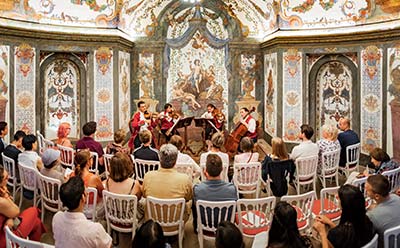
| An intimate chamber marvelous acoustics. |
Showing posts with label music. Show all posts
Showing posts with label music. Show all posts
2014/01/05
Wien, auf wiedersehen


2013/06/28
Neurons in harmony
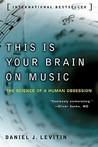 This Is Your Brain on Music: The Science of a Human Obsession by Daniel J. Levitin
My rating: 4 of 5 stars
Hard to believe, but this book is as good as its blurbs. Levitin is both a musician and a neuroscientist, who got into the science to understand better the music he was playing or engineering for rock bands. He knows far more music than I do, drawing on all genres to illustrate what it does, how it does it and why it matters. "Musical activity involves nearly every region of the brain that we know about, and nearly every neural subsystem." (pp. 85-86) And, he argues (against Pinker and other skeptics), it is not a superfluous byproduct of evolution, but has been essential to our survival and most probably, as Darwin himself believed, is even older than language.
Just how do we remember songs, even when the pitch, rhythm and timbre are all altered? And just what are pitch, rhythm and timbre, and how do they affect our brains? And why do you like heavy metal (or whatever you like), while I … well, many other things? These are just some of the mysteries that scientists are beginning to solve.
And what must occur in the brain for a musician to achieve full physical skill (of voice, strings, horn, whatever) and sensibility? It takes at least 10,000 hours of practice, says Levitin, for the brain to achieve complete mastery of anything (auto mechanics, fiction writing, musical composition or performance, or anything else). "Although people differ in how long it takes them to consolidate information neurally, it remains true that increased practice leads to a greater number of neural traces, which can combine to create a stronger memory representation." (p. 197) Talent — a genetic predisposition, that difference in learning time he mentions — is a big help, but it's not enough without practice.
Levitin's style is lively, his examples well chosen (even though I didn't recognize all the music he expected me to know), and his openness to examining contrary hypotheses makes him a credible guide. I especially appreciated his comments on performance and how a musician learns new pieces, by "chunking" — that is, learning whole groups or sequences of chords, melodies, etc. rather than all the individual notes a beginning piano player struggles to memorize. And best of all, the sheer emotion of listening and playing. That's what I want to hold on to as I get back to practicing. And I now have a clearer idea of the "schema" to listen for in classic jazz (I sort of knew, but never had it explained before) and how to appreciate the clever transformation Mahler achieves in his Fifth, or what and how Joni Mitchell accomplishes with her alternative guitar tunings.
So why four and not five stars? My very personal reaction: the first couple of chapters were too cute and anecdotal, an unnecessary (for me) warm-up for the truly informative, analytical stuff to come. But if you've never thought much about notes or scales or timbre, maybe you'll need that.
View all my reviews
2010/07/05
Personal update
A friend I hadn't heard from for a while asked me what I was up to. Lots of things, really, too many to keep track of. There's the approximately-weekly essay on Spain (I try to post every Sunday, but sometimes life gets too complicated and, like today, it comes in late). There's guitar practice, flamenco and classical; maybe some day I'll be good enough to play for you. There's that overdue book we're writing for Norton on the history of architecture and urbanism in Latin America (the pre-Columbian section is done and now my co-author Susana & I have jumped all the way to the 20th century). And there's the novel I'm in the process of publishing and which should be available by fall. And ideas for two other novels that I've barely started. Travel, most recently to Paris, then Barcelona, then Madrid (see my blog entries on Paris, 2010/06/10, and "Barcelona or Madrid?"2010/06/23).
And something else that will no doubt surprise my old friend, and anybody else who has known me over the years: I've been seduced by fútbol. Me, who since a grade school flirtation with baseball (obligatory in a suburb of Chicago, with two major league teams), me who had never paid any attention to any professional sport. Until now.
In Spain, fútbol is a collective passion that I finally couldn't ignore. At first I had no idea what those 22 guys were doing on the field. Well, 20 of them, anyway—it was pretty obvious what the portero or arquero guarding the net was up to, but the maneuvers of the other guys as they scurried up and downfield were a mystery. I've now watched enough (on the tele) and read enough to enjoy a really good pass, or a steal of the ball, or—more rarely—¡gol! We've been reading Eduardo Galeano's marvelous Fútbol a sol y sombra, and like him, my enthusiasm isn't limited to any particular team. I'm glad that Spain has been doing so well, since I live in Spain, and I was disappointed that Argentina got so thoroughly wiped out by Germany, since we have a strong Argentinian attachment in our house, but I can root for a good play by Germany or Ghana (which started out well) or even Paraguay ("even," I say, because those boys were playing rough and playing not to win, but not to lose—and an all-defensive game is much less fun to watch). And it gives me something to talk about with folks in town here in Carboneras.
Actually everything's going pretty well for us here in southern Spain, better than for a lot of people we know here. By a combination of luck and smart decisions by the smarter half of this couple, we got ourselves cushioned just in time before the "crisis"—as this deep economic recession is mislabeled. (A "crisis" is supposed to be a turning point, but so far the bankers and economics ministers haven't agreed on where to turn and seem to be hoping for a miraculous return to the old system. But I digress.)
My only problem is that I've fallen a few decades behind in my schedule. I was supposed to become a famous novelist by the time I was 45, and a good guitar-player in my 20's. I was also supposed to be fluent in French (I'm part way there) and German (long way to go still) and a couple of other languages by now. (I hadn't really planned to learn Spanish; it just happened.) And to have written more books. I haven't abandoned any of these projects, but it looks like I'll be obliged to live a little longer than I had expected to get them all done.
And something else that will no doubt surprise my old friend, and anybody else who has known me over the years: I've been seduced by fútbol. Me, who since a grade school flirtation with baseball (obligatory in a suburb of Chicago, with two major league teams), me who had never paid any attention to any professional sport. Until now.
In Spain, fútbol is a collective passion that I finally couldn't ignore. At first I had no idea what those 22 guys were doing on the field. Well, 20 of them, anyway—it was pretty obvious what the portero or arquero guarding the net was up to, but the maneuvers of the other guys as they scurried up and downfield were a mystery. I've now watched enough (on the tele) and read enough to enjoy a really good pass, or a steal of the ball, or—more rarely—¡gol! We've been reading Eduardo Galeano's marvelous Fútbol a sol y sombra, and like him, my enthusiasm isn't limited to any particular team. I'm glad that Spain has been doing so well, since I live in Spain, and I was disappointed that Argentina got so thoroughly wiped out by Germany, since we have a strong Argentinian attachment in our house, but I can root for a good play by Germany or Ghana (which started out well) or even Paraguay ("even," I say, because those boys were playing rough and playing not to win, but not to lose—and an all-defensive game is much less fun to watch). And it gives me something to talk about with folks in town here in Carboneras.
Actually everything's going pretty well for us here in southern Spain, better than for a lot of people we know here. By a combination of luck and smart decisions by the smarter half of this couple, we got ourselves cushioned just in time before the "crisis"—as this deep economic recession is mislabeled. (A "crisis" is supposed to be a turning point, but so far the bankers and economics ministers haven't agreed on where to turn and seem to be hoping for a miraculous return to the old system. But I digress.)
My only problem is that I've fallen a few decades behind in my schedule. I was supposed to become a famous novelist by the time I was 45, and a good guitar-player in my 20's. I was also supposed to be fluent in French (I'm part way there) and German (long way to go still) and a couple of other languages by now. (I hadn't really planned to learn Spanish; it just happened.) And to have written more books. I haven't abandoned any of these projects, but it looks like I'll be obliged to live a little longer than I had expected to get them all done.
2010/01/06
2010: Resolutions

As promised, my resolutions for this year 2010.
Writing:
1. History of architecture and urbanism in Latin America: Complete draft of Part II, the colonial period, 1492 to 1810 or 1820 (or in the case of Brazil, to 1822), and the rest of it soon after. (Draft of Part I, pre-columbian cities and architecture, has already been turned in to the publisher.)
2. Novel, A Gift for the Sultan: publish before the end of February, in two editions: a print and a free electronic version.
3. Spanish contradictions: a series of essays to appear on this blog. Focus will be on contemporary (post-Franco) Spain, but taking into account the legacies of the civil war and earlier conflicts to explain such puzzling features as the unresolved territorial organization and powers (so that Catalonia, the Basque Country and even Galicia and Navarra are neither integrated nor subdued), causes and consequences of the corruption scandals, the struggles over sexuality and gender, etc. I propose to post these essays weekly, beginning next Sunday, 17 January.
4. Some new short stories.
 Blowing my own horn:
Besides my presence on this blog and other sites (FaceBook, Twitter, the Red Room, etc.), I plan to make more of my previously published stories more accessible. I've already started to do this, with stories and essays on Scribd and BookRix (where I just posted a little book today).
Personal projects:
More fluent French, at least minimal conversational and reading ability in German, better guitar-playing (got to get those fingers to move faster and more surely)
 In short, you'll be able to read more of me, and I should be able to speak to more people and maybe even entertain a crowd on guitar (though that's probably the most challenging thing on my list -- it doesn't come easily, which is part of why I do it).
Photo of hornblower in Congress Park, Saratoga Springs, by MIKECNY.
Subscribe to:
Posts (Atom)