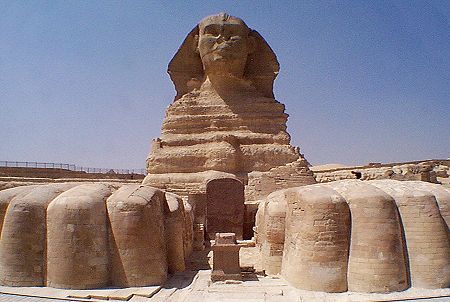
Showing posts with label Egypt. Show all posts

2015/02/20

The Nationalist Solution - NYTimes.com

In considering how to confront religious extremism and the terror it manifests, David Brooks has posed the problem intelligently in his column in today's NYT, The Nationalist Solution - NYTimes.com:
Extremism is a spiritual phenomenon, a desire for loftiness of spirit gone perverse. You can’t counter a heroic impulse with a mundane and bourgeois response. You can counter it only with a more compelling heroic vision. There will always be alienated young men fueled by spiritual ardor. Terrorism will be defeated only when they find a different fulfillment, even more bold and self-transcending.
I think this is true and important. However Brooks' proposed solution for some of those alienated young men is unconvincing: "a revived Egyptian nationalism, Lebanese nationalism, Syrian nationalism, some call to serve a cause that connects nationalism to dignity and democracy and transcends a lifetime."

Yes indeed, revived nationalism may fulfill their need for a bold and self-transcending heroic vision. Revived nationalism is what is fueling the reciprocal slaughter in eastern Ukraine, and fueled the 1990s wars in the Balkans. And rather than an antidote to religious extremism, it may be a facilitator. In the chaotic violence in Libya, Syria and other places, nationalist and religious fanaticism tend to be mutually reinforcing. The decapitators of ISIS are fanatics of that new self-proclaimed "state", whether or not they have any clear notion of Islam.

In his The Varieties of Religious Experience, William James gathered evidence from many cultures that a spiritual crisis in mid- to late-adolescence is almost universal, and can be resolved only by what he calls "conversion":  a turning away from the chaotic and contradictory messages that assail every young person to find some "process of unification of the self" which always brings "a characteristic sort of relief; and never such extreme relief as when it is cast into the religious mould. Happiness! happiness! religion is only one of the ways in which men gain that gift." (p. 163)

Note, "only one of the ways."  James continues: "The new birth may be away from religion into incredulity; or it may be from moral scrupulosity into freedom and license; or it may be produced by the irruption into the individual's life of some new stimulus or passion, such as love, ambition, cupidity, revenge, or patriotic demotion." (163-164)

The histories of Egypt, Syria, Iraq and Iran — and almost every other country — offer examples of other sorts of passions, other visions that united people in heroic struggles to construct something rather than destroy it. Mosadegh in Iran led one such movement. And in the Arab countries, Nasser in Egypt another, and the early Ba'ath in Syria, in those years when "Arab nationalism" aimed at modernization and national development, not religious intolerance. If that is the kind of "revived nationalism" Brooks was referring to, I'm afraid it's too late. Those movements were killed by pressure from more powerful nations in the 1950s (Britain principally, in the case of Iran, with more complicated frustrations in the other cases) which is one reason why they have not been repeated.

In any case, a new inspiring vision is not something outsiders can hope to inject. It can only emerge from within the alienated youth's own ideological and social environment, in the languages and symbols most familiar to them. The most we can do, and this is a lot, is rein in the racism and intolerance that beset those youth resident in Europe and widen opportunities — educational and occupational — for them to resolve their struggles of identity, so that fewer of them turn to destruction. And try not to frustrate so blatantly their new projects of construction, which will almost inevitably be opposed to vested economic interests. 

And don't miss this report by , on how a young well-educated Egyptian from a supportive family became an ISIS terrorist — and his friends' thinking that the same could have happened to them. From a Private School in Cairo to ISIS Killing Fields in Syria (With Video) - NYTimes.com

2012/09/17

Mobilizations everywhere

Everywhere lately we have been seeing big, sudden and sometimes terribly violent rallies of angry people — the worst, with the deadliest consequences, in Benghazi, Cairo and other parts of the Islamic world beginning September 11, but almost simultaneously in Barcelona (also September 11), Madrid and Lisbon (both with huge rallies on September 15), Moscow and across China. Very different movements, but the fact that they are all happening now reflects the conjunction of two global phenomena: The explosion of electronic media, making it vastly easier to convoke a crowd, and deteriorating economic conditions everwhere.

About those violent assaults on U.S. embassies in Muslim countries that began on September 11, I think Ross Douthat is right about the immediate cause: it was not about a movie that, as far as we know, doesn't even exist (nobody seems to have seen any more than a 14-minute trailer) — though the video was sure convenient for the assailants.
 
It’s Not About the Video - NYTimes.com

The question remains, though: Why did such large numbers of angry people respond? Focusing on the video has got us into a useless and damaging debate about whether we should limit "blasphemy," a concept that has no place in a free society. It also encourages the notion that Muslims are generally crazed fanatics easily aroused if you push their sacred buttons. Those of us who are a little older remember when the really big political movement in Egypt and from there to other parts of the Arab world was entirely secular — Nasser and with his call for pan-Arabism could muster enormous enthusiastic crowds, even without Twitter or SMS. Religious fanaticism is not genetic or eternal, but a circumstantial response to some very dramatic circumstances.

Here, since I claim no special expertise on the region, all I want to offer is two lines of investigation to identify the forces that are inducing people to look for radical solutions. We should first look at demographics, and then who those interplay with economics, and only then do the particular doctrines of preachers, ulemas and other agitators become relevant. In the Arab world, and in almost all other Islamic countries as well, population has been growing too fast to be absorbed in a rigid, and closed, opportunity system, and the economic crisis— including in parts of the Near East, a long-lasting drought that has driven more and more people to the overcrowded cities, creating greater density of desperate folks.

There are other possible answers to the economic crisis, and other ways to mobilize mass discontent. Limiting anybody's freedom of expression, as in the proposed legislation to outlaw "blasphemy" as in Tunis, is just going to delay finding such a solution. We need the freest debate possible to find those answers.

I hope to say something about those other mobilizations (Spain, Portugal, and Catalonia among them) in future notes — not because I know the answers, but at least to clarify our questions, what is really at stake and what can we do about the really serious world problems?

2011/10/13

How Israel was created, and what to do now

Recommended: The Real Story of How Israel Was Created by Alison Weir

It's important to understand this history, so obscured by political rhetoric and mythmakers. But, however flawed the creation, the state exists and is home to nearly 8 million people, of whom nearly 6 million (according to the Israeli census) are "Jewish" — by religion? by tradition? by ancestry? By any or all these criteria, apparently (which inflates the numbers). The occupied Palestinian territories have about 3.5 million people, including Muslims, Christians and atheists, not counting the many Jews (by any of the usual criteria) who have settled there illegally.

To my mind, the only acceptable way to solve the Israeli-Palestinian conflict is to dissolve the partition, that is, re-unite it all as a single state, with the same guaranteed rights for everybody regardless of family mythology, competitive tales of suffering, or whatever religion people profess or abjure. In other words, make it a normal modern state. Jews have as much right to live there as anybody, and no more right than anybody. It would cease to be a "Jewish" state and be simply a state with (probably for a long time) a "Jewish" majority. Until such a solution, the situation there will remain unstable and a continuing provocation to regional violence because the present condition is simply unacceptable to the non-Jews.

So how will the impasse between Palestinians and Jewish Israelis be broken? Not if it is left to those two parties, already locked in self-nourishing cycles of hate and fear. If a solution is not imposed by pressure from other states (extremely unlikely, given current US politics and the uselessness of Tony Blair), it must come from a wider change of the global context. The most important change will be if the peoples of Egypt and other Muslim-majority countries can achieve and consolidate their own democracies and themselves become normal modern states, with rights for all creeds. Such a revolution would immediately deflate Jewish Israeli paranoid chauvinism and leave people like Netanyahu and Lieberman without a constituency to play to. It would also force serious realignment and rethinking of Hamas and the PLO, and the Arabs and Jews of Israel-Palestine would again be able to talk to each and work things out, as they were beginning to do back in the early 1990s, before Rabin was assassinated (1995).

So, for the sake of Israelis, Palestinians and all the rest of us, we are obliged to do whatever we can to encourage democratization of Arab and other Muslim countries.

2011/09/29

Half-crazy in Cairo

Being Abbas El Abd (Modern Arabic Literature)Being Abbas El Abd by Ahmed Alaidy


In a Cairo circa 2003, inhabited entirely by 20-somethings, the narrator — who may or may not be named Abdullah — gets into terrible jams and awkward situations thanks to a slovenly roommate named Abbas el Abd, who is either a demonic trickster or a psychotic projection of the narrator himself. Who knows? He certainly doesn't. But in his confusions and anger you get a taste of the consumer anxieties, frustrations — sexual and also of national pride — and daily humiliations by those in authority that were a large part of what the masses in Tahrir Square in January of this year (2011) were protesting against, especially the younger ones, and that is a good reason to read this short, chaotic novel. Here's a sample of some of the daily frustrations that might drive a young Cairene nuts:
Abbas says the utilities shaft of the apartment block is the only place where a man can read the papers in the morning when his wife grudgingly shuts up so as to able to listen to the neighbors quarreling. Episode 7009 of the sitcom "Life," starring my neighbor and his esteemed wife.

Click. The Nine O'Clock News. A quick shot: in the market place in Jerusalem an Israeli conscript kicks an old woman in the stomach, and Jaffa oranges fall from her hands and are squashed beneath the huge boots.
Translator Humphrey Davies has done a complex, acrobatic job rendering Alaidy's mix of classical and colloquial Arabic and newly-minted expressions grabbed from English (al-boyyi frind, for example). His note at the end of the book is well worth reading to put this little book in context.


View all my reviews

2011/03/10

Guest post: From Animal Farm to Tahrir Square

Author Dirk van Nouhuys  fears that Orwell's 1944 allegory may foreshadow events in North Africa.
It is by chance that I happened on the fine recording of Animal Farm by Bill Nighy on BBC audio at this time. The reading includes a rousing choral rendition of the animal’s anthem, Beasts of England. It is a piquant time to reconsider Animal Farm. So many revolutions seeking democracy and/or social justice are sweeping the Middle East. Animal Farm, an allegory written out of Orwell’s righteous bitterness over what had developed from the Russian revolution, reminds us of how many such hopeful revolutions have accomplished regime change but failed to deliver democracy or social justice. Can we not count the ones that failed on our fingers and toes, whereas for the ones that succeed hands and feet will do?
 I can’t exactly remember when I first read Animal Farm, but at the time I was aware of the allegorical level, but did not focus on it. It seemed a moving animal fable made richer by its social implications.  I remember reading it later with a key and admiring how exquisitely he plotted in the politics of Russia -: this pig is Trotsky, that horse is the working class, etc., though the correspondence is not exact, for instance no pig corresponds to Lenin. Later yet I read it to my children, which they liked, and again was most sensitive to the animal fable. The prose is always Orwell’s decent writing that is clear, a little flat, and does not call attention to itself. The animals are figures, not characters. In every reading, what stuck me most was the dedication and sincerity of most of the animals. So uncritical, so increasingly wrapped in lies by the pigs. Hearing it now I confess it seemed somewhat forced and mechanical, the faults for me of allegory. But it was moving because of my fear and hope for the people of the Middle East.
 [Editor: The Nighy recording may be unavailable. But check out this amusing video of Animal Farm by Scott Pettersen.]

2011/02/09

The spectre of democracy

A spectre is haunting the first world — democracy in its hinterlands.

The consumer-capitalist states regard dictatorship in the subject countries as the price for  democracy at home. Dictatorships keep the prices of raw materials down and create captive markets for the metropolitan powers, enabling the latter to afford the shifting mix of police repression and prosperity at home that gives even their less-privileged an apparent stake in the system.  Democracy in those source countries might mean governments using natural resources for their people's needs instead of exporting them cheaply. Which would cut into the profits that enable consumer-capitalism to tolerate dissent and debate, raising the price of everything from gasoline to vegetables and exacerbating class tensions from London to Tokyo and New York and many other places.

That is why those first-world states intervened so quickly to snuff out the threat of democracy in Iran in 1953 (oil), Chile in 1973 (copper), the Congo in 1961 (all kinds of resources), and many other places.

Democracy in a big country like Egypt threatens also to destabilize dictatorships in neighboring countries, by example and possibly even by deed. It's contagious. Once started out there in a new environment such as Islamic North Africa and Western Asia (long thought immune to the disease), democracy could spread until it undermines the whole structure of inequality that allows us in the first world to spend so freely and waste so carelessly and forget about challenging the system. It's a real worry. We could end up living more like the Egyptians. And the Egyptians more like us.

Which explains:

Mideast Allies Press U.S. to Go Slow on Egypt - NYTimes.com

2010/03/15

Egyptian interruption

I skipped last Monday's essay on Spain because I was on a cruise ship on the Nile, far from Internet connections and with other things on my mind. I'm writing up details of that trip on the Spanish-language blog (link below) that I share with my alter ego, Baltasar Lotroyo.

Our tour started in Aswan, whence some of us took a bus south (upriver) to Abu Simbel and the colossi of Ramses II. We then cruised downriver to Luxor, where we saw more remains of pharaonic, Ptolemaic and Roman Egypt. From there we flew to Cairo, where we saw as much as you can see in three days -- we want to go back. More than that, Susana & I plan to study Arabic to get to know not only Egypt but the other countries speaking that language.

But not now. I have to avoid repeating an error that has has caused me great problems in the past: starting a new big project before I've completed the ones I have pending. That's why I took so long to finish my doctoral dissertation and many other things. Right now my biggest pending project is a book on Latin American architecture and urbanism, so if I take up any new language, it will have to be Brazilian Portuguese. Then, Arabic.

Same goes for smaller projects. Since I'm thinking and writing about Egypt this week, I'm suspending writing about Spain for now. I should have something thought-out about Spanish justice, or economy, or culture, to post next Sunday or Monday.

Our traveling companions were all (almost all) Spanish or Latin America. So that they can read my commentaries, I'm posting in Spanish. You can find them at Lecturas y Lectores.

Photo by Gilbert de Jong from Digital Wallpaper.

2009/06/20

A teeming Cairo alley

I just read and now have to review an early novel (I think his earliest) by the prolific Egyptian novelist and short story writer Gamal al-Ghitani. The review is for Gently Read Literature, whose editor Daniel Casey kindly sent me my copy. These are notes for a draft of the review, so I can share the process of writing a small essay on something the author knows little about.

The Zafarani Files (originally published as Waqa'i' Harat al-Za'farani, 1976. Trans. Farouk Abdel Wahab. Cairo; New York: The American University in Cairo Press, 2009) is a slapstick comedy set in a crowded, run-down alley of Cairo, with over 50 named and mostly zany characters, all of them obsessed by sex (their own and all their neighbors') and their social standing. Normally, they tolerate one another's routines -- including the effendi who pimps his own wife, the baker who is a male prostitute at the baths, the sergeant major (retired) and various others whose pretensions are far greater than their accomplishments. They view gossip, the frequent loud and violent quarrels of several of the women, and the occasional visit of a disoriented stranger as welcome entertainment. But one day the mysterious sheikh who lives in a tiny, dark apartment under the stairs and whom hardly anyone has ever seen, decides to begin his world-changing program in Zafarani Alley by depriving all the men there of that which they prize most: their sexual potency. This drives everybody over the brink. The pimp loses his customers, the male prostitute his job, the other men -- a taxi driver, a train fueler, a low-level bureaucrat, et al. -- their self-confidence, and the women have to resort to ever more desperate methods to get sexual satisfaction. Meanwhile, the government apparatus for political repression tries, with hopeless incompetence, to investigate these strange events while simultaneously denying to the world that anything unusual is occurring.

OK, my first problem is I'm probably missing a lot of the jokes. I don't know Cairo beyond what I've read in Mahfouz, and here there are word-games going on and what are probably sly references to larger political events of the 1970s. Secondly, there are so many named characters that it's hard to keep them straight, especially since the names are often similar. For example, Nabil, Nabila and Umm Nabila are three different characters, the first a young man that some of the local women fall in love with, the second a 26-year old female schoolteacher and unwilling spinster, and the third her mother. "Umm," I quickly figured out from the context, means "Mother of," and may be followed by the name of either a daughter or a son, as in Umm Yusif.

And finally, nothing ever gets resolved. With so many characters, each with his own craziness, there is no central element holding them all together as a story except the sheikh's curse (or blessing, or whatever it's supposed to be). But we never find out what happens to the sheikh (or even whether he really exists as they imagine him) or with the curse of impotence, which may still be in effect in that fictitious alley. What al-Ghitani must have been trying to do was to scandalize everybody, religious sheikhs, pretentious bureaucrats, ignorant shopkeepers and tradesmen, women generally, and the organs of the police state. The only characters who come across as reasonably sane are the "politico," possibly a Communist (or so the state bureaucracy imagines) just released from long imprisonment, and the young man who visits him to learn about the world.

But these are just reactions. Maybe tomorrow I can turn all this into a review.