2011/02/10
New page on "Sultan" background
Some readers of A Gift for the Sultan have been asking which parts are true, which invented, and how to find out more about Constantinople, the Ottomans and this critical period in world history. For those of you among the curious, I have begun to develop a new web page, Sultan: Background, with some tips to get you started. Please let me know if there's anything else you'd like to see there.


2011/02/09
The spectre of democracy
A spectre is haunting the first world — democracy in its hinterlands.
 The consumer-capitalist states regard dictatorship in the subject countries as the price for democracy at home. Dictatorships keep the prices of raw materials down and create captive markets for the metropolitan powers, enabling the latter to afford the shifting mix of police repression and prosperity at home that gives even their less-privileged an apparent stake in the system. Democracy in those source countries might mean governments using natural resources for their people's needs instead of exporting them cheaply. Which would cut into the profits that enable consumer-capitalism to tolerate dissent and debate, raising the price of everything from gasoline to vegetables and exacerbating class tensions from London to Tokyo and New York and many other places.
That is why those first-world states intervened so quickly to snuff out the threat of democracy in Iran in 1953 (oil), Chile in 1973 (copper), the Congo in 1961 (all kinds of resources), and many other places.
Democracy in a big country like Egypt threatens also to destabilize dictatorships in neighboring countries, by example and possibly even by deed. It's contagious. Once started out there in a new environment such as Islamic North Africa and Western Asia (long thought immune to the disease), democracy could spread until it undermines the whole structure of inequality that allows us in the first world to spend so freely and waste so carelessly and forget about challenging the system. It's a real worry. We could end up living more like the Egyptians. And the Egyptians more like us.
Which explains:
Mideast Allies Press U.S. to Go Slow on Egypt - NYTimes.com
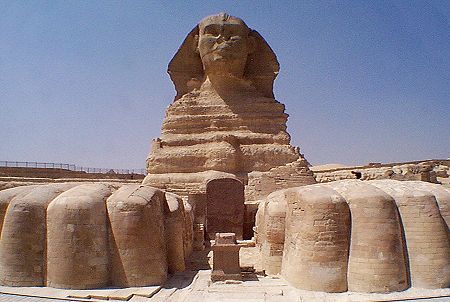
That is why those first-world states intervened so quickly to snuff out the threat of democracy in Iran in 1953 (oil), Chile in 1973 (copper), the Congo in 1961 (all kinds of resources), and many other places.
Democracy in a big country like Egypt threatens also to destabilize dictatorships in neighboring countries, by example and possibly even by deed. It's contagious. Once started out there in a new environment such as Islamic North Africa and Western Asia (long thought immune to the disease), democracy could spread until it undermines the whole structure of inequality that allows us in the first world to spend so freely and waste so carelessly and forget about challenging the system. It's a real worry. We could end up living more like the Egyptians. And the Egyptians more like us.
Which explains:
Mideast Allies Press U.S. to Go Slow on Egypt - NYTimes.com
2011/02/07
Goodreads giveaway of "A Gift for the Sultan"

So far there are no reviews of the book on Goodreads. I hope that changes. I do have several reviews, all very good, on Amazon, including a new one just posted today. See Amazon reviews of A Gift for the Sultan. If any of you "Goodreaders" have got around to reading it, I hope you will say something about it on the site.
2011/02/06
Egypt
What will matter most in the long run is that the popular rising in Egypt, even more than the earlier one in Tunisia, changes the way we must look at the world. What T. S. Kuhn might have called the paradigm of world events. (You will remember his Structure of Scientific Revolutions .) This shift feels as momentous as the shift from the Ptolemaic to the Copernican way of perceiving the universe.
Yesterday, or last week, people were still willing to believe that East and West were irreconcilable, that principles of democracy were unimaginable in Muslim societies, that the alternative to tight police control of the Muslim population would be a turn to Muslim extremists, sharia law and the rest of it, with mass popular support. There's been plenty of evidence against this view all along, but it was a convenient view to many western politicians blaming Asian or North African immigrants for local woes (France and Holland most notably) or seeking to justify pointless but terribly expensive wars.
Of course there are some people still holding to that view, but it's going to be harder to sustain than in an earlier age when the Church could command Galileo to deny that the earth moved. Thanks to the hundreds of thousands of Egyptians of all ages and classes waging their energetic but peaceful demonstration in Tahrir Square, we know it just isn't so. The "clash of civilizations" is not between East and West, or between Islam and Christianity, but between authoritarianism and free thought, free exploration, free invention. Give the people a chance — no, that's wrong, nobody gives the people anything. Let's say, when the people seize the chance to meet one another, try out new ideas or ideas borrowed from elsewhere but new to them, they can get along. Copts and Muslims and Armenian Orthodox and agnostics and atheists. And they can figure out how to keep order without the “help” of the police, like protecting the archaeological museum, or cleaning the street, or directing traffic, or taking care of their wounded.
Liberating the energies of the Egyptian people will go far to liberating all the peoples of the region. And it will mean the death of Al Qaeda, which is nourished by fear, hate, and the impossibility of other options.
Wouldn't Naguib Mahfouz be proud!
.) This shift feels as momentous as the shift from the Ptolemaic to the Copernican way of perceiving the universe.Yesterday, or last week, people were still willing to believe that East and West were irreconcilable, that principles of democracy were unimaginable in Muslim societies, that the alternative to tight police control of the Muslim population would be a turn to Muslim extremists, sharia law and the rest of it, with mass popular support. There's been plenty of evidence against this view all along, but it was a convenient view to many western politicians blaming Asian or North African immigrants for local woes (France and Holland most notably) or seeking to justify pointless but terribly expensive wars.
Of course there are some people still holding to that view, but it's going to be harder to sustain than in an earlier age when the Church could command Galileo to deny that the earth moved. Thanks to the hundreds of thousands of Egyptians of all ages and classes waging their energetic but peaceful demonstration in Tahrir Square, we know it just isn't so. The "clash of civilizations" is not between East and West, or between Islam and Christianity, but between authoritarianism and free thought, free exploration, free invention. Give the people a chance — no, that's wrong, nobody gives the people anything. Let's say, when the people seize the chance to meet one another, try out new ideas or ideas borrowed from elsewhere but new to them, they can get along. Copts and Muslims and Armenian Orthodox and agnostics and atheists. And they can figure out how to keep order without the “help” of the police, like protecting the archaeological museum, or cleaning the street, or directing traffic, or taking care of their wounded.
Liberating the energies of the Egyptian people will go far to liberating all the peoples of the region. And it will mean the death of Al Qaeda, which is nourished by fear, hate, and the impossibility of other options.
Wouldn't Naguib Mahfouz be proud!
Interviews on "A Gift for the Sultan"
 My thanks to Kipp Poe Speicher and his blog, "Closing My Eyes…," for posting this interview of Geoffrey Fox about A Gift for the Sultan and about writing generally. Sharing ideas and writing habits with colleagues can be really useful to writers — not only to pick up some new trick or technique, but so we don't feel quite so alone in our struggles to get the words right.
And here is another intervew (in Spanish) that appeared in our local Carboneras newspaper Campomar, by our friend and very good local journalist Inma Caparrós. Photo at right is from the event she describes:
Geoffrey Fox presenta su último libro "A gift for the Sultan"
2011/01/19
Your author in Greece
 |
| Leo & Gef team up in the Archaeological Museum of Athens |
 |
| In the harbor of Nauplion |
We had to stop in Nauplion, even if briefly, because I'd heard so much about it from my friend and expert on all things Byzantine, Diana Wright. (Check out her blog, Surprised by Time.) It's a small town in a lovely setting.
2011/01/17
Story: From a Trolley Stop in Amsterdam
I've just posted this story, originally published in InkPot #5 in 2004, a reflection on migration and displacement, where it can be viewed for free on Scribd:
From a Trolley Stop in Amsterdam.I hope you enjoy it. While there, you may want to look at the other essays and stories I've posted on Scribd, which can be seen here.
Whims of the wind
 Violeta Parra By The Whim Of The Wind by Karen Kerschen
My rating: 4 of 5 stars
For all of us who saw her country's struggle as part of our own for personal and social liberation, Violeta Parra was the raw, honest voice of Chile's poor. Her collections of songs from the remote hills and woods of Chile and especially her own compositions — Volver a los 17, Gracias a la vida and others — became anthems for activists around the world in the late 1960s and 1970s.
But from what human depths sprang these strange songs, at once laments and celebrations? And why did this brilliant, much loved artist take her life in 1967, at age 50? Karen Kerschen's vivid and well-paced biography goes far to explaining these things, and also tells us much about the social conflicts in Chile that led to that country's tragic experiment with socialism. And it also gives us glimpses of her admirers Pablo Neruda and Pablo de la Rokha, the "Nueva Canción" artist Víctor Jara, and Violeta Parra's most famous relatives, her musician children Ángel and Isabel and her elder brother, the equally famous mathematician and poet Nicanor Parra.
Violeta was one of 9 children of a poor peasant couple with a strong love of music. Though she would later prosper both as a performer and a visual artist, she always identified herself with the poor, playing their homemade instruments, composing songs of their pain and joys, depicting what she thought were their lives and their dreams in her colorful arpilleras of yarn woven into rough jute backing. (To see examples, search for "violeta parra arpillera".) This choice of thematic material made it very difficult for her to break through as a performer in urban Chile, where "top 40" type tunes, mostly foreign had begun to dominate commercial radio and the clubs, but when people had a chance to hear her many of them became entranced by the uniqueness of her style and the directness of her language. In 1954, when she was 37, she seized the opportunity to perform in Europe at a folklore jamboree sponsored by the Polish government, and in Europe — especially and for the longest period in France — she found an audience fascinated by her delivery and also by her arpilleras.
Though she considered herself ugly because of her pockmarked face, she attracted many men, including one tyrannically jealous husband (he stopped her from publicly performing for years), another husband who was more tolerant and forgiving of her impetuous and unpredictable behavior, and many other lovers, all of them younger than she. She blamed herself for the death of a baby daughter she left behind when she had the chance to go to Poland, grieving to the point of desperation, but always — with her children as with her lovers — her artistic expression and desire for attention to her art took precedence over any other obligation. Her love for her surviving children and perhaps her fear that something terrible might befall them (as it had to the baby she had left behind) caused her to interfere in their lives in ways that must have been intolerable, including her loud and vehement condemnations of Ángel and Isabel's performance of "Nueva Canción" protest music that was less "folkloric" (rural-based and traditional) than her own. The poverty of her childhood had so marked her that when she did begin to make money, she regarded it as extraordinary and ephemeral, either to be spent quickly before it disappeared or hoarded for her children. Her last big investment after her return to Chile, "La Carpa de la Reina", a huge tent on the outskirts of Santiago where she hoped to attract audiences for her music who would also dine on her (equally folkloric) empanadas and sopaipillas was a disaster. She had violent mood swings, from exuberance to blind rage that could be provoked by the slightest contretemps.
It was after she realized that her last long-time lover, Swiss-born musician Gilbert Favre, was not going to return to her, that at 50 she was not going to maintain the kind of idyll she had imagined (and that she was not going to "return to being 17," as one of her songs puts it), that she wrote her most famous song, "Gracias a la vida," one of the saddest, most poignant celebrations ever written. And it was not long after that that, after two previous suicide attempts, she stuck the barrel of a pistol into her mouth and pulled the trigger.
Karen Kerschen has done an enormous job of interviews and documentary research, and treats this much-loved figure with great affection but also with the distance to recognize the pain she caused herself and many of those around her. Her short, vivid chapters are enlived by the author's pen-and-ink illustrations.
View all my reviews
2011/01/12
2011: Resolutions

I did get my novel published, though not by February as I had resolved, and I did write several blog essays about Spain, as promised. Now I'll have to work harder on those other things, the architectural history book and new fiction. Write more, read more, write better, that sums it up.
2011/01/11
Çok teşekkür ederim—Thank you in Turkish
As Susana reported here a couple of days ago ("Olives for breakfast…", 2011.1.8), our travels through Greece and then Istanbul culminated in a reading in that city from my novel, A Gift for the Sultan , before a literary circle of the Alumni Association of the Middle East Technical University (METU), a prestigious Turkish university serving the whole Middle East and where the language of instruction is English. This group of alert, widely-read professionals engaged me in a lively discussion from which we all learned some surprising things.
Even the history buffs present were surprised by some of what I told them about this crucial period, the tumultuous years of Ottoman and Orthodox Christian relationships just prior to Mehmet's conquest of Constantinople. Collaboration of all kinds, including marital, was at least as frequent as conflict. When I said that I thought that what had really happened in 1453 was that Constantinople had conquered the Ottomans, they understood what I meant and I think at least some of them were inclined to agree with me. What I meant was that, by seizing that great city and making it theirs, the Ottomans turned themselves from a mostly nomadic and anti-urban force into the great cosmopolitan polity that eventually extended over three continents and ruled in splendor for over 400 years.
And I learned that the meaning of "gazi" has changed dramatically since then: in the time of my novel (beginning of the 15th century), it was a heroic term that a warrior had to win in battle, used by fiercely independent war chiefs who were leaders of their own mounted bands. Today it means simply a wounded soldier, not heroic at all.
Though it was a cold and rainy night and off their usual schedule, we had a crowd of over a score of people who came directly from work for dinner and discussion. I have to thank — çok teşekkür ederim — a whole daisy-chain of METU alumnae for making this happen; Lale Eskicioğlu, who lives in Canada and hosts the Read Literature website; her former classmate in Istanbul, Zeynep Karaburcak, a businesswoman with great organizing skills, and Yasemin Civelekoğlu, moderator of the literary group, who distributed the pdf of the novel to the members.
I now know something more about contemporary higher education and about the literary establishment in that fascinating country, and began friendships that I hope to continue.
, before a literary circle of the Alumni Association of the Middle East Technical University (METU), a prestigious Turkish university serving the whole Middle East and where the language of instruction is English. This group of alert, widely-read professionals engaged me in a lively discussion from which we all learned some surprising things.Even the history buffs present were surprised by some of what I told them about this crucial period, the tumultuous years of Ottoman and Orthodox Christian relationships just prior to Mehmet's conquest of Constantinople. Collaboration of all kinds, including marital, was at least as frequent as conflict. When I said that I thought that what had really happened in 1453 was that Constantinople had conquered the Ottomans, they understood what I meant and I think at least some of them were inclined to agree with me. What I meant was that, by seizing that great city and making it theirs, the Ottomans turned themselves from a mostly nomadic and anti-urban force into the great cosmopolitan polity that eventually extended over three continents and ruled in splendor for over 400 years.
 |
| Miniature of horse-archer, Topkapi Museum |
Though it was a cold and rainy night and off their usual schedule, we had a crowd of over a score of people who came directly from work for dinner and discussion. I have to thank — çok teşekkür ederim — a whole daisy-chain of METU alumnae for making this happen; Lale Eskicioğlu, who lives in Canada and hosts the Read Literature website; her former classmate in Istanbul, Zeynep Karaburcak, a businesswoman with great organizing skills, and Yasemin Civelekoğlu, moderator of the literary group, who distributed the pdf of the novel to the members.
I now know something more about contemporary higher education and about the literary establishment in that fascinating country, and began friendships that I hope to continue.
Subscribe to:
Posts (Atom)