We love this city, and since we had already seen the top 3-day tourist attractions on previous visits (Hagia Sophia, Topkapı, etc.) and since we're spending more than a week here (of the 3 we're devoting to exploring Turkey) we feel free to stroll around, take the feribot up the Halıç (the "Golden Horn") and take in some of the museum exhibitions aimed mainly at a Turkish public.
Thursday evening was my talk about my book A Gift for the Sultan before a gathering sponsored jointly by the Harvard and MIT alumni organizations where, fortunately, everybody could understand my English —though I started out with a couple of sentences that I had prepared in Türkçe. My accent is probably all wrong, but they were tolerant. Thanks to Şeyma Yavuz (president of the Harvard Club of Turkey) for organizing it and to all those who came out on this rather inconvenient evening, as it was close to the eve of the Kurban Bayramı (Eid al-Adha in Arabic countries) or festival of the sacrifice which is the beginning of a week-long holiday.
The event was held in the Blue Room of the Sultanahmet Four Seasons Hotel, which is the former Sultanahmet Jail, which from 1919 to 1969 "served mostly as a prison reserved for writers, journalists, artists as intellectual dissidents sentenced," according to Wikipedia. After years of abandonment (the prisoners had been transferred to another jail), it was converted into this luxury hotel that opened in 1996. What was then the exercise courtyard is now an open-air restaurant, and unless you knew this history you would never guess that the penthouse rooms at each of the four corners had been the guard towers. It was the best jail I had ever visited, and I've visited several, a couple of times (in a Venezuela mix-up and in Chicago after a civil rights sit-in) as an unwilling guest. None of the others offered such a splendid array of olives and cheeses along with the wine. One thing did continue from the old days: the people gathered around me on Thursday were indeed writers and intellectuals, and posed very interesting questions and new thoughts regarding my book and other things. I hope and plan to see them all again on future visits.
On Friday, we spent almost all of the day at two exhibitions at the İstanbul Modern art museum. One was the biennial featuring works inspired by the Cuban-American artist Félix González Torres (check out the links for more detail). González-Torres' own works were not presented but were described and alluded to, for art from many countries aimed at making us painfully aware of violence and censorship. Many women are included amont the artists, but the other big show in the main building was exclusively of women with explicitly feminist themes. A good way to celebrate a Muslim holiday, it seemed to us. The pieces by Turkish women were especially interesting to us. One by Asıl Sungu is a pair of videos, featuring her first with her father and then with her mother, asking opinions on what to wear — pretty funny, the differences between the way her father and her mother wanted her to look: he, favoring a more professional, businesslike style that might be more protective of her, and she (the mother) urging a sort of little-girl costume. But on the whole the works that impressed us most were the old ones: Tina Modotti's marvelous photographs in Mexico, and Martha Rossler's more satiric portraits combining scenes of the Vietnam war (occurring at the time of these works) with consumer paradise images from the US.
Well, that was exhausting. Hours on our feet at two big exhibitions requiring a lot of attention. So next day, yesterday, we took the feribot up the Halıç to Bilgi Üniversitesi, near Sülüce on the far shore of the Halıç. The ferry is large, with two interior decks and and an upper exposed deck, a coffee and snacks stand, comfortable seats, and the fare is the same as for other public transportation, a mere 2 TL (less than 1 euro). Susana was interested in Bilgi for its setting and its architecture, and also for an exhibition on LeCorbusier. It has a good, kind of funky (colorful and intentionally inelegant) restaurant, Otto Santral. And from there we took a taxi to the huge Eyüp mosque complex. "Eyüp" is the Turkish version of "Abu Ayyub al-Ansari, the companion and standard bearer of the Prophet Muhammad",who is said to be buried there. (Wikipedia). From there, we took the teleferik up to the Pierre Loti Cafe, where the French novelist is said to have hung out. Great views, good Turkish coffee. I bought a couple of Loti's boks there. I'll let you know more after I read them. He was a very curious character, whose Turkish experience I hadn't known much about. I'd only read his Pecheur d'Islande, about a very different part of the world, when I was in high school.
Now we're off to Edirne. Talk to you again soon.


2011/11/01
Among the Turkish Kurds
We are in Sultanahmet in İstanbul now, at 6:30 pm Salı (Tuesday) and the muezzin is calling out from the Blue and other mosques. Despite this medieval throwback (amplified by 21st century loudspeaker technology), this is one of the most sophisticated, diverse and populated (nearly 14 million people) cities in the world. We landed here yesterday after a 6-day tour of a very different Turkey, as sharp a contrast as one can imagine to İstanbul: southeastern Anatolia, the provinces of Şanlıurfa and Diyarbakır. Kurd country, with pockets of Arab-speakers, mostly poor and rural, but changing rapidly — too rapidly for many nomadic herders and pastoralists to comprehend. The famous old city of Diyarbakır, military stronghold and site of repeated mass violence from the 13th century BC to the massacres of 1925, has burst out from its ancient walls as the swelling population spreads out to the west, and new construction is everywhere, in some places knocking down millenial neighborhoods.
The GAP is not the only thing changing peoples lives. The kids are all (or mostly) in school now, all learning to speak proper Turkish regardless of what they speak at home. Although it cannot be used as a medium of instruction, as far as we could tell there are no restrictions on using Kurdish outside of government-sponsored institutions. There are now newspapers and radio stations in Kurdish (for a while they were outlawed), and Kurdish is what most people (except those Arabs) speak most of the time, but at least in the bigger towns everyone understands Turkish.
And the Kurds we spoke with consider themselves "Turks", not as an ethnic label but in its relatively new — invented at the time of the founding of the Republic in 1923 — sense of "citizen of Turkey". But clearly our limited experience in the area leaves out a whole lot of the story of tensions between Kurdish-speaking and Turkish-speaking Turks, which a glance at Hürriyet Daily News will show you are still high. Those tensions, and ethnic conflicts generally in what is now Turkey, are not ancient or inherent, but were energetically fostered by foreign powers aiming to split and seize parts of the old Ottoman empire, beginning in the 18th century. But that's a subject for another, longer essay, which will in part be a reflection on Caroline Finkel's massive Osman's Dream, which I just finished reading.
We covered some 1,400 kilometers, from Şanlıurfa to Mardin and Diyarbakır, with our very patient and punctual driver Mehmet Tanık. Our starting and end point was the very poor village of Yuvacalı, where Alison Tanık has organized the whole extended family around these tours. We saw some amazing ancient sites, from Göbekli Tepe (thought to be the most ancient temple anywhere) to the relatively recent — a mere 2,000 years old or so, from the time of Julius Caesar — statues atop Mount Nemrut, still more recent (13th-16th century AD) Seljuk and Ottoman structures, and all that 20th and 21st century building and Lake Ataturk. I'll tell you more about our adventures in future posts. Meanwhile, if you are interested in doing something like this, check out Nomad Tours Turkey.
Diyarbakır grew from 30,000 in the 1930s to 65,000 by 1956, to 140,000 by 1970, to 400,000 by 1990, and eventually swelled to about 1.5 million by 1997. Today the intricate warren of alleyways and old-fashioned tenement blocks that makes up the old city within and around the walls contrasts dramatically with the sprawling suburbs of modern apartment blocks and cheaply-built gecekondu* slums to the west. (Wikipedia)The children now have opportunities that their parents had never imagined — not all of them healthful. The rapid changes here, as they always do, create such disparities in knowledge and wealth that corruption and crime grow along with everything else. Much of the change is spurred by the huge GAP, Güneydoğu Anadolu Projesi or "Southeastern Anatolia Project", a huge scheme centered on the building of the Ataturk Dam on the Euphrates. Jobs, construction, hydroelectric power and irrigation are among the more positive effects, flooding of ancient sites and rapid influx of population are among the more problematic ones. Places that had water for millenia suddenly went dry as rivers were diverted, other places went under water. The flooded sites are lost forever, but gradually water is coming back, through pipes, to villages that had lost it. Rapid development is always an uneven and unsettling process.
*Turkish for "built overnight".
The GAP is not the only thing changing peoples lives. The kids are all (or mostly) in school now, all learning to speak proper Turkish regardless of what they speak at home. Although it cannot be used as a medium of instruction, as far as we could tell there are no restrictions on using Kurdish outside of government-sponsored institutions. There are now newspapers and radio stations in Kurdish (for a while they were outlawed), and Kurdish is what most people (except those Arabs) speak most of the time, but at least in the bigger towns everyone understands Turkish.
And the Kurds we spoke with consider themselves "Turks", not as an ethnic label but in its relatively new — invented at the time of the founding of the Republic in 1923 — sense of "citizen of Turkey". But clearly our limited experience in the area leaves out a whole lot of the story of tensions between Kurdish-speaking and Turkish-speaking Turks, which a glance at Hürriyet Daily News will show you are still high. Those tensions, and ethnic conflicts generally in what is now Turkey, are not ancient or inherent, but were energetically fostered by foreign powers aiming to split and seize parts of the old Ottoman empire, beginning in the 18th century. But that's a subject for another, longer essay, which will in part be a reflection on Caroline Finkel's massive Osman's Dream, which I just finished reading.
 |
| Zeus and friends atop Mt. Nemrut (Virtourist) |
2011/10/21
Türkiye'ye gidiyoruz

We leave from Madrid on Tuesday, first for a week in the towns and villages of the Kurdish region in southeastern Anatolia (Şanlıurfa, Diyarbakır, Nemrut, Yuvacali), some of the time staying in villagers' homes. I probably won't be able to post anything on the Internet from there (this is really rural territory), but I'll let you know about our adventures when I can.
Then we fly from Şanlıurfa to İstanbul, in time for the presentation of the Turkish-language version of my novel A Gift for the Sultan by its publisher, Nokta Kitap, at the big Tüyap International Book Fair in İstanbul in November. In connection with this publication, I've been invited to speak to the Harvard Alumni Association (Harvard Mezunlar Derneği) and, a few days later, students of Koç Üniversitesi.
You think maybe I'm a little excited? So excited I've begun learning Turkish. Fortunately, the Harvard alumni and the Koç students will be able to understand me in English, because I'm not yet ready to deliver a lecture in the language.
These are busy times of big changes in Turkey, and now of renewed troubles in some of the Kurdish areas, so I should have a lot to tell you after this trip.
Meanwhile, my thanks to Amy Miles for her work in helping us self-published authors get a little more exposure. Here's the interview she has just posted on her blog:
Self Published Authors: Author Interview: Geoffrey Fox
My case is a bit peculiar. A Gift for the Sultan is self-published in its original, English-language version, but is about to published by a major trade publisher in a Turkish-language version, in Istanbul. The translation has been completed, and the book should be coming out in just a couple of weeks. I'll be letting everybody know when that happens.
Signing ebooks
I mentioned here a while back that I now could sign your copy of my ebook on Kindle, thanks to a clever app developed by Evan Jacobs. He has now added other possibilities: I can give you a personal dedication of your e-copy of the novel on any device (not just Kindle) you use. Here's what he says:
So if you have a copy of A Gift for the Sultan on your iPad or whatever, I'll be happy to scribble my signature and a personal note. I'll also be glad to see any comments you send along.== Kindlegraphs are now available on all Kindle apps == Your most requested feature was "Support for other reading devices and platforms". There are Kindle apps for every major platform (e.g. Windows PC, Mac, iPhone, iPad, Android, Windows Phone 7) and now your readers will be able to view their Kindlegraphs directly inside these apps. A reader who doesn't have a Kindle device can simply enter a regular email address during the Kindlegraph request process. When her Kindlegraph request is fulfilled, the reader will receive an email with links to download her Kindlegraph (in both PDF and AZW formats). If she has a Kindle app installed and she clicks the AZW link, her Kindlegraph will open inside her Kindle app. == Readers can send comments to authors when requesting a Kindlegraph == This was the second most requested feature and it allows your readers to provide context about themselves so that you can better personalize their Kindlegraphs.
2011/10/15
Speaking in tongues
Here is a fascinating discussion for somebody like me who is an avid language-learner:
Pimsleur review by experienced language learner | Fluent in 3 months
Irish polyglot Benny Lewis is even more devoted to learning new tongues than I. And that's saying something. Check out his 8-language pitch for his learning guide.
Currently I'm learning Turkish. I've been invited to give a talk next month to students at Koç Üniversitesi in Istanbul about A Gift for the Sultan, which will by then be published in Turkish, and I want to be able at least to converse a little in that language while we're there. I've been using (mostly) Rosetta Stone, which is marvelous for my way of learning: simultaneously aural and written, but intuitive, no rules spelled out. I cheat, and look in books when intuition fails. Each of us has his/her own learning techniques, but for me it's been working. After reading Benny Lewis's review and listening to the Pimsleur sales pitch (it's online), I'm sticking with Rosetta.
Pimsleur review by experienced language learner | Fluent in 3 months
Irish polyglot Benny Lewis is even more devoted to learning new tongues than I. And that's saying something. Check out his 8-language pitch for his learning guide.
Currently I'm learning Turkish. I've been invited to give a talk next month to students at Koç Üniversitesi in Istanbul about A Gift for the Sultan, which will by then be published in Turkish, and I want to be able at least to converse a little in that language while we're there. I've been using (mostly) Rosetta Stone, which is marvelous for my way of learning: simultaneously aural and written, but intuitive, no rules spelled out. I cheat, and look in books when intuition fails. Each of us has his/her own learning techniques, but for me it's been working. After reading Benny Lewis's review and listening to the Pimsleur sales pitch (it's online), I'm sticking with Rosetta.
2011/10/14
Keeping Spain "different"
 The Disinherited: The Exiles Who Created Spanish Culture by Henry Kamen
My rating: 3 of 5 stars
Since the Catholic Monarchs' conquest of Granada and their expulsion of the Jews in 1492, Spanish rulers have sought to unify their country by driving out dissidents and deviants, thus guaranteeing and protecting the country's backwardness. Kamen tells the stories of many of the most interesting and attractive thinkers, artists, scientists and other innovators forced into exile, whether by the Inquisition or later burst of intolerance, though he has chosen not to say much about those who most strongly identified with the losing side in the 1936-39 civil war, and almost nothing about the huge numbers driven to leave Spain by poverty and the hopes of a better life in the Americas or elsewhere in Europe; this is a deliberate choice, on the grounds that "political émigrés and economic migration" have both been "well-studied" and thus not in need of further discusion.
"Spain is the only European country to have attempted to consolidate itself over the centuries not through offering shelter but through a policy of exclusion," he states in the preface (p. x). At first glance that may seem to be an exaggeration — France was extremely cruel to its Huguenots, several European countries drove out their Jews even long before the Third Reich's campaign to exterminate them, Protestants were forced to flee from Catholic lands and Catholics from Protestant during the 100 Years War. But Kamen is right that no other country so consistently, and over such a long period, succeeded in excluding so many and so many different types of misfits (religious, intellectual political, etc.).
This book is a collection of vignettes and anecdotes to illustrate the argument, rather than a systematic analysis of a Spanish "policy of exclusion." If the author had attempted that, he would quickly have to admit that there was no single "policy" through the centuries, and in most periods no policy at all — the intellectuals he writes about were in many cases voluntary émigrés or expatriates who left because Spanish backwardness (in education, infrastructure and institutions) did not give them space or support to develop their talents. The great virtuoso violinist Pablo Sarasate, for example, repeatedly returned to perform in Spain but was always disappointed because there was no adequate orchestra to accompany him or knowledgeable audience to receive him.
But beyond the sometimes fascinating stories of individuals, the book does illustrate the force of Spain's resistance to change, and thus incidentally gives us more context to understand the ferocity of reaction against the unprecedented modernizing efforts of the Second Republic, which was finally suppressed by insurgent generals, the continent's most reactionary Catholic church, and their allies. Toward the end of the nearly 40-year dictatorship of Franco, Minister of Tourism Manuel Fraga tried to attract tourists with the slogan "Spain is different." And it was, because under Franco it was western Europe's only theme park of mediaval superstitions, primitive technology, and lock-step discipline. Spain has changed, enormously, since the death of Franco, forced to change by its internal contradictions and some very capable and audacious political leaders, and by the changing world. But the forces of repression, the insistence on only one correct dogma, remain strong and are re-emerging in this current economic crisis. If, as seems likely, the conservatives win in November, they have already promised that one of their first victims will be the objectivity and variety of Spain's international-award-winning news reporting on public television and radio. So the struggle continues.
View all my reviews
2011/10/13
How Israel was created, and what to do now
Recommended: The Real Story of How Israel Was Created by Alison Weir
It's important to understand this history, so obscured by political rhetoric and mythmakers. But, however flawed the creation, the state exists and is home to nearly 8 million people, of whom nearly 6 million (according to the Israeli census) are "Jewish" — by religion? by tradition? by ancestry? By any or all these criteria, apparently (which inflates the numbers). The occupied Palestinian territories have about 3.5 million people, including Muslims, Christians and atheists, not counting the many Jews (by any of the usual criteria) who have settled there illegally.
To my mind, the only acceptable way to solve the Israeli-Palestinian conflict is to dissolve the partition, that is, re-unite it all as a single state, with the same guaranteed rights for everybody regardless of family mythology, competitive tales of suffering, or whatever religion people profess or abjure. In other words, make it a normal modern state. Jews have as much right to live there as anybody, and no more right than anybody. It would cease to be a "Jewish" state and be simply a state with (probably for a long time) a "Jewish" majority. Until such a solution, the situation there will remain unstable and a continuing provocation to regional violence because the present condition is simply unacceptable to the non-Jews.
So how will the impasse between Palestinians and Jewish Israelis be broken? Not if it is left to those two parties, already locked in self-nourishing cycles of hate and fear. If a solution is not imposed by pressure from other states (extremely unlikely, given current US politics and the uselessness of Tony Blair), it must come from a wider change of the global context. The most important change will be if the peoples of Egypt and other Muslim-majority countries can achieve and consolidate their own democracies and themselves become normal modern states, with rights for all creeds. Such a revolution would immediately deflate Jewish Israeli paranoid chauvinism and leave people like Netanyahu and Lieberman without a constituency to play to. It would also force serious realignment and rethinking of Hamas and the PLO, and the Arabs and Jews of Israel-Palestine would again be able to talk to each and work things out, as they were beginning to do back in the early 1990s, before Rabin was assassinated (1995).
So, for the sake of Israelis, Palestinians and all the rest of us, we are obliged to do whatever we can to encourage democratization of Arab and other Muslim countries.
It's important to understand this history, so obscured by political rhetoric and mythmakers. But, however flawed the creation, the state exists and is home to nearly 8 million people, of whom nearly 6 million (according to the Israeli census) are "Jewish" — by religion? by tradition? by ancestry? By any or all these criteria, apparently (which inflates the numbers). The occupied Palestinian territories have about 3.5 million people, including Muslims, Christians and atheists, not counting the many Jews (by any of the usual criteria) who have settled there illegally.
To my mind, the only acceptable way to solve the Israeli-Palestinian conflict is to dissolve the partition, that is, re-unite it all as a single state, with the same guaranteed rights for everybody regardless of family mythology, competitive tales of suffering, or whatever religion people profess or abjure. In other words, make it a normal modern state. Jews have as much right to live there as anybody, and no more right than anybody. It would cease to be a "Jewish" state and be simply a state with (probably for a long time) a "Jewish" majority. Until such a solution, the situation there will remain unstable and a continuing provocation to regional violence because the present condition is simply unacceptable to the non-Jews.
So how will the impasse between Palestinians and Jewish Israelis be broken? Not if it is left to those two parties, already locked in self-nourishing cycles of hate and fear. If a solution is not imposed by pressure from other states (extremely unlikely, given current US politics and the uselessness of Tony Blair), it must come from a wider change of the global context. The most important change will be if the peoples of Egypt and other Muslim-majority countries can achieve and consolidate their own democracies and themselves become normal modern states, with rights for all creeds. Such a revolution would immediately deflate Jewish Israeli paranoid chauvinism and leave people like Netanyahu and Lieberman without a constituency to play to. It would also force serious realignment and rethinking of Hamas and the PLO, and the Arabs and Jews of Israel-Palestine would again be able to talk to each and work things out, as they were beginning to do back in the early 1990s, before Rabin was assassinated (1995).
So, for the sake of Israelis, Palestinians and all the rest of us, we are obliged to do whatever we can to encourage democratization of Arab and other Muslim countries.
2011/10/07
Why Criticism Matters - Essay by Elif Batuman - NYTimes.com
This was fun to read. I admit I have scant knowledge of literary theory, though I have read some Jameson, and the reference here gives us much to think about regarding Proust and other French novels (our sometime collaborator Dirk will no doubt be interested), and the "negative criticism" of "neuro novels" is devastatingly amusing. What I found most stimulating of my own creative impulses (which could no doubt be alternatively explained in the language of neuro novels) was her interpretation of Freud's interpretation of dreams, as applied to fiction.
Why Criticism Matters - Essay by Elif Batuman - NYTimes.com
Yes, I suppose that criticism does matter, though not so much as the creation of the dreams.
Why Criticism Matters - Essay by Elif Batuman - NYTimes.com
Yes, I suppose that criticism does matter, though not so much as the creation of the dreams.
2011/10/05
Engels' Marxism
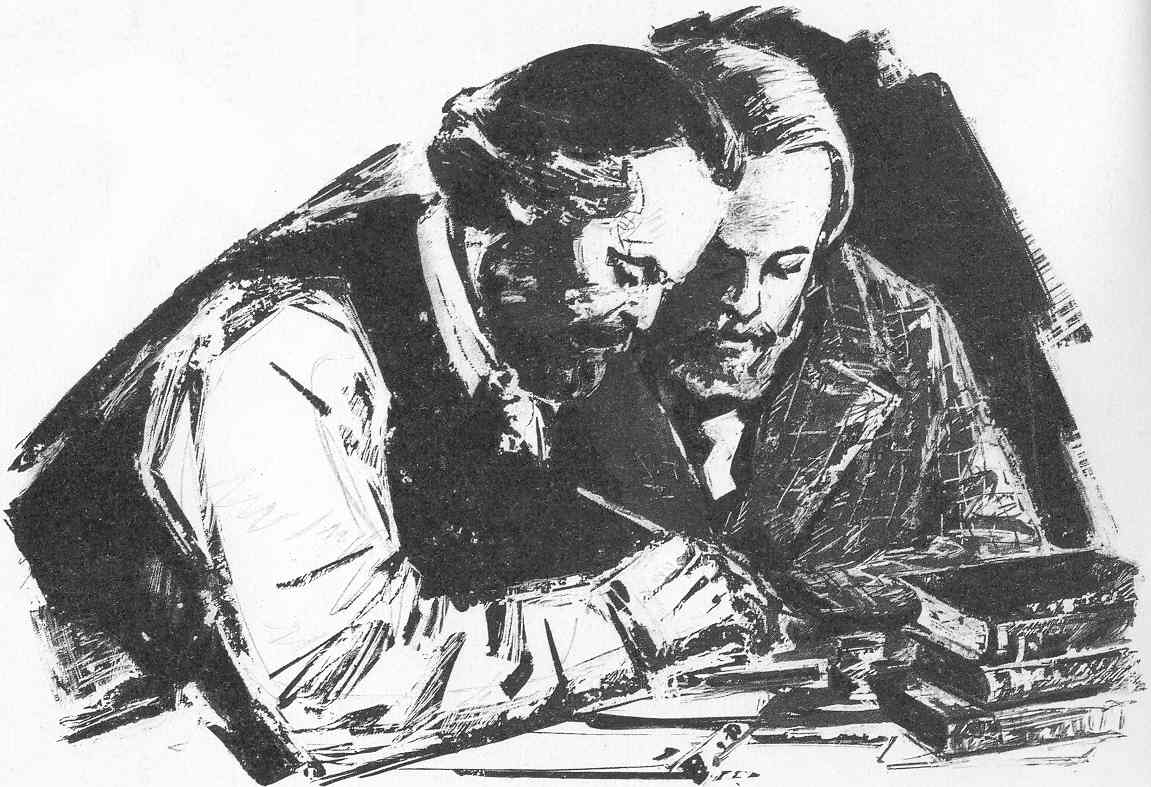
Now was that deceitful? Well, yes, in the same way any promotional copy is. Or just a clever move to attract attention to ideas that he and Marx shared? Marx didn't mind for his own sake — the ideas expressed were his and Engels' — but was probably a little saddened that his brilliant friend would be so self-effacing as to disguise his authorship. And Engels was not really trying to fool people about his involvement in the theory of dialectical materialism, which was already notorious.
Their collaboration was closer and more complex than I had imagined. I just discovered this quite fascinating discussion. It shows where Engels took the lead, and where he followed or merely elaborated, and is a persuasive refutation of arguments that Engels had misunderstood or oversimplified Marx. Both the strengths and errors of their analysis have to be attributed to both of them.
Engels' Marxism
By the way, yes, of course it is unethical for an editor to pose as an independent reviewer, and also unnecessary: one can still say nice things about a book as an editor. Another note: I'm still looking for that pamphlet or book I mentioned above. But actually Engels was involved in almost all Marx's works, in some cases the primary author, from the Communist Manifesto on.
The anonymous dual portrait above is from this archive.
2011/10/03
Choosing what to read
Dirk van Nouhuys' essay on the novels that have stayed with him (this blog, 2011.9.28) has got me thinking about how I choose fiction to read. Dirk has no patience for those lists of the 100 or 1,000 or however many books "you must read before you die"(try Googling "books"+"before you die" for examples), as though there could be one list for everybody (and as though there were only that many possibilities). I too think such lists are silly, but since I know I'm never going to read more than a tiny sample of all that's worth reading, I need some way to guide my choices.
So, how do I choose? For starters, I always try to read the selections of my local reading club in Carboneras, which are usually good and always promote lively discussions (all in Spanish, which I review on my Spanish-language blog Lecturas y lectores). Beyond that I have two major criteria:
But even limiting my reading to books that do one or the other of those things, my actual reading is still largely a matter of chance: what I happen to have heard about and what I can get easily.
I'm not going to try to create a list like Dirk's, but if anyone is curious about the books I have found important enough to read and comment on, you're invited to take a look at my "Little Library of the Lair" Fiction Readings or, if you read Spanish, the different collection in my Pequeña biblioteca comentada.
On another note, I'm glad to see that some of my earliest work is still being cited by scholars. A recent example is this MA thesis by Javier Fernández (University of Georgia, 2004), which makes good use of parts of my 1979 book Working-Class Émigrés from Cuba (Palo Alto: R&E Research Publications, 1979; published version of my 1975 PhD dissertation), which must have been in his university library — it's pretty hard to get these days, but a recent query made me aware that it has also been a resource to other younger scholars working on issues including migration, Latinos, the Cuban revolution or racial and gender conflicts. (For more about this work, see my entry in Academia.edu, Working-Class Émigrés from Cuba.)
So, how do I choose? For starters, I always try to read the selections of my local reading club in Carboneras, which are usually good and always promote lively discussions (all in Spanish, which I review on my Spanish-language blog Lecturas y lectores). Beyond that I have two major criteria:
- The book promises to tell me something I really want to know, for example about a culture or a time or a place or a psychological experience, and/or
- I expect to learn something I can use about the craft of writing.
But even limiting my reading to books that do one or the other of those things, my actual reading is still largely a matter of chance: what I happen to have heard about and what I can get easily.
I'm not going to try to create a list like Dirk's, but if anyone is curious about the books I have found important enough to read and comment on, you're invited to take a look at my "Little Library of the Lair" Fiction Readings or, if you read Spanish, the different collection in my Pequeña biblioteca comentada.
On another note, I'm glad to see that some of my earliest work is still being cited by scholars. A recent example is this MA thesis by Javier Fernández (University of Georgia, 2004), which makes good use of parts of my 1979 book Working-Class Émigrés from Cuba (Palo Alto: R&E Research Publications, 1979; published version of my 1975 PhD dissertation), which must have been in his university library — it's pretty hard to get these days, but a recent query made me aware that it has also been a resource to other younger scholars working on issues including migration, Latinos, the Cuban revolution or racial and gender conflicts. (For more about this work, see my entry in Academia.edu, Working-Class Émigrés from Cuba.)
Subscribe to:
Posts (Atom)