It must have been at the concert he gave at Harvard on May 18, 1961 that I first saw and heard Pete Seeger in person. It was so long ago, and my memories so imprecise, I had to search the Harvard Crimson to be sure of the date. What I remember clearly is that the event was more than musical, that I and many of us at Harvard (I was a junior) knew that his appearance at that time, and our support, was a strong political statement, our protest against the suppression of critical speech (and song) that was orchestrated by the right-wing press and business interests and their men in Congress. Seeger had a "contempt of Congress" conviction, carrying a one-year jail sentence, pending against him (he had refused to name names) and on that pretext, Harvard had initially banned the concert. But there was sufficient pro-free speech sentiment at Harvard, including not just among us students but even on the law faculty, to make the university president relent. And as I recall, the house was packed. I don't remember what he sang, but I remember him as tall, dignified,
and weary. He was under tremendous pressure. And grateful for our
presence, as we were delighted by his. See this May 8, 1961, article in the Crimson.
2014/01/29


2014/01/24
Point of view, time, place and story
 99 Ways to Tell a Story: Exercises in Style by Matt Madden
My rating: 3 of 5 stars
This is a lot of fun, especially for fans (like me) of comic book art. Madden has a skillful pen (and brush and photographer's eye, because he uses various media), and is good at imitating the styles of other cartoonists he admires. The question he poses (as did Raymond Queneau, whose 1947 book Exercices de style inspired this one) is whether, by changing point of view, tense and tone, we are really telling the same story.
Like Queneau, he begins with a very simple (rather silly) anecdote: comic artist (Madden) gets up from his desk to go to the refrigerator, is interrupted by his partner's question about the time, and forgets what it was he was looking for in the refrigerator. That seems to be a story about forgetfulness. But when the point of view is that of the refrigerator, it's about the ridiculous and confused meddling of human beings with the calm mechanical life enjoyed by the 'fridge. Or if the p.o.v. is of the lady friend who asks the time, it's about the unreliability of her partner. And if it's set in the future on a space ship, it may be about the bewilderment caused by supersonic travel. And so on.
No, it no longer is the same story if, for example, the Odyssey is told from the point of view of Leopold Bloom in Dublin in 1904, instead of the weary, crafty warrior Ulysses on the sea in the far more distant past.
View all my reviews
2014/01/23
Blood stained humor
 L'Insurgé by Jules Vallès
My rating: 4 of 5 stars
Jules Vallès was a central figure in the Paris Commune of March-May 1871: popular orator, creator and editor of the most-read newspaper, Le Cri du Peuple, elected deputy and even an elected battalion commander. He remained at the barricades throughout the "Week of Blood", la Semaine Sanglante of annihilation, but survived — through a combination of lucky breaks, discreet risk-taking friends, and clever improvisations — to tell the tale. In 1886, the year of his death, he told this part of it in this fictional autobiography, published posthumously and narrated by his alter-ego "Jacques Vingtras".
We can't know how much of it he fictionalized — very little, apparently, except that "Jacques Vingtras" focuses especially on the comic and self-deprecating details, careful not to attribute to himself anything like heroism, a notion he distrusts. Thus we see "Jacques" as a battalion commander with no military aptitude or tactical sense who issues contradictory and at times nonsensical orders, a loudmouth so brash he enrages people who should be allies, and so much in a hurry all the time that he can't get his official deputy's sash on straight. In the context of an immense tragedy he describes other moments not comical but so strange that I'm sure he didn't make them up: For example, when a handful of National Guards (the Commune's defenders) are running for their lives under a fierce cannonade, they pass an old, blind beggar still begging at his accustomed spot before a now-destroyed church, and — they stop to give him coins! The old urban habits of those men survived even under such enormous stress. It is the attention to such minute detail, in the context of broad involvement in all the politics of the Commune, that makes this book invaluable for feeling and reliving the immense drama. And because Vallès/Vingtras is so unpretentious, he's good company, even if his shorthand phrases and extensive use of slang sometimes make him hard to follow.
View all my reviews
A context for literature
 Making the News: Modernity and the Mass Press in Nineteenth-Century France by Jeannene M. Przyblyski
My rating: 3 of 5 stars
These ten essays tell not only about how the modern "news" paper came to be, but also how it shaped the conditions for the creation of the vast and expanding literature of 19th century France. Émile de Girardin (1802-1881) had a lot to do with both phenomena: he created the first paper which claimed to be nonpartisan (and thus called simply "La Presse"), cut the price in half (to the outrage of his competitors, one of whom challenged him to a duel for disloyal competition), and financed the publication mainly by filling the pages with advertising; he thus expanded circulation far beyond the privileged, monied élite, and gained the revenue to pay writers including Balzac, Sue, Gautier and a great many others.
Besides Girardin, a reader can learn here about Daumier's battles (through his caricatures) with Louis-Philippe and Louis Napoléon, and about such colorful journalists as Émile Pouget (1860-1931), who employed deliberately obscene and comical working-class vernacular to attack everybody in power.
What I missed was any discussion of the press during the Paris Commune (March-May, 1871), when over a score of new papers with enormous circulation flourished briefly, with editors including Jules Vallès (Le Cri du Peuple), Maxime Vuillaumine (Le Père Duchene) and Prosper-Olivier Lissagaray (author of the monumental Histoire de la Commune). There is however an essay by Przyblyski on the post-Commune manipulation of photographs and documents by Eugène Appert to contribute to the myth of the "pétroleuses", the crazed women incendiaries who supposedly created most of the destruction of Paris in the last days of the Commune — and who, if they existed at all, must have been very rare.
View all my reviews
2014/01/16
A frightening thought experiment
 Lord Of The Flies by William Golding
My rating: 5 of 5 stars
An unknown number of British boys, none older than 12 and others half that age, are marooned on an otherwise uninhabited Pacific island, with no adults, and after some childish attempts to reproduce civilized order, turn into murderous savages. This is a powerful thought experiment, terrifying because it is so believable — as Stephen King also says, in his graceful and convincing prologue to this edition. If we could turn loose a lot of boys this young, with enough food and water to survive but no adult supervision, something like this would be bound to happen in only a few weeks time, or less. All of us who have been 12-year-old boys can remember those inchoate feelings, those moments of exultation at being free of supervision, and other moments of unbridled rage when we felt capable of any violence, and our feeling that we had to be part of some group, either as leaders or followers.
No need to say more — reviews and detailed discussions of every aspect of this book, and of the films made from it, are readily available on the 'Net. What is especially frightening is knowing that not only children can turn so cruel, but that we adults are susceptible to similar mass behavior with even more violent consequences (in "The Lord of the Flies" only two children are killed, stupidly and frantically by a crazed mob, and another "littlun" with a birthmark is lost; imagine if these painted young savages had access to landmines, rockets and suicide belts). In fact (a point made by many readers), Ralph, Piggy, Jack Meridew and the other boys on the island are replicating in childish form the behaviors of the real adults on Pitcairn Island. I don't think anyone who has read this book will be able to forget it, because it reminds us of too many terrors in our real pasts.
View all my reviews
2014/01/15
Big Pharma is out to get you
 The Constant Gardener by John le Carré
My rating: 3 of 5 stars
John LeCarré here sets in motion a dozen or more morally and psychologically complex characters in many directions at once, leading into three major stories and at least a half a dozen lesser ones. The framing story is about Big Pharma, the enormously wealthy multinational pharmaceutical companies which can cure you or kill you to make a profit, and the people who try to be sure they do mostly good things and curb its corrupt tendencies. The second is an adventure story of a lone man, the "constant gardener"of the title, using his wits against an enormous conspiracy with deadly power — much like LeCarré's famous intelligence operative George Smiley, but here the enemy is not Iron Curtain spy rings but Big Pharma, which has killed his wife. Finally, and here the subtlety and complexity of LeCarré's imagination is best displayed, there is the story of divided loyalties, virtue and weakness and ultimately self-betrayal, exhibited to some degree by several characters but especially by the gifted, deeply religious and morally confused Markus Lorbeer.
LeCarré's fictional DKV, with enormous financial resources and political influence, hopes to make millions from an anti-TB drug created by a smaller partner based in Kenya, and is willing to bribe or otherwise pressure doctors, scientific journals, hospitals and regulators to get it approved and paid for with public money; meanwhile the operation in Kenya is testing the drug on Kenya's poor, not necessarily a bad thing if there are adequate safeguards. But there are not: with the complicity of government officials and common thugs, the companies suppress information about the drug's sometimes lethal side-effects and even go to the extreme of murdering those who are about to expose their practice.
Besides the psychologically complex characterizations, LeCarré offers vivid descriptions of both social and physical settings in Kenya, London, Elba and even Winnipeg. The book is seldom boring. But there are too many implied stories left unresolved, the "constant gardener" who occupies most of the story, Justin Quayle, seems far less interesting than many of the minor characters whom we glimpse too briefly (including Markus Lorbeer) or never see at all because they are dead before the story begins (Quayle's wife Tessa and the good doctor Arnold Bluhm), and the central story — the denunciation of bad practices of some pharmaceutical companies — is hardly news.
View all my reviews
2014/01/05
Wien, auf wiedersehen
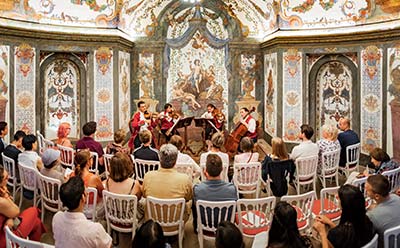 |
| An intimate chamber marvelous acoustics. |
2013/12/20


2013/12/16
Poor sailing for Spain
 |
| Fritz (Ricardo Olivera) |
- Catalonia, with almost 1/6 of the population and the highest GDP in Spain, is threatening to secede;
- Nationwide, unemployment is surpassed in the Eurozone only by Greece;
- Social services including health, education, and aid to caregivers of dependent relatives are being slashed, generating enormous "tides" of protest almost every day;
- Thousands of families are homeless due to evictions for nonpayment of mortgages while the banks are stuck with millions of empty new homes:
- The bankers that set up those unpayable mortgages and drove their banks to ruin claim and usually get multimillion euro bonuses;
- Corruption scandals among the political elite are multiplying, but few are punished and nobody ever resigns;
- The government is not only refusing to investigate Franco era crimes (despite UN and World Court demands), it is also reviving Franco era repressive legislation;
- The Catholic Church continues to use its state subsidies to return Spain to the middle ages.
The most divisive issues in Spain were not really resolved in the 1978 Constitution, but simply covered over in deliberately ambiguous language to achieve the broadest consensus. These divisive issues were mainly:
- Representative government —If the people were to be sovereign, who were "the people" and how direct could be their participation in government? Powerful forces wanted to maintain the institutions set up by Franco, including the supremacy of the military hierarchy and of the recently restored monarchy. With so many rival political parties — including Franco's arch enemies, the Communist Party and newly reorganized and re-invigorated Socialist Party, plus all the new regional parties that were springing up, all facing the die-hard Franco-heirs in Alianza Popular — how could the government remain stable and avoid a resumption of civil war, perhaps by other means? The expedient decided upon was an electoral system skewing votes so that one or another party's electoral advantage would be multiplied to give it enough parliamentary seats that it could not easily be overturned.
- Territorial and ethnic divisions —Large regions remained attached to languages and traditions that had been suppressed by Franco, the largest being the Galicians (gallegos or galegos), the Basques and Catalan-speakers (including not only those of Catalonia but those speaking related dialects in Valencia and Baleares). Was Spain one nation, or a union of nations with distinct laws, though gathered under a federal state? The pseudo-solution was regional "autonomy," understood differently by the different parties and subject to future determination by the courts.
- Monarchy or Republic? The ad-hoc solution (after much fierce debate) was a sort of republican monarchy, where the king reigns but does not rule. This was a major symbolic concession by the Left, standard-bearer of the Spanish Republic, but considered acceptable because of the apparently peaceable and pro-democratic posture of Juan Carlos — who owed his investiture to Franco.
- Church and State: Franco had defined his government and the country as "National Catholic" meaning that, for him, Fascism and Catholicism were two faces of the same reality, and a "Concordat" with the Vatican assured state funding of the Church. The Left representatives wanted to cut that funding entirely. The compromise was that "all" creeds would be recognized, the country was declared officially laic (id est, with no official religion), but the state continued to exempt the Catholic Church from taxes (even on commercial property) and to pay the salaries of teachers of religion in the public schools and of priests in military.
The ambiguity on the second point allowed pressure from the centralizing, conservative Partido Popular, through its influence on the courts, to overturn a reform of Catalonia's governing statutes (involving the relative emphasis on the national language, castellano — what we call "Spanish" — and Catalan and other issues of self-determination), taken in Catalonia as unpardonable meddling (intromisión), especially since a very similar statute was approved in neighboring Valencia (which also speaks a variety of Catalan, but was governed by the conservatives whereas Catalonia had at the time a coalition leftist government).
The other problems listed above stem mainly from the rigidity and inconclusiveness on the territorial and democratic procedure issues. There are too many courts (Audiencia Nacional, Tribunal Supremo, Tribunal Constitutional all top-ranked in the justice system, and all the regional courts) with different criteria and stacked with judges placed there by political pressure or, in some notorious cases, removed when they take justice issues too seriously: Baltasar Garzón is the best known, but there have been others. This makes it very difficult to prosecute corruption cases against politicians who have their party's support. And has for similar reasons made it almost impossible to control the banks and financial markets — since the people supposed to do the controlling are part of the problem.
As for the Church — well, we'll save that for later. (Though I've already discussed the issue in earlier notes, for example Claiming the soul of Spain (2008/02/10). If you're curious about other thoughts I've had on these themes, just click the link "Spain" below and the blog notes will pop up.
| . |
2013/12/11
Hard-pressed | Harvard Gazette
Hard-pressed | Harvard Gazette
Patterson's critique of superficial, ill-sourced reporting by reporters who don't know anything more about their subjects than what they have read hurriedly from other reporters is surely valid. What I doubt is the relevance of his proposed remedy, "knowledge-based reporting". More rigorous training of journalists won't protect us from those who (deliberately or blindly) mislead us, or from those who claim to know more than they do. There are well-informed and objective reporters, even now, along with the idiot or lazy scriveners and paid propagandists, but it takes practice and good critical judgment to know which reporters and which reports can be trusted.
Our only real protection is, as it always has been, knowledge-based reading. And with today's communications resources, including Google and Wikipedia and our ability to e-mail or Skype anyone we know who might be able to fill us in on something puzzling, the knowledge-base is more accessible. It's up to you and me, pal, to find out enough about what interests us to know whose version is most credible.
"Gripes about the dismal prospects of the Fourth Estate are probably as old as the printing press itself. News consumers are uninformed and ill served by journalists who focus on the superficial, too often delivering a narrow and inaccurate portrait of the nation’s public affairs, protesters typically declaim."So begins the Harvard Gazette article, recognizing that the critique Thomas Patterson offers in his new book Informing the News is not new and is thus not news to most of us, either. But it is worth thinking about in new ways, because we are in a new communications environment, utterly different from that known to Oscar Wilde or Walter Lippmann or even George Orwell, who maybe came closer (in 1984) to imagining our world of today.
Patterson's critique of superficial, ill-sourced reporting by reporters who don't know anything more about their subjects than what they have read hurriedly from other reporters is surely valid. What I doubt is the relevance of his proposed remedy, "knowledge-based reporting". More rigorous training of journalists won't protect us from those who (deliberately or blindly) mislead us, or from those who claim to know more than they do. There are well-informed and objective reporters, even now, along with the idiot or lazy scriveners and paid propagandists, but it takes practice and good critical judgment to know which reporters and which reports can be trusted.
Our only real protection is, as it always has been, knowledge-based reading. And with today's communications resources, including Google and Wikipedia and our ability to e-mail or Skype anyone we know who might be able to fill us in on something puzzling, the knowledge-base is more accessible. It's up to you and me, pal, to find out enough about what interests us to know whose version is most credible.
Subscribe to:
Posts (Atom)