Thanks to friend Dirk van Nouhuys for this curious note.
AbeBooks: AbeBooks' Most Expensive Sales in November 2011
We suspect that the person who bought it is not a communist. But, who knows?


2011/12/05
How to change the world
 How to Change the World: Tales of Marx and Marxism by Eric J. Hobsbawm
My rating: 4 of 5 stars
Marx is back. Even finance capitalists like George Soros are re-reading him with attention, and — more tentatively, after the terrible experience of Stalinism — leftists are rediscovering him. Hobsbawm notes two main reasons: 1st, the collapse of the Soviet Union "liberated Marx from public identification with Leninism in theory and with Leninist regimes in practice," and 2d, "the globalised capitalist world that emerged in the 1990s was in crucial ways uncannily like the world anticipated by Marx in the Communist Manifesto." Hobsbawm himself has been liberated from identification with Leninist regimes (though long active in the British Communist Party, he became increasing critical of Soviet practices beginning in the 1960s).
In this collection of essays, one written as long ago as 1957 and others published here for the first time, he stresses the "enormous force" of Marx's thought "as an economic thinker, as a historical thinker and analyst, and as the recognised founding father (with Durkheim and Max Weber) of modern thinking about society." But he also points out that Marx never completed his magnum opus, Capital — volumes 2 and 3 were put together by Engels from Marx's notes after Marx's death in 1883 — and left many important issues unresolved. No theory of literature or other arts, though he and Engels were obviously interested and commented on these in their correspondence. Engels' anthropological theorizing, based mainly on the flawed research of Lewis Morgan, doesn't hold up today, though we can still learn something from the questions Engels posed if not his answers.
But the lack most seriously felt by later Marxists has been a theory of politics, despite what Hobsbawm calls (correctly, I think) many "brilliant" political insights in Marx's journalistic writings, especially "The 18th Brumaire of Louis Napoleon" and the pieces gathered by Engels under the title "Civil War in France". How exactly were revolutionaries supposed to make the revolution? And how would the new socialist or communist society be organized? Marx and Engels chose not to say. Lenin, a great pragmatist more than a theoretician, made up theoretical positions on the fly as he tried to solve one problem after another. But according to Hobsbawm it was Antonio Gramsci who "pioneered a Marxist theory of politics." Gramsci was not only the founder of the Italian Communist Party but also a rare intellectual who knew both the rural (Sardinia) and urban industrial (Turin) proletariat. Hobsbawm's two essays on Gramsci will not only remind you of his brilliance and originality, they will no doubt make you want to reread the Prison Notebooks.
Now as then (in the 1880s or 1930s or 1960s) if we are looking for answers for our current economic crisis, we're going to have to make them up ourselves — but Marx and Engels, Gramsci and others can help us formulate the questions we should be asking. And this book by Hobsbawm should help us understand those thinkers.
View all my reviews
2011/12/04
The longest dynasty
 Osman's Dream: The History of the Ottoman Empire by Caroline Finkel
My rating: 3 of 5 stars
Covers the entire Ottoman dynasty from the original Osman (14th century) to the last sultan (exiled in 1922). Focus is narrowly on the reigns of all of them, some brilliant (Mehmet the Conqueror, Suleyman the Magnificent), others bumbling and at least one of them mad. Probably because a full accounting of all the intrigues involving the sultans requires so much space, Finkel offers only scant contextual information, for example on how the society and the many cultures gathered into the Ottoman empire were evolving (Anatolian Muslims, Balkan Christians and Muslims, Greek and Armenian Christians, Kurdish Muslims, Arabs and others in Syria, Egypt, etc.). This makes the book dense with data that seem disconnected and hard to follow — for example we read that a certain Sheikislam (highest religious authority) or upstart Janissary officer conspired in a certain way, but what drove that action and what did it mean to others (besides the sultan) in that time? Reading it straight through is probably not the best approach; it will be an invaluable reference source for anyone investigating particular aspects or episodes in this very long history.
View all my reviews
2011/11/22
Honoring the Enemy, A Lesson From Gallipoli
Thanks to our friend César Chelala for this article from his series International Perspectives with Dr. Cesar Chelala in Epoch Times.

Honoring the Enemy, A Lesson From Gallipoli | Viewpoints | Opinion | Epoch Times
As César points out, there are many lessons from Gallipoli, for all the countries involved. Also several films and books, memorials and cemeteries, and political careers destroyed or enhanced. This history, and the magnanimous gesture recounted by César Chelala, go far to explain the reverence for Mustafa Kemal in modern Turkey.
Our anonymous friends at Wikipedia offer a detailed and thoroughly researched article which lists films, books, etc. Gallipoli Campaign
Map is if from the Gallipoli Guide — Anzac Day for New Zealanders, which offers a virtual tour of the peninsula.
2011/11/21
Why the 1% Love "Anarchist Violence"
A good friend just sent me this article by Steve Weissman, which roused memories and emotions or not-so-long-ago.
Why the 1% Love "Anarchist Violence"
Astute analysis. It makes me think back on my own experience, which was different because my theater of operations then was the Chicago area.
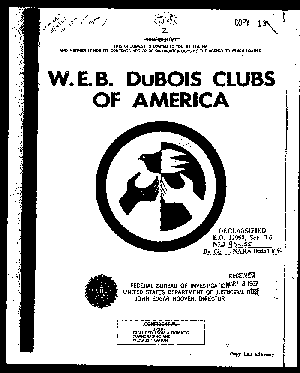
 There our movement started out on the campuses — I had founded an SDS chapter at Northwestern by bringing together three or four separate single-issue clubs already recognized —but reached out to link to community groups, especially (in Evanston IL and Chicago) black, mostly church-based organizations. They got us to contribute to demanding better housing and better schools by sit-ins, marches and heavy leafletting, and we helped them make their constituents more aware and more angry about the toll theirs sons were paying in the US's futile and odious Indochina war. Such days. We, or some of us, also made contact with young labor activists. These were workers and mostly union members from those other ethnic communities — Polish, Italian, Ukrainian, Czech, even some Irish — some of whom were discovering Marxism-Leninism through the small, short-lived W.E.B. DuBois Club, where I came into contact with them.
It was during the Democratic Party Convention of 1968 that for the first time in the most dramatic ways we did face the issue of provocateur violence. And especially the absurd plots that the police attributed to the Chicago Seven and the even more absurd (and much funnier) fantasies that the Yippies invented in reply.
We continued to draw on students from many Chicago-area campuses, but the twin issues of racial and ethnic discrimination and the Vietnam war brought us together with young labor activists and then, increasingly, other non-student youth from the several ethnic communities (Appalachian whites in the "Young Patriots", Puerto Ricans in the "Young Lords", Mexicans in a couple of separate "Raza" groups) systematically and intelligently politicized by the Black Panthers, under the very capable leadership of Fred Hampton.
The Panthers made a display of self-defense, but that was mostly a pose; the real violence always came from the police. They assassinated Fred in his bed shortly before Christmas 1969, but he had established a strong enough base that the movement survived and gathered new support — since the murder had been so blatant. (For much more on this, including video clips of Hampton showing why he was such an effective leader and thus such a threat to the likes of Atty. Gen. John Mitchell, FBI chief Herbert Hoover and Nixon, see this 2009 broadcast The Assassination of Fred Hampton on Democracy Now.) The day Fred's lieutenant Bobby Rush sought and received refuge in the church of Jesse Jackson, icon of ML King's non-violent movement, marked a major breakthrough for all of us, a joining of hands of dissheveled young radicals and well-groomed, church-attending family folk who just weren''t going to take it any more.
In sum, what I've taken from all those experiences is that nonviolence must be the preferred strategy — as it was for Fred Hampton — but not an unwavering principle. Not when, as Hampton put it, the enemy doesn't even know what "peace" means, when like the US's Cointelpro then or Bashar al-Assad's tanks and planes today they threaten to wipe out your whole community. But that is not (yet) the nature of conflict in Oakland. As long as possible, nonviolence has to be the preferred strategy because it is the most effective, because the victory sought is not a shift of rulers over the same system but a social transformation, making the blind defense of privilege impossible. But you knew that already.
Why the 1% Love "Anarchist Violence"
Astute analysis. It makes me think back on my own experience, which was different because my theater of operations then was the Chicago area.
It was during the Democratic Party Convention of 1968 that for the first time in the most dramatic ways we did face the issue of provocateur violence. And especially the absurd plots that the police attributed to the Chicago Seven and the even more absurd (and much funnier) fantasies that the Yippies invented in reply.
We continued to draw on students from many Chicago-area campuses, but the twin issues of racial and ethnic discrimination and the Vietnam war brought us together with young labor activists and then, increasingly, other non-student youth from the several ethnic communities (Appalachian whites in the "Young Patriots", Puerto Ricans in the "Young Lords", Mexicans in a couple of separate "Raza" groups) systematically and intelligently politicized by the Black Panthers, under the very capable leadership of Fred Hampton.
The Panthers made a display of self-defense, but that was mostly a pose; the real violence always came from the police. They assassinated Fred in his bed shortly before Christmas 1969, but he had established a strong enough base that the movement survived and gathered new support — since the murder had been so blatant. (For much more on this, including video clips of Hampton showing why he was such an effective leader and thus such a threat to the likes of Atty. Gen. John Mitchell, FBI chief Herbert Hoover and Nixon, see this 2009 broadcast The Assassination of Fred Hampton on Democracy Now.) The day Fred's lieutenant Bobby Rush sought and received refuge in the church of Jesse Jackson, icon of ML King's non-violent movement, marked a major breakthrough for all of us, a joining of hands of dissheveled young radicals and well-groomed, church-attending family folk who just weren''t going to take it any more.
In sum, what I've taken from all those experiences is that nonviolence must be the preferred strategy — as it was for Fred Hampton — but not an unwavering principle. Not when, as Hampton put it, the enemy doesn't even know what "peace" means, when like the US's Cointelpro then or Bashar al-Assad's tanks and planes today they threaten to wipe out your whole community. But that is not (yet) the nature of conflict in Oakland. As long as possible, nonviolence has to be the preferred strategy because it is the most effective, because the victory sought is not a shift of rulers over the same system but a social transformation, making the blind defense of privilege impossible. But you knew that already.
2011/11/20
Red dervish

I could not resist buying this miniature by Özcan Özcan last Tuesday in Sultanahmet, İstanbul.
The Ottoman script forming the dervish's skirt and tunic says "Ya hazreti Mevlana" — "Oh! Most holy Master" (i.e., the Mevlana Rumi).
I suspect he has been watching the news of all the street demonstrations, from Tahrir Square to Homs and Madrid and Oakland and Wall Street. Its enough to keep you spinning, Oh! Enlightened Ones.
Or maybe he just been reading Rumi's Divani Shamsi Tabrizi. That too is well worth a whirl.
This Is What Revolution Looks Like | Common Dreams
Perfectly said, by Chris Hedges:
This Is What Revolution Looks Like | Common Dreams
When I described myself as a "red dervish" a little while back, this is what I meant: red (as in revolutionary), and like a Sufi dervish personally drawing strength from my vision, the vision of our latent collective power — that of all humanity — to conquer the evil within and among us and release our more powerful impulses of love and solidarity. A Sufi would call that evil "Sheitan," a more modern name is "capitalism." Or as the great Turkish poet Nazım Hikmet (himself something of a red dervish) put it, to live "like a forest in solidarity, / this is our yearning."
Yaşamak bir ağaç gibi tek ve hürDavet (Invitation); for the complete translation, see this Wiki version.
ve bir orman gibi kardeşçine,
bu hasret bizim.
Whirling to freedom
 The Forty Rules of Love by Elif Shafak
My rating: 3 of 5 stars
The encounter and transforming love between Rumi and the wandering dervish Shams i-Tabriz in the 1240s is background, context and explanation of the transformation in 2008 and 2009 of Ella Rubinstein, Jewish American housewife in Northampton MA, through contact with their story. Shams turns the respected and sedate scholar Rumi into a poet and co-founder (along with Shams) of the whirling dervishes; their story turns Ella from a self-repressed, resigned wife in a loveless marriage into a free and adventurous woman. Alternating chapters are told from the points of view of Ella or Shams and the many people who come in contact directly with him in Konya, Damascus or Tabriz. His stern but gentle manner and his preachings of love arouse strong reactions, ranging from murderous hostility on the part of Islamic zealots to almost total identification by Rumi, from respect and devotion by outcastes whom he has consoled and aided to the one kind of love he cannot allow himself, the passionate, carnal kind. Which may be what you thought this book was going to be about, but no, Shams' 40 Rules of Love are Sufi rules, of accepting one's fate but aiding and preventing harm to others and trusting in God's overall just design of all things. The book is a welcome introduction to this moment in Sufism and the origins of the Mahlevi whirling dervishes ("Mahlev" or master was what Rumi was called), and the twin stories — of the 13th and of the 21st centuries — come to a satisfying conclusion.
However, Shafak's narrative structure and voice here are so limited that one longs for a little break now and then. Each chapter tells us the thoughts and observations of just one character at a time, often telling us things that they would be unlikely to say even to themselves, and everybody sounds alike, whether a drunk or a prostitute or enlightened one in Konya in 1246 or Ella Rubinstein in 2008. The drunk tells us he is drunk but he doesn't sound drunk, the angry zealot tells us he is an angry zealot but doesn't sound very excited about it, and so on. “"Beauty is in the eye of the beholder," Shams kept saying.” (p. 268) He sounds just like Ella. These limitations are quite unlike Elif Shafak's approach in her earlier novel, The Bastard of Istanbul (see my review), where there are different voices and narrative points of view, including a genie and an Internet forum. But "40 Rules" comes to a good, perfectly Sufi ending, which goes far to compensate for other weaknesses, and in the course of reading it we learn much about why Sufism is so appealing to so many.
View all my reviews
2011/11/15
Is Neuroscience the Death of Free Will? - NYTimes.com
Or, as Isaac Bashevis Singer used to like to say, we have to believe in free will; we don't have any choice.
Is Neuroscience the Death of Free Will? - NYTimes.com
I find Eddy Nahmias' argument persuasive: "free will" does not depend on a "soul" or any other kind of self outside the brain, and is not incompatible with recognizing that all previous events are involved in shaping new ones (determinism). And like any good philosophical argument, his opens up new questions. One that interests me especially is how unconscious racism can influence conscious actions. And that suggests the further question, how to curb such tendencies, that is, how can our conscious decisions change our unconscious or pre-conscious predispositions? Can we train ourselves to respond "instinctively" in new ways?
Yes, of course we can, and we have all done it at some time — whether learning a new language, giving up (or taking up) smoking, setting ourselves a new exercise routine, or changing driving habits, etc. The fact that we can and do make such changes demonstrates (or at least implies) that our free will can change our "determined" decisions, that is, set new preconscious tendencies. New neuroscience investigations should help us understand how we do this and to do it better.
2011/11/14
How we remember
This experiment confirms what we already suspected: regarding the "ghost story", memory adjusts the past to fit what we think should have happened; regarding the sunken ships, memory also hooks past events to other already imagined or known events, which will be different for each person who is remembering.
How Psychology Solved The Mystery Of A Lost Shipwreck : NPR
How Psychology Solved The Mystery Of A Lost Shipwreck : NPR
Subscribe to:
Posts (Atom)