Louise Marley has expressed my thoughts on this strange business of writing.
J.K. Rowling and the Usefulness of Fame | Louise Marley | Blog Post | Red Room
2013/08/20


2013/08/13
Homicide and self-deception
 Libra by Don DeLillo
My rating: 5 of 5 stars
Like Mario Vargas Llosa's La Fiesta del Chivo, Libra is a chillingly realistic novel that re-imagines and reconstructs a famous magnicide. But the more mysterious circumstances of the assassination of John F. Kennedy, and the particular obsessions of Don DeLillo, make this a very different book from Vargas Llosa's telling of the killing of Rafael Trujillo.
According to DeLillo (through his stand-in character, Nicholas Branch), “the conspiracy against the President was a rambling affair that succeeded in the short term due mainly to chance.” Many people with different motives were out to get Kennedy, from right-wing Aryan-nation types to non-ideological drifters desperate to leave a mark on history, but (in this version) the most systematic pursuers were people who blamed him for the “loss” of Cuba and thought that his elimination would help them get that country back. These included embittered CIA cast-offs, mobsters, investors, and Cuban exile terrorists. You get the impression that even if they'd missed in Dallas, somebody was going to get JFK as long as he insisted on riding in an open car.
DeLillo is fascinated by the narratives we make up to explain ourselves and the world around us. Mostly he is fascinated by those with the weirdest and most complicated narratives, narratives that need frequent adjustment because they keep bumping into contradictory realities. Lee Oswald struggles to persuade himself that he is on to some secret understanding of the world, gained from laborious reading (because he's dyslexic). Jack Ruby has convinced himself that he must always be a defender of the Jews and works very hard to silence his own suspicions that he may be homosexual. The rogue ex-CIA men, outwardly very calm, have an absolutely loony interpretation of history and their role in it. The most sensible character is Marina, Oswald's Russian wife, who can't take seriously any of her husband's elaborate poses and just wants him to teach her English and help her and their baby daughters survive in what for her is a strange new world.
DeLillo has a very great novelistic strength that Vargas Llosa also exhibits (though more in the Peruvian novels than in Chivo): pitch-perfect dialogue. Ruby's scenes are the best. He is a club owner, big spender and always on the brink of bankruptcy. His conversations with himself, his strip-teasers, a mobster associate from whom he's seeking a loan, his feckless male roommate, and the cops he loves (he's always taking them big, cholesterol-laden sandwiches) are hilarious, fragmented, contradictory, and utterly believable. In fact, my one complaint about the book is that we have to wait too long for Ruby to appear. Here's a sample, from his meeting with Tony Astorina, chauffeur for the mobster:
"Jack, I come by here for old time."
"We used to swim on the Capri roof."
"I'm saying. I didn't come by for the coffee."
"Tony. I appreciate."
"I come by because we go back together."
"We got laid in adjoining rooms."
"Havana, madonn'."
--Etc. It's wonderful.
We can't know whether or to what extent DeLillo's reconstruction of the messy, haphazard but ultimately successful plot to kill President John F. Kennedy is accurate, but it certainly is plausible. And it does create a coherent narrative that DeLillo offers as a “refuge,” “a way of thinking about the assassination without being constrained by half-facts or overwhelmed by possibilities, by the tide of speculation that widens with the years.” (From the “Author's Note” at end of book.)
P.S.: I read the book and wrote this review years ago; what brought it back to mind is my reading of Balzac, whose panoramic view of the social world and his ear for quirky dialogue reminded me especially of DeLillo (and maybe Vargas Llosa). I hope to develop these reflections on the sociological view in fiction in a future essay.
View all my reviews
2013/08/01
Did Zeus Exist? - NYTimes.com

Did Zeus Exist? - NYTimes.com
Canadian literary adventure with Atwood & Gibson
For info on this literary cum outdoors opportunity, click on Atwood and Gibson in the wild.
I'd love to see Newfoundland & Wild Labrador, and I'm sure it would be a pleasure to spend some time with Margaret Atwood and Graeme Gibson. Sorry I haven't the time or money just now. As the announcement informs us,
Guess I'll just stay at home and read Margaret Atwood's The Edible Woman (sounds delicious), or maybe The Handmaid's Tale or Surfacing, all of which are staring at me from my bookshelves. I don't have anything by her partner Graeme Gibson, though. Wild Labrador will have to wait.
 |
| A view of Labrador, from Adventure Canada |
Novelist and poet Margaret Atwood is one of Canada’s best known, most prolific and most honoured authors. Among her numerous awards, she has won the Booker Prize, the Arthur C. Clarke Award, and twice the Governor General’s award. With Graeme Gibson, she is co-chair of BirdLife International’s Rare Bird Club.
Graeme Gibson co-founded the Writer’s Union of Canada and the Writer’s Trust. He's a former council member of the World Wildlife Foundation and the chair of the Pelee Island Observatory. He is the author of several novels, as well as the bestselling Bedside Book of Birds and Bedside Book of Beasts.
Guess I'll just stay at home and read Margaret Atwood's The Edible Woman (sounds delicious), or maybe The Handmaid's Tale or Surfacing, all of which are staring at me from my bookshelves. I don't have anything by her partner Graeme Gibson, though. Wild Labrador will have to wait.
2013/07/24
A lost illusion, happily
 I began reading Illusions perdues out of a sense of duty, as a required chore. My reasons: Balzac is too important not to know; several sources insist that this is his best novel; Karl Marx was a fan; and finally, I wanted to know more about 19th-century Paris and to practice my French.
Getting through part I, Les deux poètes, was indeed a chore. It seemed to move very slowly, especially because of all the words I had to look up (I have Robert installed in my Kindle) but also because it takes many pages of description of a disagreeable illiterate printer, his antiquated printing machinery, and even his rickety house before we even meet the principal characters.
2013/07/18
Back to my novel in progress: Eugène Varlin
My new novel is about a crisis in a different city, in a different time. Not Constantinople in the 15th century, but Paris in the 19th, and very especially the Commune of 1871. And for this I had to read this book:
 Pratique militante & écrits d'un ouvrier communard by Eugène Varlin
My rating: 5 of 5 stars
The life and writings of one of the true working-class heroes of the Paris Commune of 1871, Eugène Varlin, bookbinder, labor organizer, promoter of women's equality in work and in the movement, and ultimately batallion commander and combatant slain in the final days of the Week of Blood, the "Semaine Sanglante" that crushed the Commune. Paule Lejeune, author of many books on feminism and French history, has pulled together letters of Varlin and other texts putting his life in context.
View all my reviews
 I admire Varlin enormously, and was delighted to find this modest little book put together very conscientiously by a woman who has worked for years for good causes and on the recovery of obscured revolutionary history. (Check out her list of oeuvres on this Wiki site: Paule Lejeune.)
Among the reasons for my admiration of Eugène Varlin are that he was a superb labor organizer and one of the few elected members of the Commune to keep his head amidst all the frantic rhetoric and chaotic orders and counter-orders after the Versaillais finally broke through the Commune's defenses. He was also a surprisingly articulate and clear, largely-self taught radical journalist and thinker, as the articles and letters assembled by Lejeune will make clear. And very practical: it was his idea, for which he recruited Nathalie Lemel and other workers, to set up the low-cost working-class restaurants known collectively as La Marmite, which became popular centers not only for simple, cheap nutrition but also for developing social relations among workers in different métiers and of both genders.
He could have escaped, in those last desperate hours, as did many others — shaving his beard would have been a good start for a disguise. But he was almost the last commander standing — he had been elected a battallion commandant — and would not desert the barricade. When all ammunition was exhausted, he was seized and slaughtered. He was 32.
Varlin was also a founding member of the Paris section of l'Association Internationale des Travailleurs (A.I.T.), what we know today as the First International.
Pratique militante & écrits d'un ouvrier communard by Eugène VarlinMy rating: 5 of 5 stars
The life and writings of one of the true working-class heroes of the Paris Commune of 1871, Eugène Varlin, bookbinder, labor organizer, promoter of women's equality in work and in the movement, and ultimately batallion commander and combatant slain in the final days of the Week of Blood, the "Semaine Sanglante" that crushed the Commune. Paule Lejeune, author of many books on feminism and French history, has pulled together letters of Varlin and other texts putting his life in context.
View all my reviews
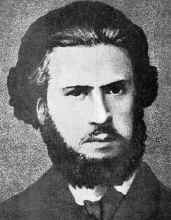
Among the reasons for my admiration of Eugène Varlin are that he was a superb labor organizer and one of the few elected members of the Commune to keep his head amidst all the frantic rhetoric and chaotic orders and counter-orders after the Versaillais finally broke through the Commune's defenses. He was also a surprisingly articulate and clear, largely-self taught radical journalist and thinker, as the articles and letters assembled by Lejeune will make clear. And very practical: it was his idea, for which he recruited Nathalie Lemel and other workers, to set up the low-cost working-class restaurants known collectively as La Marmite, which became popular centers not only for simple, cheap nutrition but also for developing social relations among workers in different métiers and of both genders.
He could have escaped, in those last desperate hours, as did many others — shaving his beard would have been a good start for a disguise. But he was almost the last commander standing — he had been elected a battallion commandant — and would not desert the barricade. When all ammunition was exhausted, he was seized and slaughtered. He was 32.
Varlin was also a founding member of the Paris section of l'Association Internationale des Travailleurs (A.I.T.), what we know today as the First International.
2013/07/16
Bir Cihan İki Sultan — first reviews

Bir Cihan İki Sultan (Timur ve Yıldırım'ın Mücadelesi) - Işık Kitabevi
And more importantly, this big chain of culture and entertainment media: D&R
And best of all, the first reviews have appeared.
As far as I've been able to work out with my Turkish-English dictionary, the review at the kitaplarix.com site is pretty positive. They seem surprised that a Westerner can be so objective — at least, I think that's what this says:
Harvard Üniversitesi'nde ders veren Fox, Yıldırım ve Timur'un ölümüne mücadelesini bir Batılıdan beklenmeyecek kadar başarılı ve objektif yazmıştır.The Turkish in the brief comments on other websites is too colloquial for me to make out — I can't tell whether they love the book or think it's a menace. But at least the comments show that people are aware of and reading it.
Readers of the English version have generally understood the novel to be a romance about a Byzantine princess and an Ottoman brigand; the Turks are presenting it as a political and military history of the clash between two giants of their history, Timur (or Tamerlane) and Bayezid I (Yıldırım Beyazıt). That's all fine (those stories indeed are part of the book), but I hope some readers in both languages will appreciate the broader story that frames the others: that of the struggle of a great city against an anti-urban force bent on destroying it.
In the end, as the book can only hint at in the last pages, the resolution will begin 51 years later with the conquest of Constantinople by the Ottomans (A.D. 1453). The city will not just survive, but by its many subtle resources will transform the Ottomans into a cosmopolitan and multi-ethnic urban power, reaching from their capital in Constantinople to govern a tri-continental complex of subject cities (Northern Africa, Western Asia and Eastern Europe). Now that was one very powerful city. And still is, under its new name of Istanbul.
P.S.: One of my Turkish friends has given me a more accurate translation of the quote above:
"Fox, who is a lecturer at Harvard University, has written about Yildirim and Timur's to-the-death struggle in such a successful of objective manner that is beyond what we can expect of a Westerner." Or, ".... that could not have been expected from a Westerner."I'm not and never have been a lecturer at Harvard University, but I studied there, so it's a pardonable error which may sort of locate me intellectually for a Turkish reader.
2013/07/12
Medicine & Citizenship in Venezuela | Dissertation Reviews
For those of us deeply attached to Venezuela, this University of Chicago, 2012 dissertation by Amy Ellen Cooper is especially fascinating. But it will also be important for anyone seeking to change the world, on the relationship of social context and social conditions (including especially citizen participation) to physical health.
Medicine and Citizenship in Venezuela | Dissertation Reviews
From the review by Ana Servigna (Tulane):
 And much more. I suspect that the desire for such participation was always, down deep, what the cult of "el Doctor Milagroso", José Gregorio Hernández, has always represented. He was a real Venezuelan physician, d. 1919, to whom many Venezuelans attribute magical curing powers and is now in the process of beatification. Statuettes and images of him are seen all over the country, and a postage stamp with his portrait was issued on the centenary of his birth in 1864. Now citizens have other ways to work to change conditions for better health, in addition to, or instead of, seeking magical aid from the dead doctor.
Medicine and Citizenship in Venezuela | Dissertation Reviews
From the review by Ana Servigna (Tulane):
Health practices are generally related to healing bodies, but Cooper explains that in Venezuela, those practices have become a “political experience of citizenship” (p. 73).…
Participation in the healthcare system is not limited to doctors and patients; it also includes an extraordinary number of community health volunteers. Complementing her previous chapters, Cooper analyzes the volunteers’ experiences of providing healthcare for others. One important feature that she highlights is that most volunteers are women, a phenomenon found in many other studies as well; however in her sample, these women are not only active participants but also local leaders engaged in the solution of local problems.
oooo
 |
| One of many popular images of the miraculous doctor. |
 And much more. I suspect that the desire for such participation was always, down deep, what the cult of "el Doctor Milagroso", José Gregorio Hernández, has always represented. He was a real Venezuelan physician, d. 1919, to whom many Venezuelans attribute magical curing powers and is now in the process of beatification. Statuettes and images of him are seen all over the country, and a postage stamp with his portrait was issued on the centenary of his birth in 1864. Now citizens have other ways to work to change conditions for better health, in addition to, or instead of, seeking magical aid from the dead doctor.
2013/06/28
Backgrounder on Turkey
 Turkey: What Everyone Needs to Know by Andrew Finkel
My rating: 4 of 5 stars
This concise, quick read will be a good starting point for anyone who needs to know about this surprising country. Finkel covers a breadth of topics and suggests linkages among them — language, regional disparities, ethnic history and conflicts, political history, current party and government structure, economic potential and weaknesses, religious tolerance and conflicts, and Turkey's complex and fluid geopolitical strategy. Not a word about the country's vibrant arts scene — theater, literature, film, painting, etc. — but on other aspects, clear and opinionated (he's a fierce defender of free speech, which is sometimes in danger).
Andrew Finkel is an American journalist with long experience in Turkey. He is also the husband of historian Caroline Finkel, author of the monumental history of the Ottoman empire, Osman's Dream, which I reviewed here earlier; she describes him (in her acknowledgements) as an "academic manqué" (he mentions having worked on a Ph.D. dissertation), and indeed he approaches journalism with a scholar's seriousness and the expectation that his readers will be able and happy to follow a sometimes subtle and sophisticated argument. He was fired from Turkey's big daily Today's Zaman in 2011, he believes for defending a critic of the paper's founder and backer, the controversial Islamic preacher and charter-school empresario (in the U.S.) Fethullah Gülen (look him up — Americans should know about him). Finkel now has a regular column in the International Herald Tribune, still reporting from Turkey.
View all my reviews
Neurons in harmony
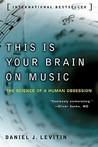 This Is Your Brain on Music: The Science of a Human Obsession by Daniel J. Levitin
My rating: 4 of 5 stars
Hard to believe, but this book is as good as its blurbs. Levitin is both a musician and a neuroscientist, who got into the science to understand better the music he was playing or engineering for rock bands. He knows far more music than I do, drawing on all genres to illustrate what it does, how it does it and why it matters. "Musical activity involves nearly every region of the brain that we know about, and nearly every neural subsystem." (pp. 85-86) And, he argues (against Pinker and other skeptics), it is not a superfluous byproduct of evolution, but has been essential to our survival and most probably, as Darwin himself believed, is even older than language.
Just how do we remember songs, even when the pitch, rhythm and timbre are all altered? And just what are pitch, rhythm and timbre, and how do they affect our brains? And why do you like heavy metal (or whatever you like), while I … well, many other things? These are just some of the mysteries that scientists are beginning to solve.
And what must occur in the brain for a musician to achieve full physical skill (of voice, strings, horn, whatever) and sensibility? It takes at least 10,000 hours of practice, says Levitin, for the brain to achieve complete mastery of anything (auto mechanics, fiction writing, musical composition or performance, or anything else). "Although people differ in how long it takes them to consolidate information neurally, it remains true that increased practice leads to a greater number of neural traces, which can combine to create a stronger memory representation." (p. 197) Talent — a genetic predisposition, that difference in learning time he mentions — is a big help, but it's not enough without practice.
Levitin's style is lively, his examples well chosen (even though I didn't recognize all the music he expected me to know), and his openness to examining contrary hypotheses makes him a credible guide. I especially appreciated his comments on performance and how a musician learns new pieces, by "chunking" — that is, learning whole groups or sequences of chords, melodies, etc. rather than all the individual notes a beginning piano player struggles to memorize. And best of all, the sheer emotion of listening and playing. That's what I want to hold on to as I get back to practicing. And I now have a clearer idea of the "schema" to listen for in classic jazz (I sort of knew, but never had it explained before) and how to appreciate the clever transformation Mahler achieves in his Fifth, or what and how Joni Mitchell accomplishes with her alternative guitar tunings.
So why four and not five stars? My very personal reaction: the first couple of chapters were too cute and anecdotal, an unnecessary (for me) warm-up for the truly informative, analytical stuff to come. But if you've never thought much about notes or scales or timbre, maybe you'll need that.
View all my reviews
Subscribe to:
Posts (Atom)